In the vast, electric blue waters 70 to 90 miles off the coast of the Northeast and Mid-Atlantic, the canyons drop precipitously into 500 to 800 fathoms and deeper along the continental shelf. The grand pelagic images elicited by these storied waters offshore of New Jersey, New York, Delaware and Virginia present white marlin smoking ballyhoo, large tuna streaking on jigs or poppers, and mako and thresher sharks gobbling live bluefish baits. But there’s a different type of fishery just inside that drop into the deep blue, where a steady slope from 50 to 100 fathoms leads down to the canyons. True denizens of the deep reside along this edge. On shipwrecks and muddy clay bottom, bottomfish such as golden, gray and blueline tilefish, rosefish, barrelfish and wreckfish feed in the murk. Deep-dropping sorties to the Northeast and Mid-Atlantic canyon flats offer unbounded opportunity for bottomfishing aficionados.
The Grounds
World War II was a turbulent time along the US Atlantic coast, when wolfpacks of Nazi U-boats torpedoed unsuspecting tankers, cargo vessels and military ships, sinking these vessels in ill-fated circumstances. Ultimately these shipwrecks created structure for offshore bottomfish to colonize. These vessels join hundreds of other ships claimed over the centuries by nasty storms and hurricanes in this sub-marine graveyard.
Wind back the clock to the Ice Ages, and the terrestrial continental shelf extended 80 miles offshore to the canyon walls. The ground became a thick muddy-clay bottom. Glacial rock formations now in 400 to 800 feet of water jut up off the seafloor and provide structure for oddities such as barrelfish, wreckfish and rosefish. The soft ground between is habitat where golden and gray tilefish upwards of 50 pounds burrow.
Die-hard bottom brawlers run to these grounds from spring through winter to target deep-water species with specialized equipment to winch these beasts from the depths.
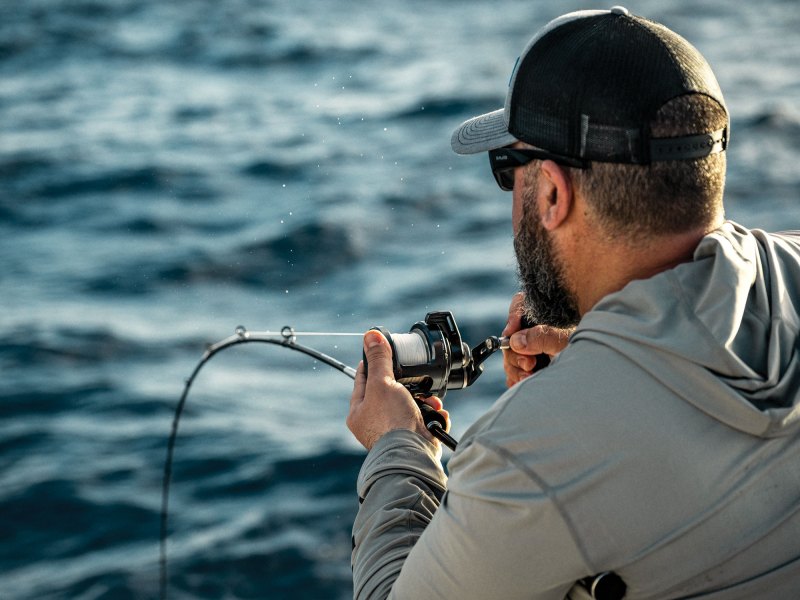
Bottom Jigging
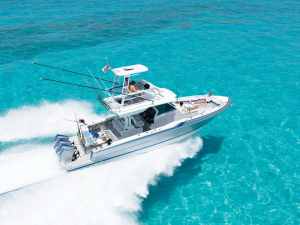
“Golden and blueline tilefish will hang anywhere from 200 to 800 feet of water in the clay muddy grounds along the slopes,” says Capt. Freddy Gamboa of the 39-foot Contender Andrea’s Toy. “When we want to put boxers in the cooler of 5 to 20 pounds, we target the more gentle slopes and break out the jig rods and go shallow in 200 to 400 feet of water. You want to be vertical when jigging, so we can only do it shallow when the winds are light and variable with minimal current.” The technique involves dropping a jig to the bottom and bouncing it, either tapping the bottom or bringing it 1 to 3 feet up.
Tilefish burrow into the clay and poke their heads out to inspect passing prey. They burrow in colonies, so when you get one hit, there’s bound to be more in the area. When Gamboa finds fish, he conducts short drifts to cover an area. Capt. Tom Daffin of the Fishin’ Fever further explains the behaviour of tilefish. “When we jig the shallows of 310 to 360 feet, I find the tiles mill around more, and we drift patch to patch, dropping jigs down and working them from about 1 to 5 feet off the bottom,” he says. “Those fish are moving around in little schools and can get aggressive once they leave the sanctuary of their burrows.”
Daffin goes super light in respect to the deep arena when jigging, employing a Nexus heavy spinning rod matched with a Penn Battle 3000 with only 20-pound braided line, to which he ties on a 4- to 6-ounce white bucktail tipped with a meat strip of anything from mahi belly to bluefish. “On calm days, I throw the jig upcurrent and drift back to it, bounce-twitching it until we come vertical. Once it passes the boat, reel it up and recast.”
Meat Sticking
If trophy-caliber golden tiles of 30 to 50 pounds are on the hit list, Gamboa’s strategy changes. He goes deeper and switches to bait rods. “The larger model tilefish are on the steep sloping ledges in 400 to 800 feet,” he says. “Tilefish feed with three senses. First, they feel vibration, then they pick up a scent, and then they see the bait. That’s why we bounce the sinkers hard on the bottom to awaken them. Many times anglers get hit on the bounce and miss the first hookset, but under any circumstance do not give up the bite. They will come out of the burrow after the initial vibration-inspection hit. Then they’ll aggressively smell where the bait is, see it and chase it down until they commit on the hook.” The Hudson Canyon clay and muddy flats off New York and New Jersey are prime turf for tilefish.
Deep-dropping means 750 to 1,000 feet and even down to 1,400 feet for Daffin. “Once we get close to the canyon edge in the deep, we look for mini landslides on the screen,” says Daffin. “The mini sub-marine landslides expose the clay and mud bottom tilefish burrow into, and you can read the slides on the finder by looking for contour lines that are really tight, then become long. You can see the faint blue fuzz lying on the bottom of the screen. Those are the tilefish. If you drop down a rig and feel the weight get stuck in the mud, you’re in the right place.”
Gamboa’s baits are set on a heavy-duty, high-low, two-hook rig, built of 100-pound test leader material and size 10/0 Mustad circle hooks. He baits the rig with slender strip baits of mahi-mahi, false albacore, bluefish, salmon belly, and even dogfish. He stays away from using squid, as they are too easily plucked off the hook. Daffin’s bait rig is a three-hook chicken rig made of 150-pound monofilament leader, crimped with three 8-inch droppers fixed with 10/0 Octopus circle hooks or 9/0 J-hooks fixed with tubing, glow beads and glow skirts. Whole 9- to 11-inch squid are his favorite baits, but strips of salted bluefish or mackerel and fresh salmon belly are also productive.
Read Next: Deep-Dropping Tips to Catch Tasty Fish
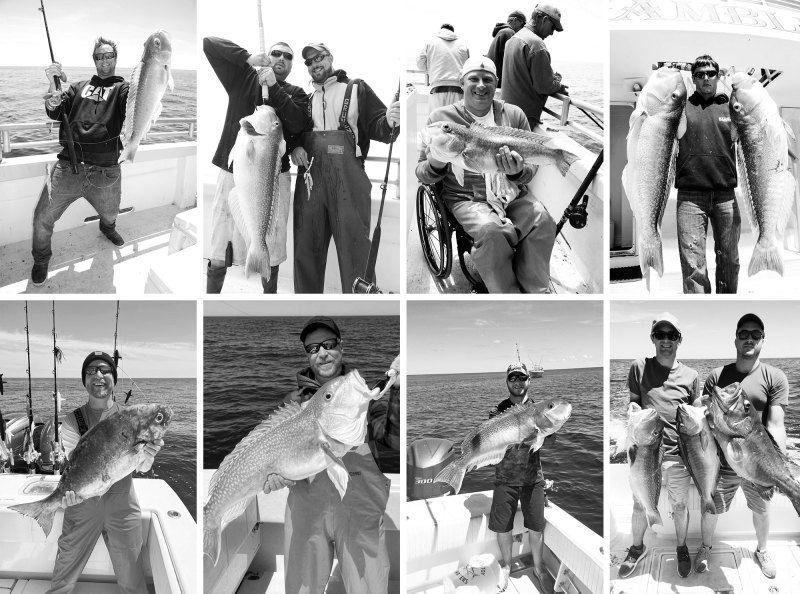
Wrecking Crew
While tilefish hang and burrow in muddy flats, shipwrecks and offshore glacial rockpiles hold some surprise down-deep denizens like smaller rosefish of 1 to 3 pounds, barrelfish of 10 to 30 pounds, wreckfish that can top out at 80 pounds and even the errant snowy grouper. “We find that the rosefish and barrelfish are always caught south of the Lindenkohl Canyon to the Baltimore Canyon,” says Gamboa. “About every third trip, we find an exotic like a snowy grouper to surprise the crew.” When targeting wreck species, Gamboa uses the same tilefish rigs on the bottom. Whereas tilefish will pop their air bladders out and float up about three-quarters of the way to the surface, wreckfish fight all the way to the top, so be prepared for a dogfight.
Daffin says he finds rosefish deep in 700 to 1,000 feet and drops sabiki-type rigs fitted with 5/0 circle hooks and squid as bait. “Barrelfish and rosies seem to like the real deep waters on the east sides of the canyons,” says Daffin. “If we do find any snowy groupers, they are a bit shallower in 300 to 400 feet of water.”
Deep Blue
Time and effort to access the offshore grounds 60 to 80 miles offshore is a commitment most anglers only make when targeting tuna and marlin. The deep-drop fishery is worth a look with the same level of commitment. Even better, pros in the know start mornings targeting pelagics. Then they’ll drift the mud and clay bottoms for tiles and wreckfish to patch a productive day together with some delicious meat for the fish box.
Deep-Drop Tackle Box
-
Rods
Jigging: Shimano Terez 6’,6”, Jigging World Deep Monster 7’,6”. Bait fishing: Shimano Terez Bent Butt, 50-100 pound
-
Reels
Shimano Ocea Jigger 400/250, Penn Battle 3000, Shimano Beastmaster 9000 electric, Daiwa Seaborg 800MJ electric, Shimano Speedmaster 20
-
Line
50- to 80-pound PowerPro braid; 50- to 150-pound Seaguar or Yozuri fluorocarbon leader on bait rigs; 5-foot shot of 40- to 50-pound leader on jig rods
-
Lures
UVT 320g, 400g, 500g (double hook with assist hook), in sardine, yellow/pink, pink/glo; 4- to 6-ounce Spro bucktails
-
Terminal Tackle
Two-hook, high-low rig on 100-pound mono, size 8/0 to 10/0 heavy-duty Mustad Octopus circle hooks, crimps, 1- to 4-pound weights, pink glo skirts, glo-beads, tubing