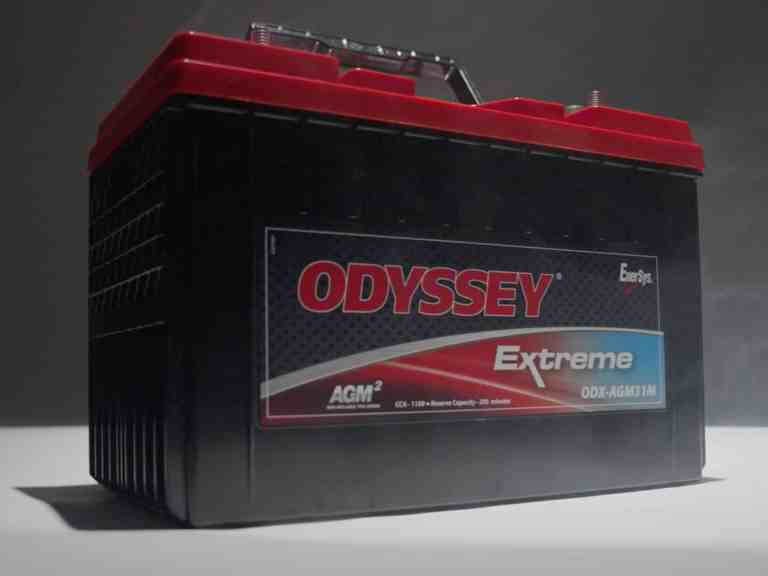
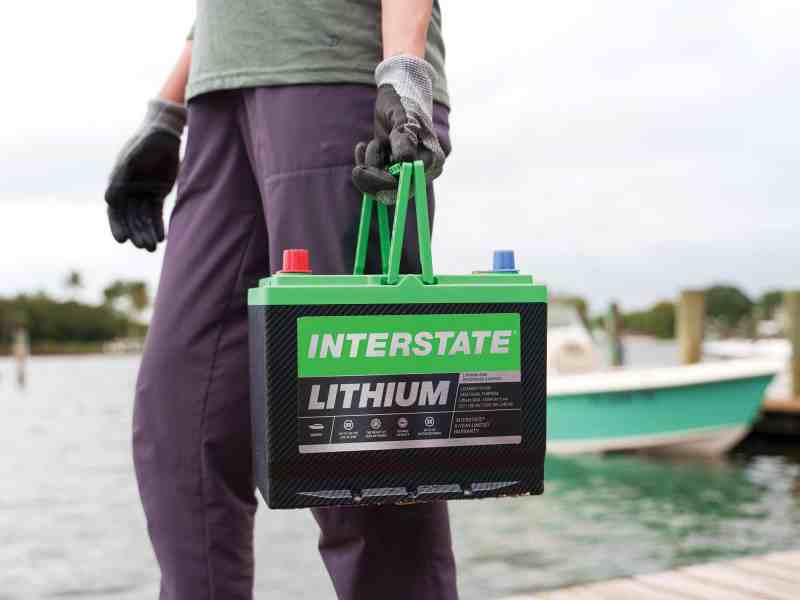
My struggles with marine battery management issues spanned years, mostly when powering onboard systems such as livewells, lighting, audio, anchor windlasses, and more. The house batteries of the time did not provide enough juice to keep everything running continuously during multiday trips aboard my center-console fishing boat. Today, however, I have put most of those battery woes astern.
Why the turnaround? Marine lithium-iron-phosphate (LiFePO4) batteries, combined with DC-to-DC charging systems, changed everything when I installed both aboard my boat more than two years ago. Let’s look more closely at these and related electronic technologies, and how they benefit saltwater boating anglers. I will also provide some caveats when it comes LiFePO4 marine batteries.
Difference in Chemistry
Traditional lead-acid batteries have been around for more than 165 years. This chemistry has been substantially refined over the past century, resulting in forms such as AGM batteries, which still find wide application in today’s boats. Yet, LiFePO4 chemistry represents the growing wave of marine-battery technology.
Marine LiFePO4 batteries offer amazing advantages over lead-acid batteries, most notably in marine house-battery, deep-cycle applications—that is, powering equipment with moderate electrical needs that extend over long periods of time. This includes accessories such as marine electronics, lights, pumps, air conditioning, refrigeration systems and trolling motors.
Longer Lasting
Fully charged lead-acid deep-cycle batteries gradually taper off in power delivery and go dead at around 50 percent capacity—a major reason why my old house battery could not keep up with electrical demands on multiday trips. A lithium battery, on the other hand, delivers full power for nearly its entire discharge cycle.
Let’s look at a real-life illustration. Say you’re running an electric trolling motor with lead-acid battery technology. The power will fade after a few hours, and the motor will lose its initial oomph as the battery discharges. With lithium batteries, however, the motor will pull strong throughout the battery’s discharge cycle, resulting in a much longer run time. The product life of LiFePO4 batteries is also longer than lead-acid models—as much as 10 times greater—before needing replacement.
Voltage Options
There are voltage options available for single lead-acid batteries, but any model greater than 12-volts tends to be so bulky and large that boating anglers, especially those who are powering trolling motors, usually connect two, three or four 12-volt batteries in a series to achieve 24, 36 or 48 volts, respectively.
LiFePO4 batteries are available in a range of voltages, as well. But the 24-, 36- and 48-volt versions tend to be more compact than comparable lead-acid models so they fit below decks more easily, making a single higher-voltage lithium a more attractive option than a comparable lead-acid version.
Read Next: Using Lithium Battery Systems for Auxiliary Power
Weight Savings
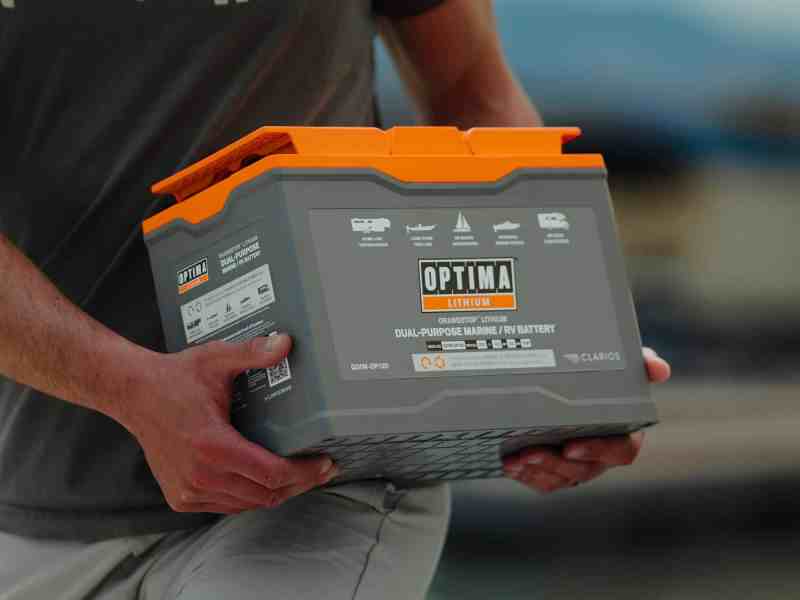
You can’t really appreciate how little a LiFePO4 battery weighs until you compare the strength it takes to lift a lead-acid battery of the same dimensions. It’s one thing to say lithiums can save up to 58 pounds in weight, but it’s quite another to see the surprise in a boater’s eyes as they lift one versus the other.
This difference can grow even bigger if, for example, you’re assembling a bank of three 12-volt batteries for a 36-volt saltwater trolling motor. Three AGMs weigh about 180 pounds in total versus 75 pounds for a bank of three lithiums. Weight savings increase if, for example, you can replace three lead-acid batteries with a single 36-volt lithium, saving around 150 pounds.
Non-Starter
Despite all of the advantages of LiFePO4 batteries, boaters also need to know the caveats. Lithium technology requires new thinking when it comes to applications. For example, most marine lithium batteries are designed to serve solely in deep-cycle applications—not as starting batteries.
On the other hand, marine starting batteries are purpose-built to crank engines. For the most part, these batteries use lead-acid chemistry—a proven choice for short bursts of high energy. Most, but not all, lithium batteries are not designed to produce these kinds of high-energy electrical bursts.
It’s important to be aware that some lithiums also may damage marine engine components if employed in starting applications. For this reason, lithium batteries must be isolated from the engine starting circuit. Finally, most engine alternators can’t produce the specialized charging profiles that LiFePO4 batteries need (more on this later).
Rule Exception
There is at least one exception to the rule described above. The ReLiOn RB100-HP is the first and only LiFePO4 approved for use as a starting battery for a number of mid-range to upper-range Mercury Marine outboards. The RB100-HP is a dual-purpose (starting and deep-cycle) 12-volt drop-in lithium replacement for a Group 31 lead-acid battery.
Unlike other lithiums designed only for deep-cycle applications, the RB100-HP’s battery management system (BMS) is programmed to produce bursts of high energy needed to start marine engines. It can pump out 800 marine cranking amps for eight seconds or more. Also unique to this LiFePO4 battery is the ability to safely accept the standard 12-volt electrical charge produced by the engine alternator.
Note that Mercury and ReLiOn are both owned by Brunswick Corp., so it was natural for these brands to work together in developing and certifying this new battery. Boaters should be cautious about using the RB-100-HP with engines from other brands. Keep in mind that the BMS in a lithium can shut down the battery if it senses danger such as a surge or voltage spike. This is one of the reasons for traditionally avoiding lithium in starting applications. If a battery is shut off while an engine is running, it could fry the rectifiers in the alternator.
Charging Methods
As indicated earlier, LiFePO4 batteries require special charging profiles to bring them back to full capacity safely and without damaging the battery. Many lithium brands offer compatible AC-to-DC chargers as accessories. If you are unsure about what charger to buy, ask your battery retailer or manufacturer for guidance. In fact, given the relatively new technology, boaters should consider hiring a qualified installer when switching to lithium.
If you want to charge a marine lithium through your engine’s alternator, you need a special DC-to-DC charger to do so properly. For example, I installed the Mastervolt Mac Plus 50-amp charger, which converts the 12-volts from the outboard alternator to a 12-volt charging profile for my 125-amp-hour LiFePO4 house battery. As a result, I now return with a full or nearly full battery each time I go fishing.
Cost Analysis
A few years ago, marine lithium batteries were far more expensive than comparable lead-acid batteries. Today, however, that price gap is quickly shrinking. I used to argue that lithiums are worth the extra cost because they last longer. But that argument no longer holds water, because pricing has reached relative parity. So now, there is no excuse not to join the marine lithium revolution.