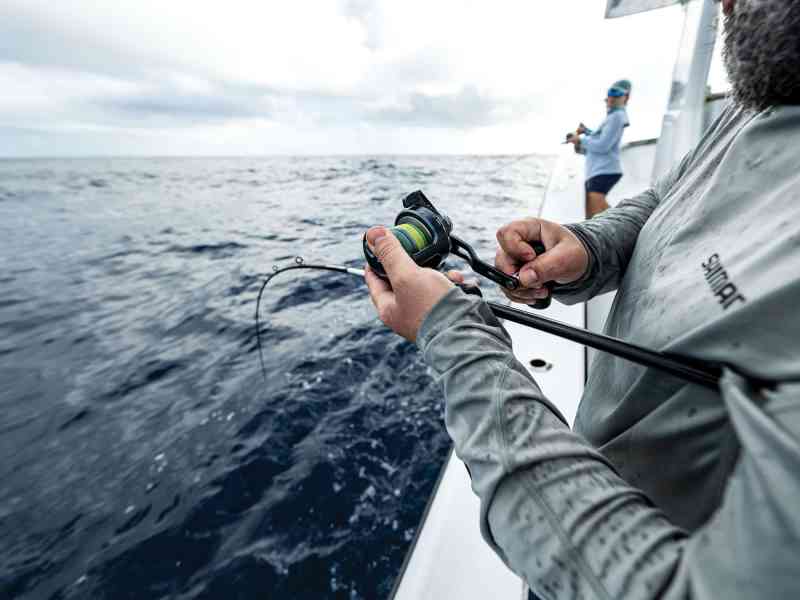
In 500 feet of water, it takes almost a minute for the lure to hit bottom. With any luck, it takes less time to get a bite. Then the work begins. Cranking up fish with a heavy rod and reel burns more calories than the fillets provide. Fighting big, bulky gear takes the fun out of fighting the fish, but the latest deep-drop gear puts the fish back in bottomfishing. Smaller jigs, lighter line, compact reels and responsive rods allow anglers to finesse the biggest bottomfish and enjoy the long battle to the surface.
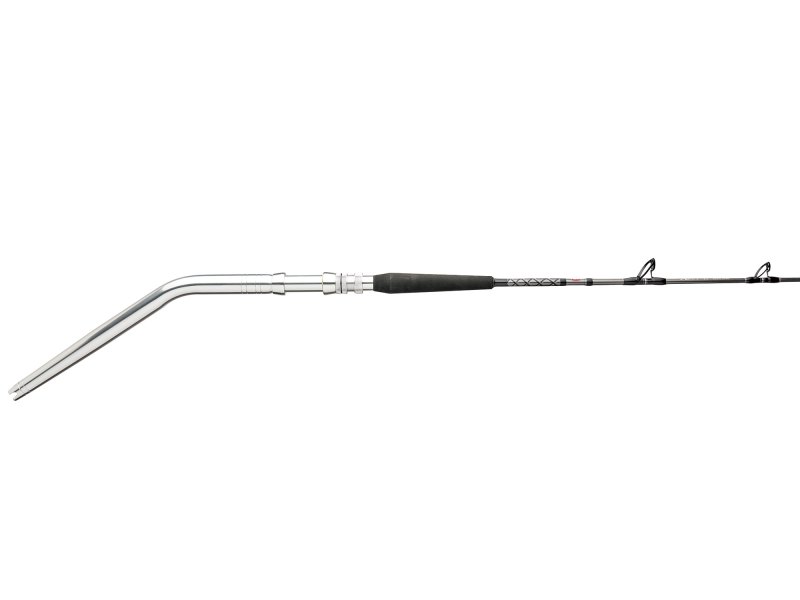
Penn Ally II
Penn shook up the deep-drop world with their Fathom Electric reel powered by a built-in battery. The compact reel and battery allow anglers to move around the cockpit to fight fish manually or under power. Winding with electric power is especially useful for retrieving unbitten baits. To complement the Fathom Electric, Penn recently released its Ally II rods. The Ally II is available with a bent butt to fish from the rod holder or a straight butt for stand-up fishing. Three rod models match the 30, 50 and 80 Fathom reels with actions to complement 3, 5 or 8 pounds of lead. “Tilefish, yelloweye snapper, vermilions and porgy have a light bite,” says Capt. Ray Rosher, a Penn prostaffer out of Miami, Florida. By monitoring the bend and bounce of the rod tip, Rosher can tell if the bait is bouncing off the bottom, stuck in the mud or hooked into a fish. “Sensitivity is crucial to deep-drop fishing,” Rosher says. Penn engineers worked through combinations of materials and design to achieve the perfect action to telegraph what’s going on hundreds of feet below the boat. Ally II rods defy trends by providing premium components like stainless steel line guides and aluminum rod butts at a reasonable $239. Penn offers even more savings when the rod is bought as a package with a Fathom Electric reel.
Daiwa Seaborg 500
To meet the needs of light-tackle deep-water anglers, Daiwa added the Seaborg 500 to their line of hand-held electric reels. With capacity to hold 440 yards of 50-pound braided line, the 500 is positioned to fish hand held or from the rod holder. The reel boasts 166 pounds of momentary pulling power to lift heavy fish off the bottom. When fish make a break for it, the drag kicks in with up to 50 pounds of pressure. The Seaborg offers manual and electric retrieve. When using the electric option, the Seaborg has a variable retrieve dial I use to adjust the retrieve speed as the fish puts more pressure on the drag.
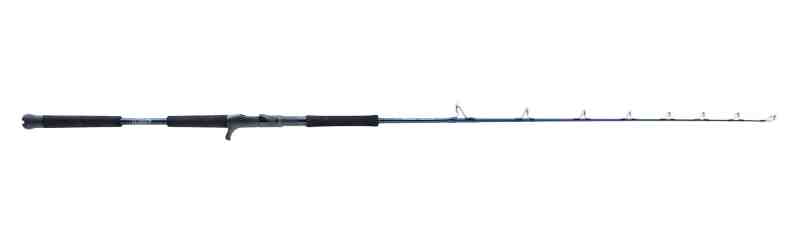
St. Croix Rogue V Jigging Rods
To consistently catch fish day in and day out, professional fishing guides need durable, no-nonsense, high-performance fishing rods. So, St. Croix tapped some of the busiest guides to help develop the new Rogue V jigging rods. “I took one look at the slow-pitch jigging rods and I wanted one,” says Capt. Rob Radlof. Rogue V slow-pitch rods are available in two spinning and five conventional models to work jigs from 150 to 500 grams. Radlof relies on the medium-light spinning model for 60- to 120-gram jigs he uses to catch black sea bass in 80 to 100 feet of water. “My objective is using the lightest possible jig,” he says. Combining the light-action rod with a spinning reel spooled with 15-pound-test braided line allows Radlof to drop an impossibly light jig in deep water. “Finnicky fish often respond to a smaller jig,” he explains. Also, the light jig allows him to use lightweight tackle to avoid angler fatigue. Radlof recently had a 79-year-old angler onboard. After catching a dozen big striped bass on the jigging rod, the angler told Radlof, “I’m getting one of these rods.”
R&R Tackle Hand Tied Jigs
After noticing finicky bottomfish turning their noses up at heavy bottom rigs, Rosher, who owns R&R Tackle, added a line of hand-tied rigs to his arsenal. “Big hooks and heavy crimps turn off fish,” he says. The new rigs are tied with 60- or 80-pound monofilament and heavy-duty circle hooks wrapped in colorful tubing. The hooks are connected to the rig with a swivel to alleviate line twist as the fish spins on the way to the surface. For bait, Rosher uses a piece of squid and a strip bait. He says fish are attracted to the squid and return to hit the strip of meat and skin. “I call it the meat and potatoes rig,” he says. Rosher recommends attaching an R&R Deep Drop Water-Activated strobe light to the swivel connecting the rig to the mainline. “Fish one rig with light and one without and see which rig catches more fish,” he suggests.
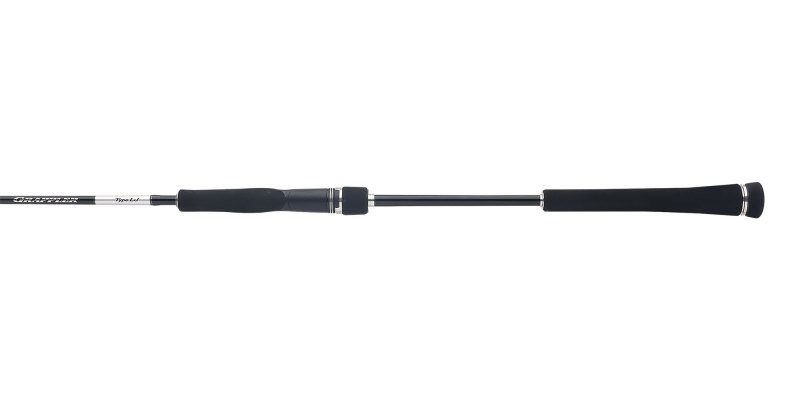
Shimano Grappler J Jigging Rod
Capt. Benny Ortiz, one of the pioneers of slow-pitch jigging, says the Grappler J jigging rod offers tremendous bang for the buck. The latest in Shimano’s Grappler Series, the jigging rods include components and features previously only available on more expensive models. “Spiral X construction is at the heart of the rod,” Ortiz says. The process aligns layers of carbon fiber to increase hoop strength and prevent the blank from ovalizing and twisting under pressure. “I put more pressure on the fish without fighting the rod,” Ortiz says. A slow-pitch rod has to have a slow-parabolic action to work a light jig deep. But it also has to have strength to battle a big fish under heavy drag. Grappler Type J rods are available in models from line diameter PE 2.5 to PE 8. Ortiz chooses a rod to match the lure weight and adjusts the power to achieve different effects. “To work the jig more slowly, I’ll use a rod rated for less weight than the jig,” he explains. To speed up the action, he picks a rod rated for a heavier jig. “The stiffer tip gives the lure a quicker response,” he says.
Read Next: Bottom-Fishing Tackle Built for Snapper Season
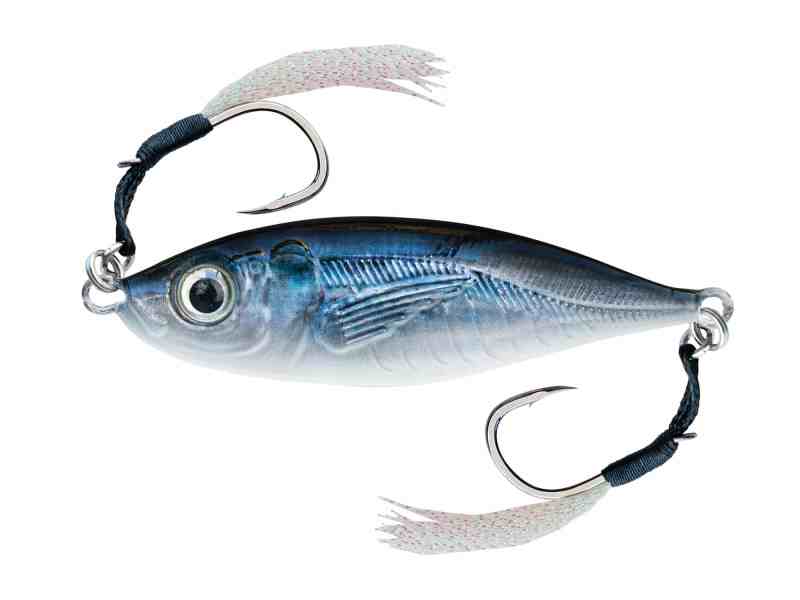
Ahi USA Ikara Jig
Everyone in the deep-drop scene is talking about Ahi USA Ikara jigs. Ahi’s Steve Oropeza explains the hype. “The jigs have an assist hook on the top and bottom to make the lure sink horizontally,” he explains. Each hook is adorned with a few strands of tinsel, providing movement and flash as the lure flutters through the water column. “Look at the lure from the dorsal and notice that one side bulges out to create vibration as it sinks,” Oropeza adds. The side of the lure is adorned with a laser-etched image of a real baitfish. The combined effect is a lure that imitates a small fish feeding on smaller fish. “That’s what really draws the strike,” Oropeza says. Originally designed for inshore fishing, Ahi expanded the line to include jigs up to 170 grams for grouper, snapper, rockfish and lingcod. “Work the lure with large sweeps of the rod then watch the line as the lure sinks,” he instructs. If the line stops moving, set the hook.