Long before daylight reaches the harbor in Seward, Alaska, crews are already loading coolers, rigging rods and stacking bait for one of Alaska’s most unique saltwater traditions.
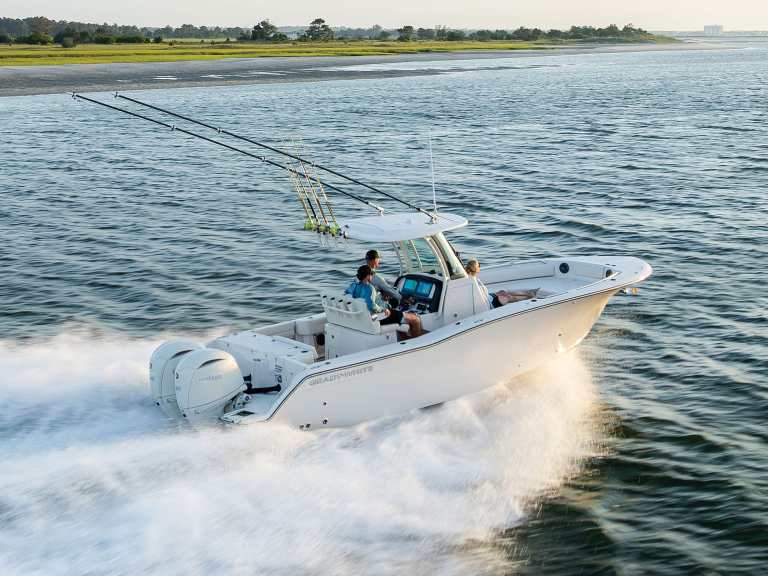
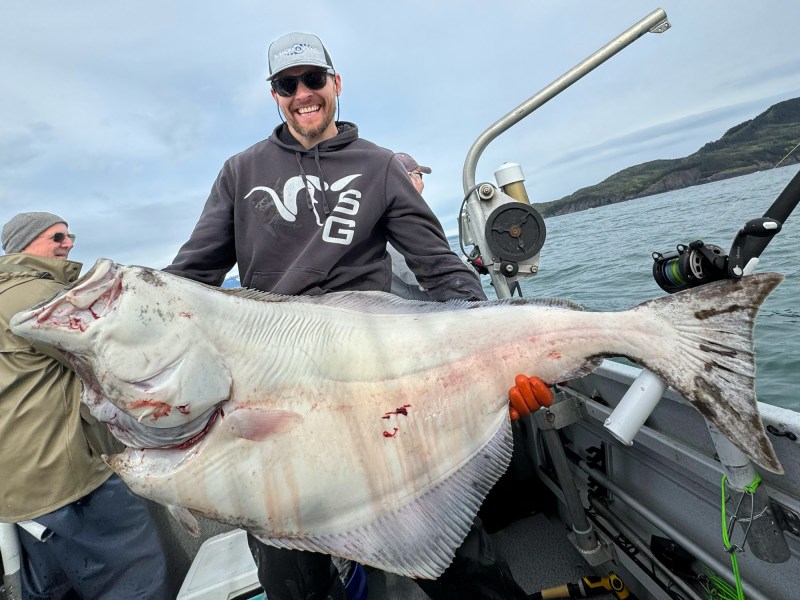
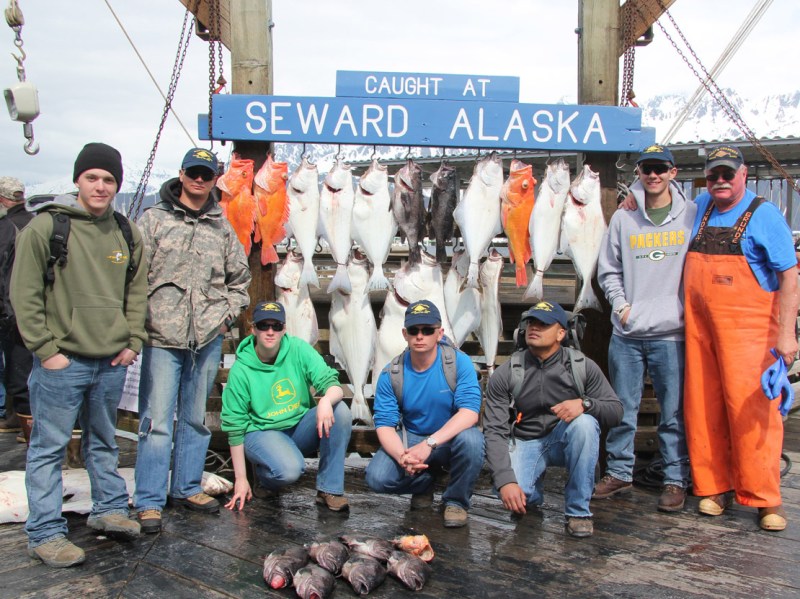
Every year on the Wednesday before Memorial Day, more than 160 junior enlisted military members from across Alaska step aboard volunteer charter boats for the Armed Services YMCA of Alaska Combat Fishing Tournament — a full day targeting Pacific halibut, rockfish and salmon in the cold waters of Resurrection Bay and the Gulf of Alaska.
For many participants ranked E1 through E5, it’s their first real taste of Alaska fishing. For charter captain Shane Hofstad, the tournament became much more than that.
“It opened my eyes to the fishing opportunities up here,” Hofstad says. “Once you start experiencing Alaska fishing, it’s hard not to get hooked.”
Hofstad first participated in the tournament after arriving in Alaska in 2015 following a military tour in Korea. Already excited about finally getting stationed in Alaska, he quickly found himself immersed in a fishery unlike anything he’d experienced before.
“There’s just so much opportunity,” he says. “Halibut, salmon, rockfish — it’s almost overwhelming at first. It’s like drinking from a garden hose.”
The tournament was Hofstad’s introduction to the Alaska saltwater fisheries where he now operates a three-boat charter business out of Valdez.
An Alaska Fishing Tradition
The event itself has grown into a massive operation over the last 20 years. What started with founder Bob Candopoulos donating two boats for a pair of halibut trips has evolved into one of the largest volunteer-driven fishing tournaments in the state, with local charter operators donating boats, fuel, time and equipment to support military members stationed far from home.
Candopoulos originally wanted to simply take service members fishing, but was told by military bases he couldn’t organize the trips directly. Instead, he reached out to the Armed Services YMCA, where then-director Mary Jo Imig helped turn the idea into a formal event.
The first tournament operated with Candopoulos’ two charter boats, Legend and Legacy. The American Legion donated space for the original barbecue, while local captains quickly bought into the idea and volunteered to help grow the event.
“It just kept growing because the charter community wanted to be involved,” Candopoulos says.
That support from Seward’s fishing community remains one of the defining parts of the tournament two decades later. Boats return to the harbor by late afternoon for weigh-ins before participants gather for a large community barbecue and awards ceremony. The Alaska Vocational Technical Center donates use of its diesel training center facilities for the event, helping organizers host hundreds of participants, volunteers and captains each year.
Generous donor support heavily subsidizes the event, so service members participate for a minimal fee. The tournament covers transportation, fish processing and freezing, while Alaska Airlines helps transport thousands of pounds of fillets home each year. Organizers estimate between 4,000 and 5,000 pounds of fish are caught annually.
Halibut and Rockfish
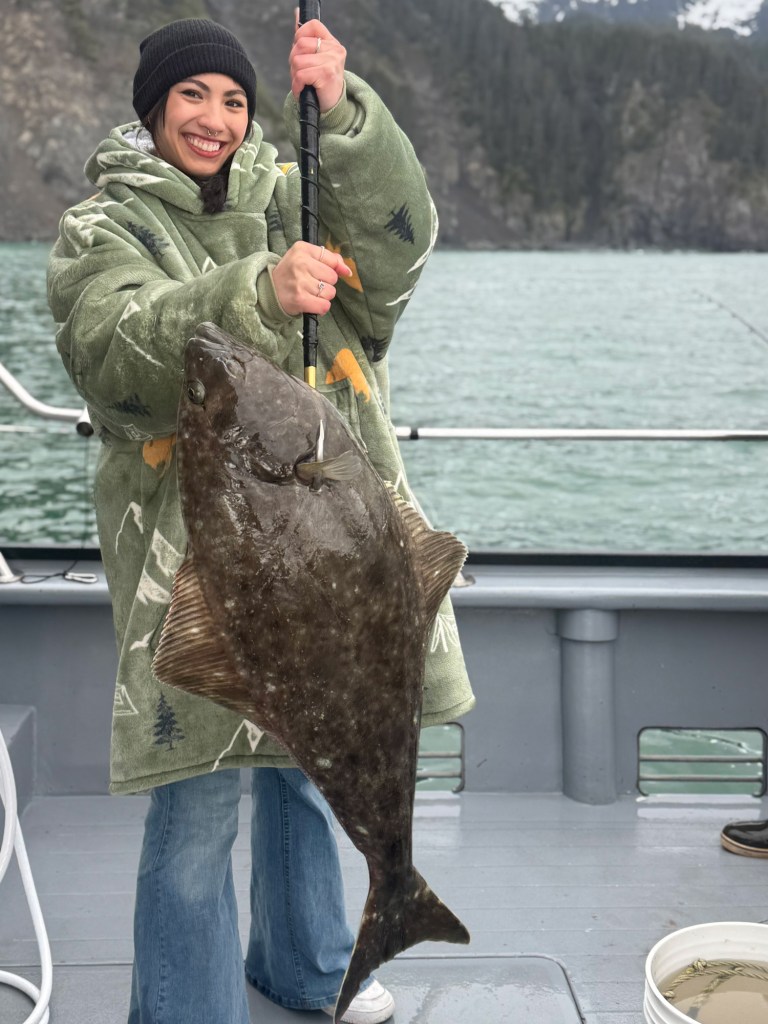
The fishing itself is pure Alaska. Depending on weather and conditions, boats target deepwater halibut and aggressive rockfish using heavy conventional tackle capable of handling strong currents and fish pulled from hundreds of feet below the surface.
Hofstad rigs Shimano Speedmaster 12 and 20 reels paired with Lamiglas rods and heavy braided line setups. Jigging rods are loaded with 150-pound J-Braid or 100-pound PowerPro, allowing anglers to maintain contact with oversized soft plastics even in heavy current.
“We’re usually fishing 12-inch grubs with 16- to 20-ounce weights,” Hofstad says. “If the current’s moving hard, you need enough weight to stay vertical.”
Bait rods are commonly tipped with salmon belly and herring, deadly combinations for Alaska halibut holding tight to the bottom.
For many participants, simply dropping a bait several hundred feet into Alaska saltwater is a completely foreign experience. Minutes later, they may find themselves battling powerful halibut or double hookups of aggressive rockfish. That learning curve is part of what makes the event special for volunteer captains.
“It’s nice taking people who have never done it before and seeing them catch fish they never thought they’d have the chance to catch,” Hofstad says.
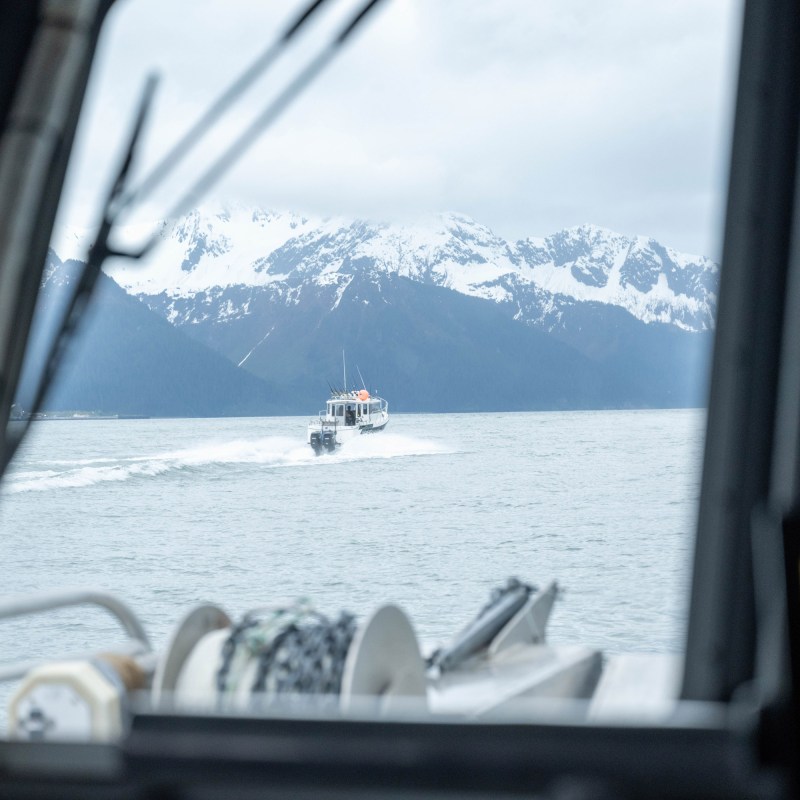
Changing weather only adds to the experience. Calm mornings in Resurrection Bay can quickly turn into cold wind, rain and rolling seas once boats push farther offshore. Successful captains constantly adjust drifts, depths and presentations depending on tides and conditions.
“Weather changes constantly out there,” Hofstad says. “That’s Alaska fishing. You have to stay flexible.”
Fleet and Community Support
Even organizing the event itself requires working around Alaska’s tightly regulated charter fisheries. Halibut charters operate under a limited-entry system with strict fishing-day regulations, making volunteer participation a significant commitment from charter operators donating valuable days on the water.
A major turning point came in 2019, when Sen. Dan Sullivan helped secure provisions allowing the Armed Services YMCA to utilize non-revenue fishing days for the tournament, helping ease the burden on participating charter operators and ensuring the tournament’s long-term future.
In a tournament atmosphere, experienced crews fish hard throughout the day. Awards are handed out for both the largest and smallest fish caught, and competitive energy builds quickly once rods start bending.
Still, organizers say the biggest impact often happens after the boats return to the dock. Sarah Riffer, executive director of the Armed Services YMCA of Alaska, has helped oversee the event for the past decade.
“My favorite part is watching everyone come back and start telling stories,” Riffer says. “They’re FaceTiming parents, showing fish pictures and talking about everything that happened during the day. For a lot of them, this is something they never would’ve had the opportunity to do otherwise.”
For Candopoulos, the event has always carried a personal meaning beyond fishing. His father served in the military and spent more than three years as a prisoner of war in Germany during World War II.
“He always wanted to give back to veterans,” Riffer says of Candopoulos. “His favorite part of the tournament is feeling like he made his dad proud.”
That spirit of giving back continues to ripple through Seward’s fishing community every spring. For Hofstad, the tournament helped introduce him not only to Alaska’s fisheries, but also to the charter community itself. After attending the event, he bought a 23-foot boat and started spending nearly every free weekend on the water with friends and family, learning fisheries, tides and weather patterns firsthand. Over time, those trips evolved into a full-time charter career.
“I had a really good support system from captains and people in the industry,” Hofstad says. “A lot of guys were willing to help and teach.”
Now, years later, he’s one of the captains helping others discover Alaska fishing for the first time. And every spring, before sunrise in Seward, another group of young service members steps aboard waiting charter boats with no idea what the day might bring.
Some leave with sore arms, coolers full of halibut and their first Alaska rockfish. Others leave with something bigger—a connection to Alaska’s fishing culture that lasts long after the tournament ends.