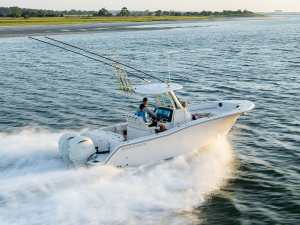
Get far away from people and you’ll catch more fish. This was the mindset behind our third 252-mile crossing aboard my center console from Miami’s Haulover Inlet to the Bahamas’w Cape Eleuthera Resort & Marina. Offshore and reef fishing in Exuma Sound can prove spectacular, as we already knew. One just needs a lenient weather window to get here—and back!
Why Cape Eleuthera?
Compared to legendary fishing destinations scattered about the Abacos in the northern Bahamas, which draw anglers primarily from between Palm Beach and Fort Pierce, Florida, Cape Eleuthera sits on the southwestern tip of Eleuthera Island. It’s more in line with Fort Lauderdale and Miami angling contingents. Part of the Bahamas’ Out Islands, it generates far less angling publicity than the Abacos, Bimini, Eleuthera’s northern front (i.e. Spanish Wells) and extremely remote favorites the likes of Cat Island, San Salvador, Rum Cay and Long Island.
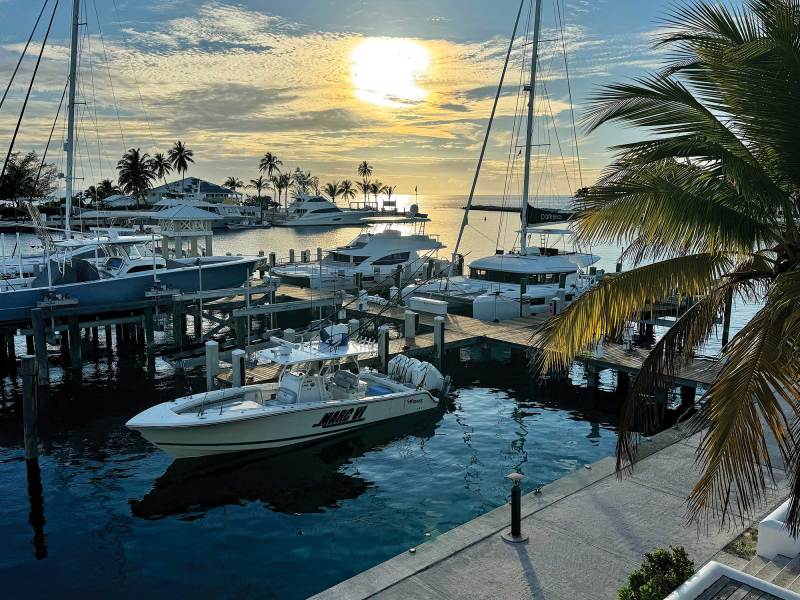
The big anchor here is the Cape Eleuthera Resort & Marina, a posh facility with the deepest marina in the Bahamas and dockage for vessels up to 200 feet in length. The property features oceanfront bungalows, marina villas, waterfront and pool-side dining, three private beaches and some 4,500 acres open to exploration via golf cart. It’s a cruiser’s paradise primarily, which likely explains the light fishing activity. We counted four other fishing boats on the “busiest” day of our trip.
A Proven Winner
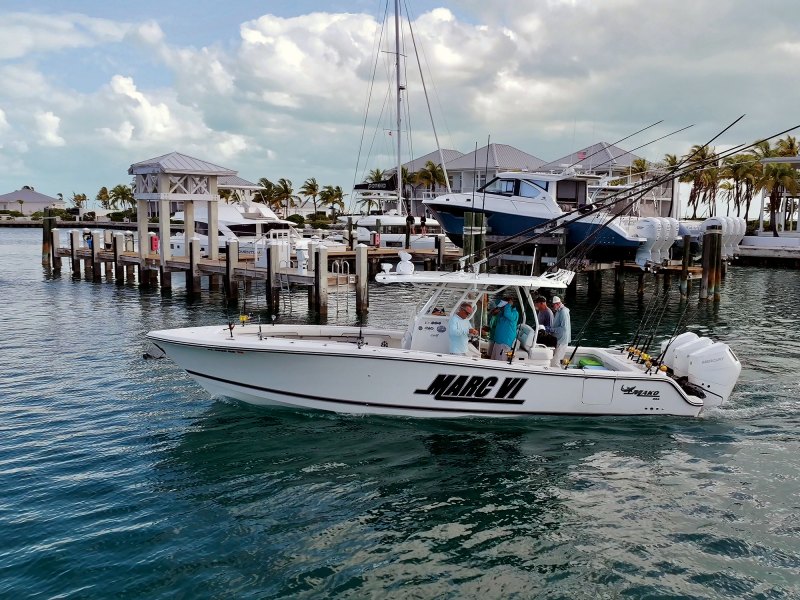
Our first visit was in 2015, aboard my Mako 284. Our 2018 and 2026 crossings were aboard my Mako 334. Our first visit produced a blue marlin, yellowfin tuna, mahi and swarms of flag yellowtails. Big mahi and flag yellowtails abounded during our second trip. And, as we were about to find out, the “catching” would be even better on our forthcoming adventure.
Deep water and pronounced bottom structures, typical of Exuma Sound in general, are minutes from the resort. Farther east, there’s an underwater reef between 25- and 60-feet deep known as “The Bridge.” It connects the southern point of Eleuthera to Little San Salvador. Beyond that is the open Atlantic and more wildly aggressive bottom topography.
The reefs in Exuma Sound are lightly pressured. Discover a few stretches of rugged bottom, and you’ll likely find quality fish. More on reef fishing in a bit.
How We Got Here
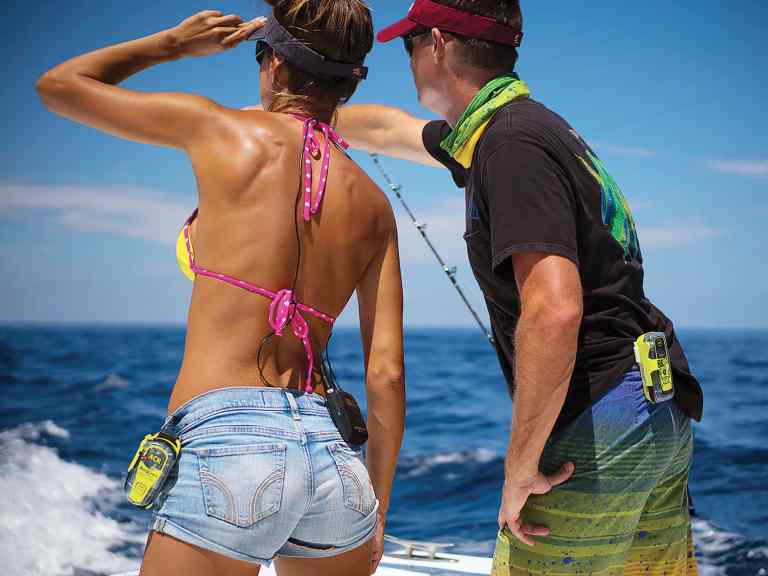
I met up with Harry Vernon, Mark Schmidt, Rob “The Swede” Greene and Charles Gonzalez at North Miami’s TNT Marine Center at 6 a.m. We loaded the MARC VI with tackle and duffle bags of clothes and positioned life jackets, throw cushions and a boat EPIRB within easy reach. We cleared Haulover Inlet at 7:15 a.m.
Our first stop was Bimini, a 50-mile run, to clear Bahamian Customs and Immigration. One week earlier, at Click2Clear.com (the Bahamas online Customs and Immigration system), we submitted our cruising and fishing permit applications, vessel details and crew information. We paid our fees and received a PCR number, which we presented on site at Customs and Immigration. We received our stamped, legal cruising and fishing permits. It took about an hour to officially clear in Bimini.
We were now legal to fish Bahamian waters, should an opportunity present itself in The Pocket or Exuma Sound.
The Journey Continues
From Bimini, we ran the Bank for 68 miles to the deep waters of The Pocket. Skirting Chub Cay (15 miles into The Pocket), we continued onward to the Nassau Harbour entrance (35 miles from Chub Cay).
To be safe, we took on fuel in Nassau, exited onto Yellow Bank and cruised 40 miles across these shallows to Ship Channel Point, our entrance into deep Exuma Sound. From there, we cruised 44 miles to the Cape Eleuthera Resort & Marina and refueled; the 252-mile journey burned 253 gallons of fuel.
We docked and washed the boat, checked into our rooms, cleaned up, reconvened for dinner, and turned in for the night.
Across the Bridge
Fishing within Exuma Sound is typically productive for pelagics, especially when a hard east or southeast wind pushes blue water and bait tight against Ship Channel/Highbourne Cay-area banks. However, winds had been northeast prior to our arrival. We opted to cross The Bridge and troll aggressive bottom topography in the open Atlantic on our first day.
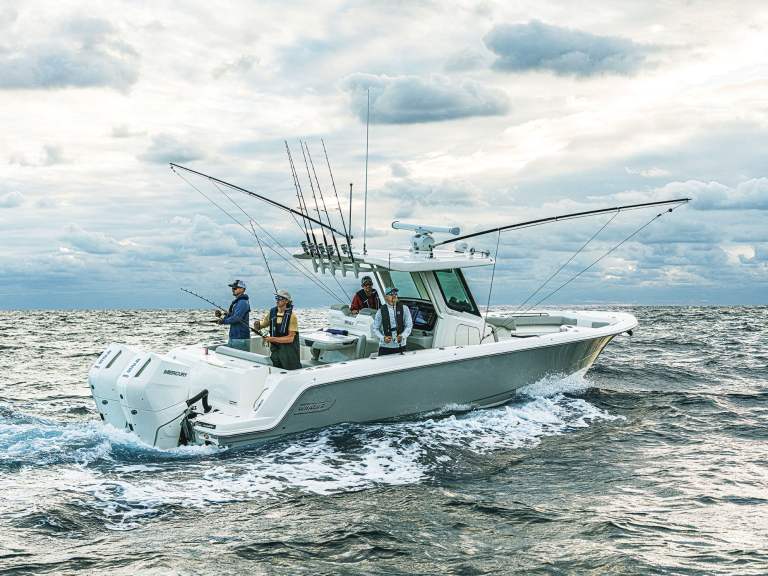
Geared primarily for blue marlin, we trolled five circle hook ballyhoo/chugger combos on Penn International 50s and an elaborate teaser system. With a minor solunar period around 2 p.m., we weren’t too discouraged by the early lack of action. As we neared that period, the ocean began waking up with flying fish showers, tunas blitzing small forage and working birds. At one point, the tuna blitzes against a Little San Salvador backdrop were so dramatic, it seemed as if we were fishing the Pacific side of Central or South America!
Code Yellowfin
A mixing of small blackfins and yellowfins had us working the finds hard. We knew marlin and wahoo had to be here, along with sizeable tunas which would surely crash our baits. We kept at it, without so much as a knock down. To rid the skunk, we exchanged the trolling arsenal for light spin tackle rigged with small crankbaits and chuggers. I’d ease Harry Vernon within casting range of a blitz, only to have him pull the hooks on his one and only taker—a small tuna. That was it for the next hour.
We redeployed trolling baits and kept at it. Once again, the tunas began crashing small forage. These were larger tunas, yet they showed zero interest in our baits. Blue marlin be damned; we had to crack the tuna code. I swapped the flat line baits for Rapala X-Rap Magnum Xtreme and Rapala Countdown Magnum swimmers and the far center rigger bait with a small, pink-skirted/circle hook ballyhoo on 80-pound test fluorocarbon leader.
The Winning Sounds
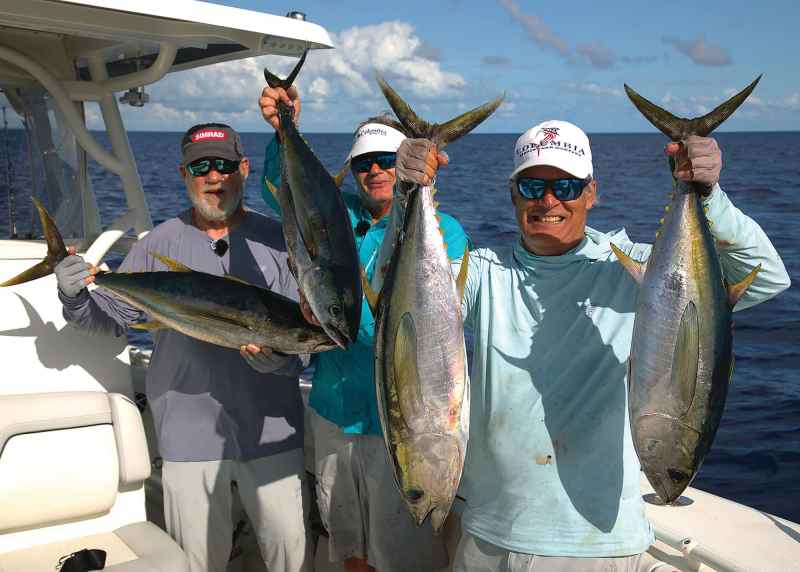
The screaming of the clicker and line leaving a reel initially shocked us. A yellowfin piled on a Rapala swimmer. We boated the fish and pressed on. Minutes later, another yellowfin clobbered the plug. It seems as if we cracked the code.
We continued trolling with new-found enthusiasm. Next, it was a quadruple-header, on both Rapalas, the small pink-skirted ballyhoo and one large ballyhoo chugger. We boated a yellowfin on the small ballyhoo and one off the plug; the others shook free. While resuming trolling speed, a small billfish entered the spread, but we failed to hook it. And just like that, the ocean seemed to fall back to sleep.
Mahi Ahoy!
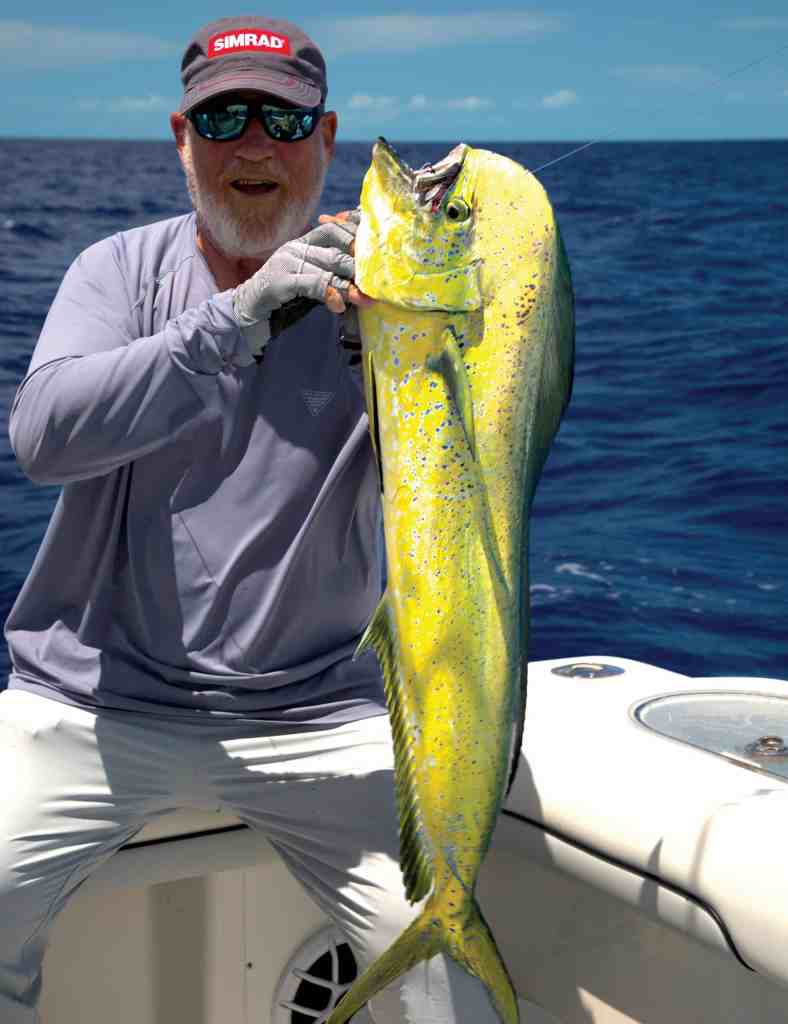
How good is the mahi fishing here? Three 15- to 20-pound fish raced up to the boat as we anchored in 70 feet of water to fish for yellowtail. On our previous two visits, working birds and quality mahi greeted us as soon as we exited Ship Channel Point.
Despite hardly any sargassum, the mahi action was good—find working birds, and they’d be underneath. Even blind trolling produced. Had we scaled down to small and medium ballyhoo on 80- and 100-pound leaders, there’s no telling how many mahi we would have tallied.
Early into the trip, a strong front ushered in northeast/east winds upwards of 25 knots. Fortunately, given this scenario, the resort side of Exuma Sound was in the lee. Rather than stay ashore, we trolled small Rapala swimming plugs on 50-pound fluorocarbon leaders over nearby patch reefs in 10 to 20 feet of water. We had fun releasing groupers, barracuda and jacks, despite losing a plug here and there to big cero mackerel.
Big Tails
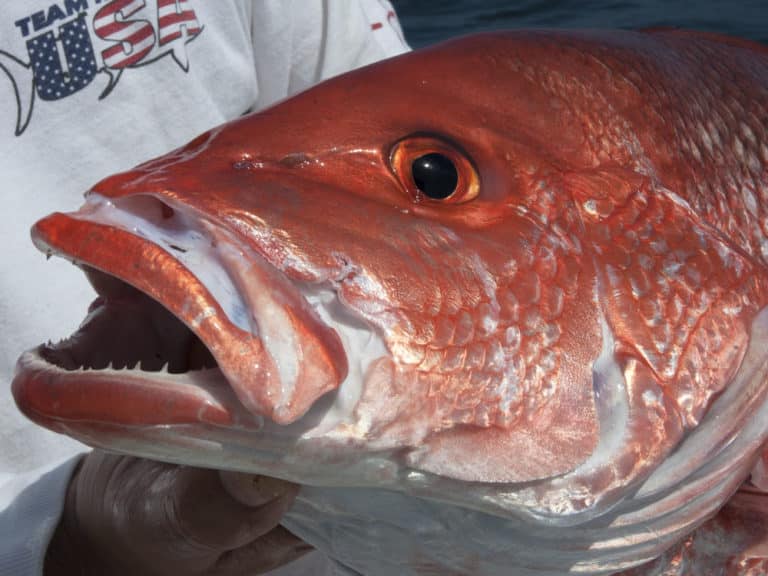
Given the abundance of healthy reefs along Exuma Sound, The Bridge and Atlantic side, yellowtailing is spectacular. Anchored on the same coordinates that produced unreal yellowtailing during our past two visits, we hung over a large mesh chum bag and waited for them to rise. Once our sonar revealed their progression up in the water column from 70 feet down, we began fishing in earnest.
Some of the ’tails here are large enough to power back down to the reef. Therefore, 20-pound-test fluorocarbon leaders are advised along with stout rods and 20-pound class main lines; you may also have to “horse” fish in ahead of sharks. We baited with silversides, ballyhoo strips and squid pieces on small yellowtail jigs and 1/0 in-line circle hooks with very light weights (knocker rig).
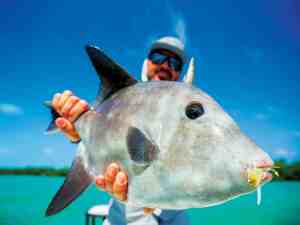
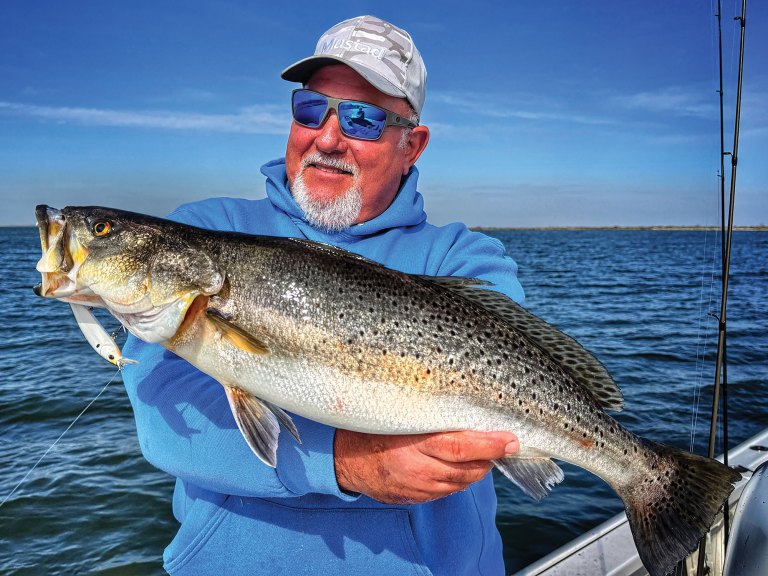
The bite was fast. The occasional “small” ’tail, which easily exceeded legal measurements back home, was released. Schmidt scored a flag right at the start, followed by Vernon catching one even larger. I landed the trophy of the day, a yellowtail measuring just over 27 inches. We even let videographer Charles Gonzalez catch his personal best yellowtail. Big cero mackerel and horse-eye jacks provided additional fun.
Cherry On Top
We deep-dropped for a few hours on our final day. Without numbers, we consulted our sonar for marks tight to bottom between 600 and 1,000 feet. Schmidt and Vernon lowered squid-baited hooks from a pair of Penn Fathom electric reels while I managed the drifts. We scored yelloweye, wenchman and blackfin snappers.
We returned to Cape Eleuthera around 1 p.m. to fuel and prep the boat for our run home the following morning.
Read Next: Prepare for a Crossing to the Bahamas by Boat
Best Times
We planned this trip for April, prime for migrating white and blue marlin, mahi, yellowfins and late-season wahoo (winter is best). We raised two small billfish, but failed to hook them. May is also exceptional for pelagics, as is most of June. However, bottomfishing is good year-round.
Cape Eleuthera experienced cooler than normal water temps this past April, which delayed the migration of pelagics; ditto for Cat Island, some 60 miles below us.
A Roff’s Ocean Fishing Forecasting chart showed a large push of warm water making its way up toward Devil’s Point at Cat Island. As anticipated, its arrival at Cat produced exceptional fishing. For us, it was too late; we were heading home the following morning. Yet, it was still a fish-filled trip with perfect weather on all but two days.
Homeward Bound
A slick ocean made for an easy crossing. Including a 45-minute fuel stop in Nassau Harbour, our run home took seven hours, 20 minutes. We cleared Haulover Inlet at 1:30 p.m.
While chatting with Justin Dubowitz, manager at Cape Eleuthera Resort & Marina, he said he cherishes the tranquility and abundance here, the obvious fruits of its secluded location. It’s just far enough of a crossing to deter droves of South Florida anglers. Rest assured, I will return soon for my fourth visit. This place is that good.
Given the ever-so-larger center consoles, increased fuel capacities and high-horsepower outboards, many others will soon make short work of reaching what will likely become a once-remote Bahamas fishing destination. Get here while the getting is good.
Where To Stay
Cape Eleuthera Resort & Marina
capeeleuthera.com, 1-242-334-8500, IG: @capeeleuthera, FB: Cape Eleuthera Resort & Marina