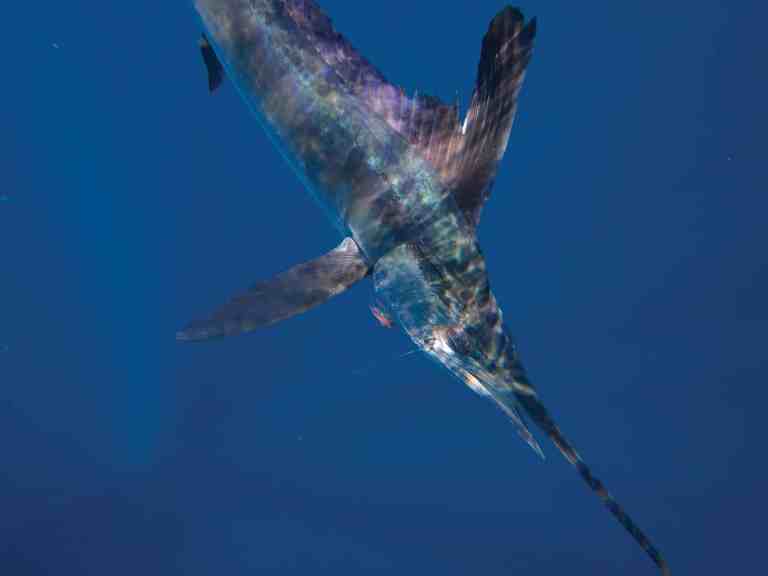
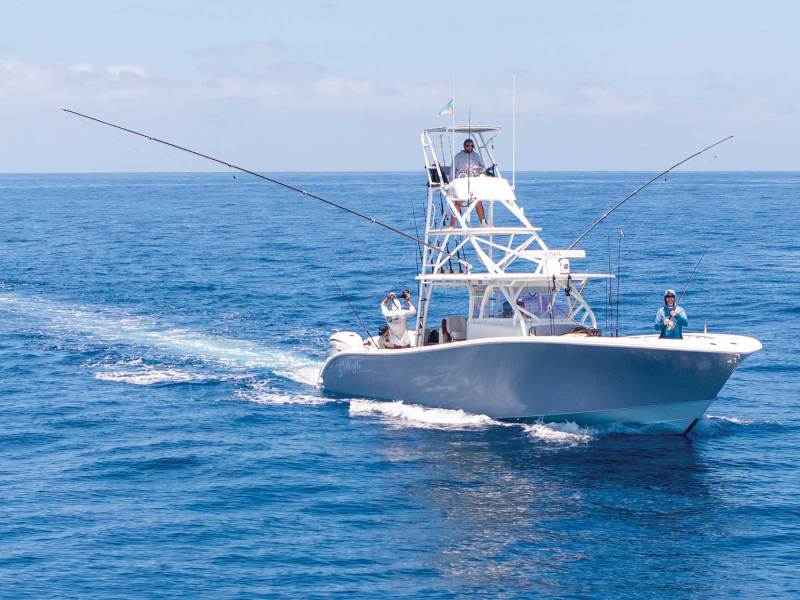
The mantra among offshore anglers is summed up with seven Ps: Proper Planning and Preparation Prevents Piss Poor Performance. When 1,000 pounds of hungry marlin shows up behind the left teaser, little details make a big difference. Proper planning and preparation means big-game pros are constantly improving their rigging. Tougher rod holders, lighter outriggers, precision clips and better organization go a long way toward landing the fish of a lifetime.
Outriggers
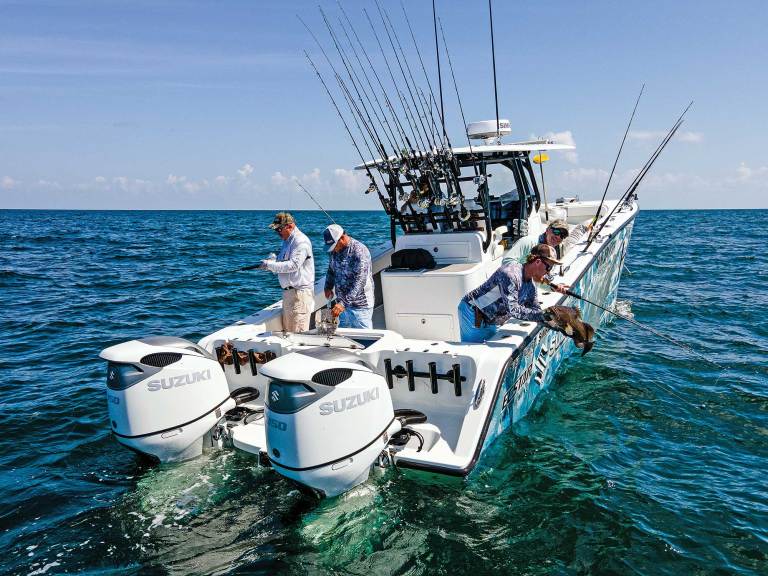
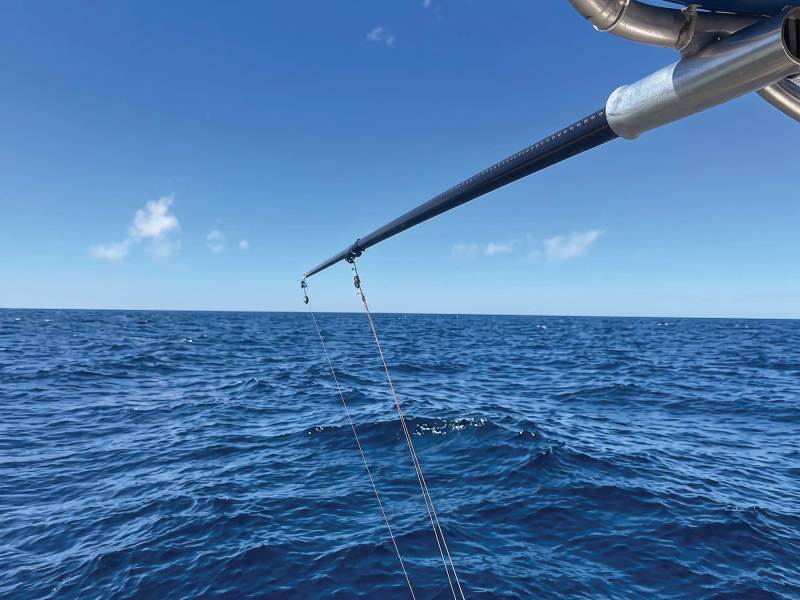
Outriggers make an offshore boat. Outriggers allow anglers to troll more lures, place lures in clean water outside the boat wake and keep lines untangled while fighting a fish.
It seems like every angler uses a different outrigger system to match the boat’s layout and meet the team’s fishing needs. Outriggers should be versatile and easy to deploy and use.
One of the coolest new outrigger systems comes from the North Carolina coast. Geronimo carbon fiber outriggers are lightweight and collapsable, making them easy to install and transport. To rig out a T-top, the new Kingfish 12-foot outriggers collapse to 7.5 feet, weigh just over 3 pounds and fit into a standard rocket-launcher rod holder. Heavy-duty lever locks secure the telescoping pole so it won’t inadvertently collapse when seas turn rough.
My biggest challenge with collapsable outriggers is maintaining consistent tension on the halyard lines. Geronimo outriggers are available with 20 mm Ronstan Pulleys to smoothly guide the halyard lines, allowing me to add more tension to the line and reduce tension on my outrigger clips.
Clips
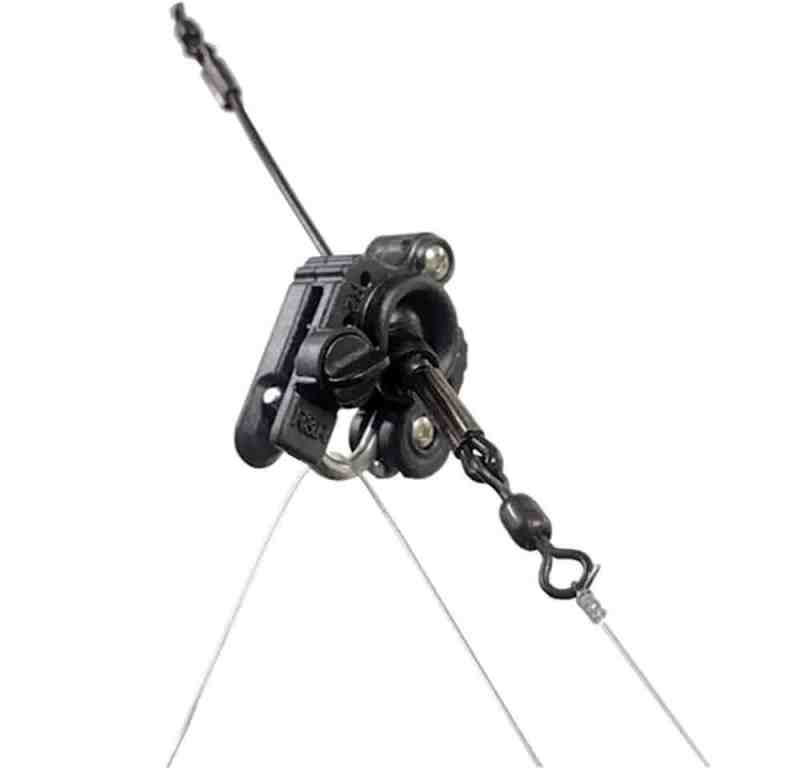
Savvy anglers obsess over outrigger clip tension. Clips should be set tight enough to secure the line, but light enough to release when a fish bites. Some clips apply more pressure for heavy lures and big fish while others are more precise for fickle fish like marlin and king mackerel.
Instead of switching clips to match my target fish, I installed R&R Tackle’s R2 Outrigger Clips. Designed by Capt. Ray Rosher, R2 clips reflect his decades of experience tournament fishing. Tension adjusts from up to 25 pounds of pressure for big baits to light release for smaller baits. The clip swivels on a ball joint, so the clip always faces the lure for a quicker, more predictable release. Over time, the wire bail wears out and causes friction on the line. R2 clips use replaceable stainless steel, tumble-polished wire that prolongs the life of the system.
Pullies/Cleats
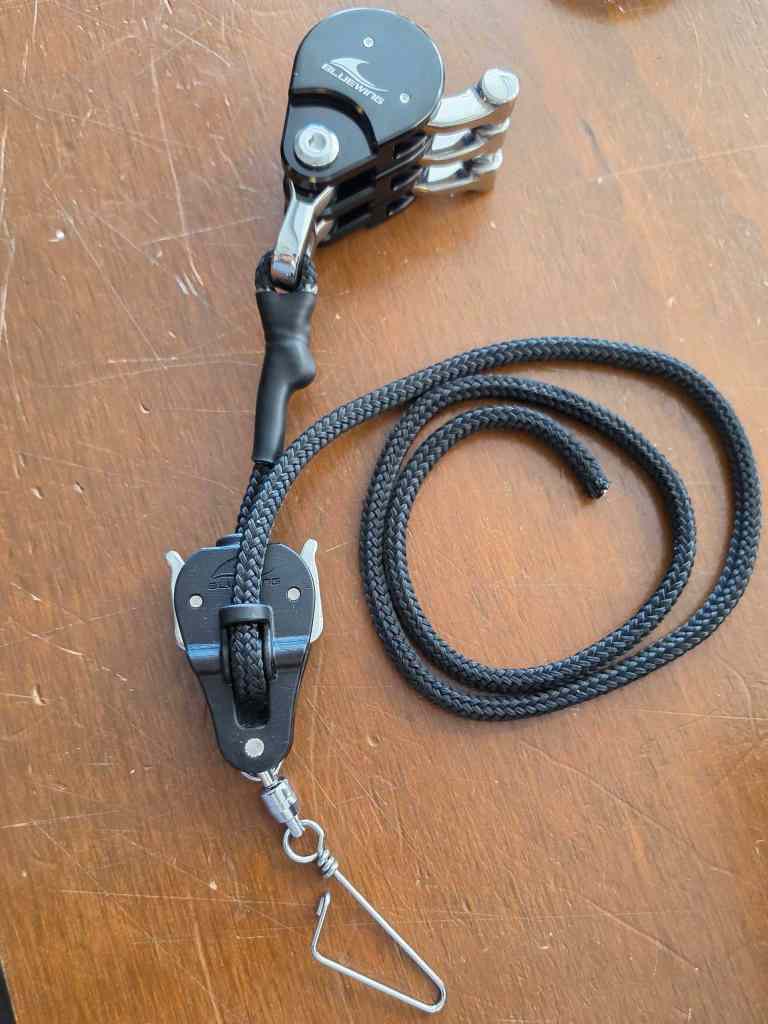
One of the challenges of installing outriggers on smaller boats is attaching the outrigger halyards to the boat. Bluewing Outrigger Tensioners solve the problem by running the halyard tie-down through a pulley and camlock. Clip the pulley to a fixed point on the T-Top and then run the halyard tie-down through the cam and cinch down the lock.
On my boat, I constantly adjust the halyard tie downs when collapsing and extending the outriggers or swinging them in and out to run or fish. The tensioners make this process quicker and safer to adjust and secure the halyards.
Swivel Rod Holder
A swivel rod holder takes the place of several fixed rod holders. Angle the rod holder 90 degrees out for a dredge rod, turn the rod holder 45 degrees for trolling, release the lock and let the rod holder free spin for bait fishing. The Gemlux Lockable Swivel Rod Holder HD has adjustable tension to control the rod holder rotation. Constructed out of high-polished stainless steel with a screwless flange, the Gemlux combines form and function to look as good as it works. Loosen a large knob at the bottom of the rod holder tube to adjust the angle and lock it in place.
Rigging Station
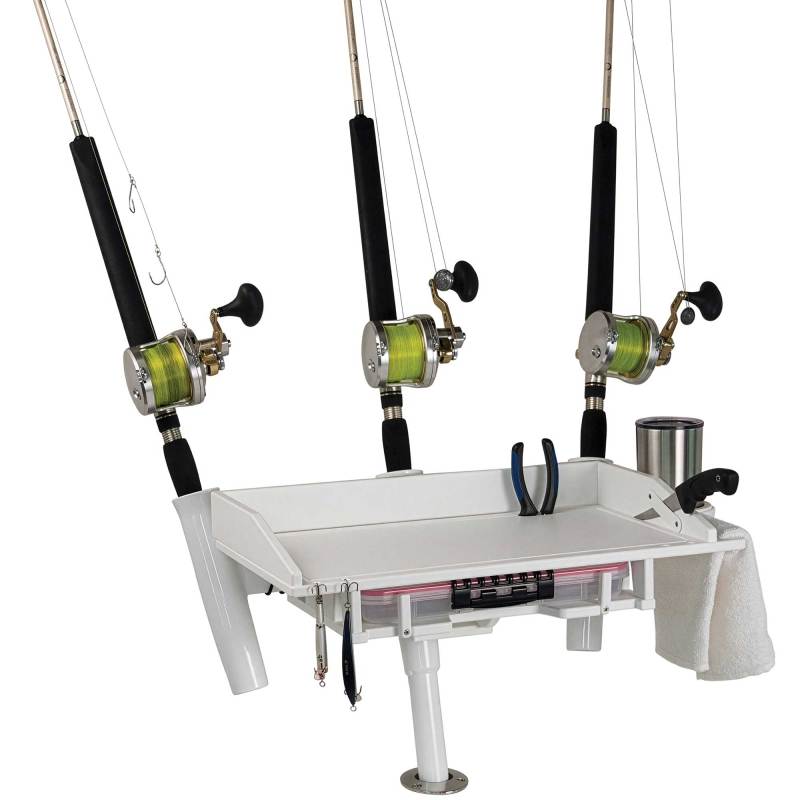
The most important of the seven Ps is preparation. Preparing baits and rigs anticipates chaos that ensues when a pack of tuna attack the back of the boat. A central rigging station provides a clear, organized workspace to quickly prepare and replace baits and rigs. On my small boat, I use a Boat Outfitters Rod Holder Mount Fillet Table to extend rigging space and keep my tackle organized. The rigging station fits in a rod holder with space for a standard 3700 tackle tray and three rod holders to expand rod-storage options. I secure my rod in the holder and quickly rig or replace the lure with tackle and tools in easy reach.
Read Next: How to Add Accessories Onto Your New Boat
Leaning Post
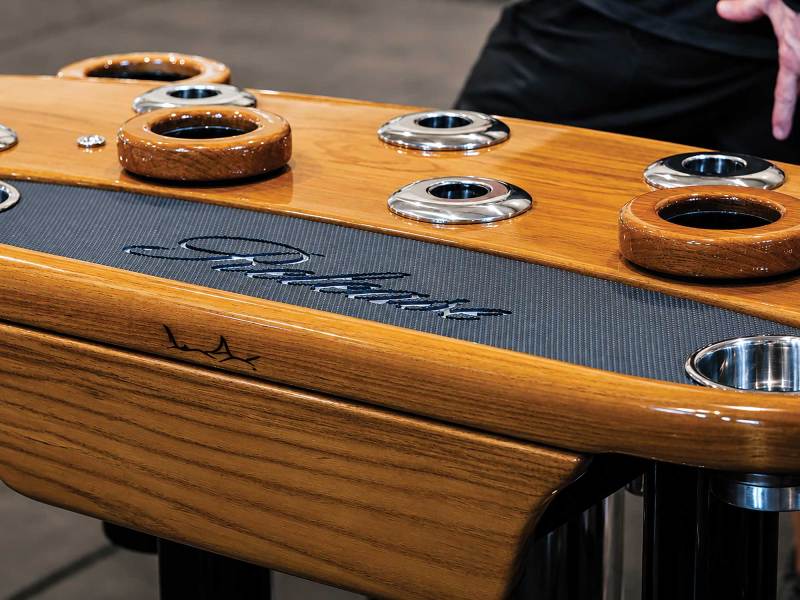
Successful live bait fishing requires a frisky, fresh live bait. To minimize the time a live bait spends out of water and keep it prepped for action, the Release Marine Freestanding Rocket Launcher with Wicked Wells Deckplate combines rod holders with live bait tubes plumbed into the baitwell circulation system.
The water feed and drain tubes pass through the rocket launcher base to 2.5- or 3.5-inch bait tubes installed on the workstation. Rod holders positioned next to the bait tubes keep lines untangled and live bait prepared to quickly deploy. The metal parts are mirror-polished stainless steel and the wood is polished to a deep gloss with custom work trays and rod holder/bait tube configurations to meet each team’s unique live bait needs.
Block and Tackle
Every offshore angler leaves the dock prepared to catch the fish of a lifetime. Even if dolphin and sailfish are the targets, an angler should be ready for a 700-pound tuna to show up in the trolling spread.
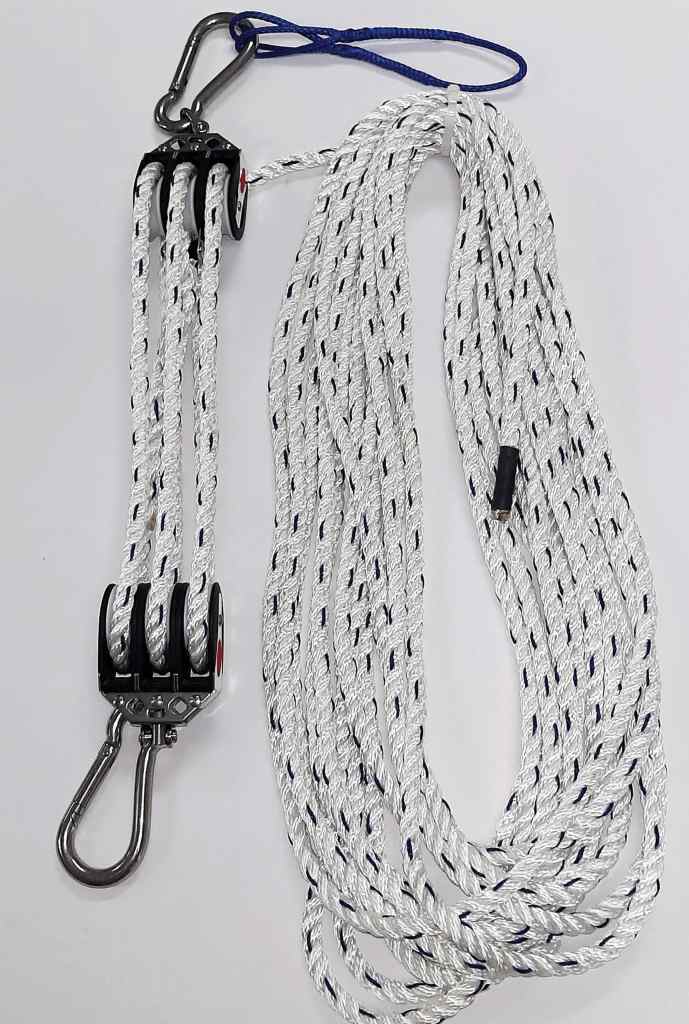
Preparation includes a heavy-duty block and tackle to transfer the sea monster from the water to the boat. By transferring the weight across multiple strands of rope, a block and tackle reduces lifting force to one-sixth the actual weight. Tournament Cable’s Big Game Block and Tackle combines pulleys, strap and rope rated to over 3,000 pounds. The system fits in a 5-gallon bucket to protect it from moisture and corrosion so it is ready when needed. Be sure to practice rigging the system before it’s needed to lift the fish of a lifetime into the boat.