This research program is never going to work, Don Hammond was told. “Several biologists I worked with said I was wasting my time because fishermen would never throw back a dolphin. They were too good to eat. But I had faith in the sport fishermen,” Hammond recalls.
One must admit, it was a big ask: mobilizing captains and anglers to join a mission to tag and release dolphin for the purpose of research. Dolphin is an A-list game fish, not to mention a “today’s special” worldwide, but mystery shrouded its movements, genetics, reproductive patterns, and behavior. Could a few spaghetti tags change that?
What began as a private venture born under the South Carolina Department of Natural Resources in 2002 has bloomed into one of the most successful citizen-driven fishery research projects in history. The Dolphinfish Research Program (DRP) celebrates its 25th anniversary this year. More than 40,500 tags have been deployed as part of the program. Hundreds of captains and anglers have participated, although two overachieving crews have tagged more than 9,000 dolphin.
While it initially focused on the Western Central Atlantic, the DRP has expanded to the Caribbean, South Atlantic, Mediterranean, Gulf of Oman and the Eastern Tropical Pacific. Guy Harvey, whose namesake foundation is dedicated to protecting the world’s oceans, has been one of its biggest sponsors and supporters. One of Harvey’s mahi paintings serves as the DRP logo.
Hammond, the founder and director emeritus of the DRP, retired in 2017. The program and the information it collects continues to grow under current director, Wessley Merten Ph.D.
The DRP has its eyes on expansion. In 2022, it began to collect data on wahoo. “It’s another species of cultural and economic significance that lacks the data necessary for effective stock management and long-term sustainability,” says Merten.
But before we look any further ahead, let’s reflect on the present, and the incredible amount of data and discovery the DRP has generated over the past quarter century. (Check out the sidebar with a partial list of facts and statistics that have been revealed through the DRP.)
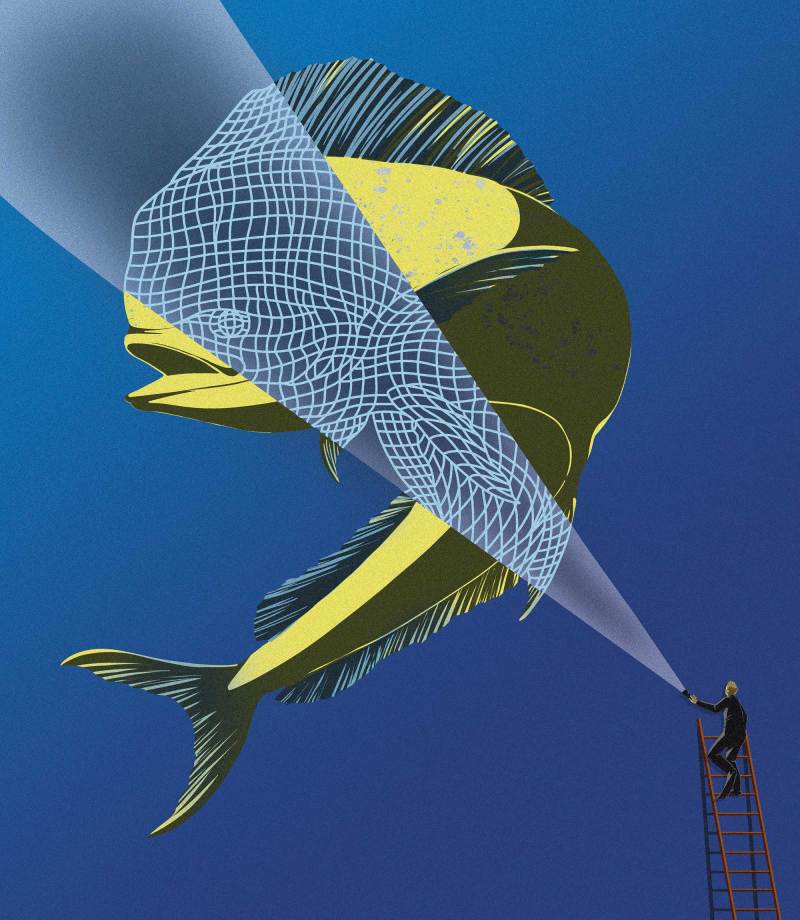
This research is critical. Mahi are wildly overfished. Currently, out of the 43 jurisdictions in the Western Central Atlantic, only five — Mexico, the Bahamas, the continental U.S., Puerto Rico and the U.S. Virgin Islands—have established any recreational or commercial regulations for dolphin.
“The dolphin is an oceanic species that we thought could never be overfished,” Harvey said in an interview with Salt Water Sportsman last year. “Well, here we are, and dolphin are overfished, not only by recreational anglers, but because of the nationwide demand for the mahi fillet or mahi sandwich.”
Could the research outpace the resource? Possibly, although it’s hard to bet against a creature that can swim 150-plus miles in a straight line over a 24-hour period (you guessed it—a fact discovered by DRP).
Read Next: The Importance of Researching Dolphinfish
In a letter to DRP supporters on the occasion of the 25th anniversary, Hammond writes fondly of the time spent with “all the wonderful fishermen I met through the study, and the never-before-known aspects about this popular game fish’s life history that were being revealed.”
As for Merten, he is taking DRP forward with a goal to find answers for, as he puts it, “what is causing the long-standing and well-documented decline in the number and size of dolphin caught along the U.S. East Coast and parts of the Caribbean Sea.”
Frustration is growing at a lack of action among regional and international management bodies. In June 2026, the South Atlantic Fisheries Management Council elected to halt work, four years in the making, on actions that would have strengthened dolphin conservation measures regionally.
Merten issued a call to action: “In the short term, domestic and international management of dolphin is in a state of stagnation, despite the species’ economic and cultural importance and continual calls from anglers to improve management of the species,” Merten writes. “In the long term, your engagement in the DRP can help acquire basic fishery information that can be used to improve species management for generations to come.”