Think of a boat’s helm as an angler’s office. It’s the place where owners spend a lot of time, so it makes sense that it is as comfortable as possible. Those who run offshore get pounded when slamming through steep waves, hosed by salt spray, buffeted by near-hurricane-force winds, and exposed to huge temperature swings. Anything that can be done to mitigate these extremes means a better day on the water. Fortunately, there are plenty of ways to make the helm station more human-friendly.
The easiest way to ensure a helm is ergonomically correct for you is to order the right boat and include options that make it even better. We’re talking about elements such as hardtops, wraparound windshields, clear vinyl enclosures and more. There are also plenty of aftermarket upgrades. Let’s look at some options and add-ons.
Sweet Seats
Most boat builders offer several options for helm seats, and buyers should consider these with the goal of creating greater comfort when standing and sitting. Pay attention to the footrests. There should be one for use when sitting on the edge of the chair, along with a flip-down footrest for use while sitting all the way back. I recently tested a SeaVee 400Z that had an angled, padded area on the bottom of the dash, just below the wheel, for resting feet while sitting in the helm seat. I had never seen a footrest there before, but that’s where drivers often put their feet. Smart move SeaVee.
Heated Discussion
Staying warm on chilly mornings is a luxury, and a great trend is the increased availability of helm seat heaters for saltwater fishing boats. Boat builders such as Boston Whaler, Pursuit and other brands are warming to the idea. The aftermarket also offers solutions like the Llebroc 12-volt seat heater ($198), which installs on its series 1 and 2 helm seats. Shockwave is a Canadian company that knows a lot about fishing in cold weather and offers the heated Commander bucket seat, which is $650 more than its non-heated model.
Wind Deflectors
An overlooked source of helm crew discomfort is the buffeting caused by wind vortices whipping around the windshield. Even with glass in front and on the sides, the maelstrom can be is strong.
Another factor is high sound levels from the wind that I’ve measured at 105 decibels, which is as loud as a gasoline-powered leaf blower and can potentially cause hearing damage. One great solution is Wind Armor, wind dams that install on the sides of center consoles and extend outward, on demand, to provide wind protection for those at the helm. Installing clear-vinyl spray wings is another way to block wind while keeping the crew drier and preserving forward and side visibility.
Read Next: Seven Creature Comforts That Help Catch Fish
Shock and Ahhhh
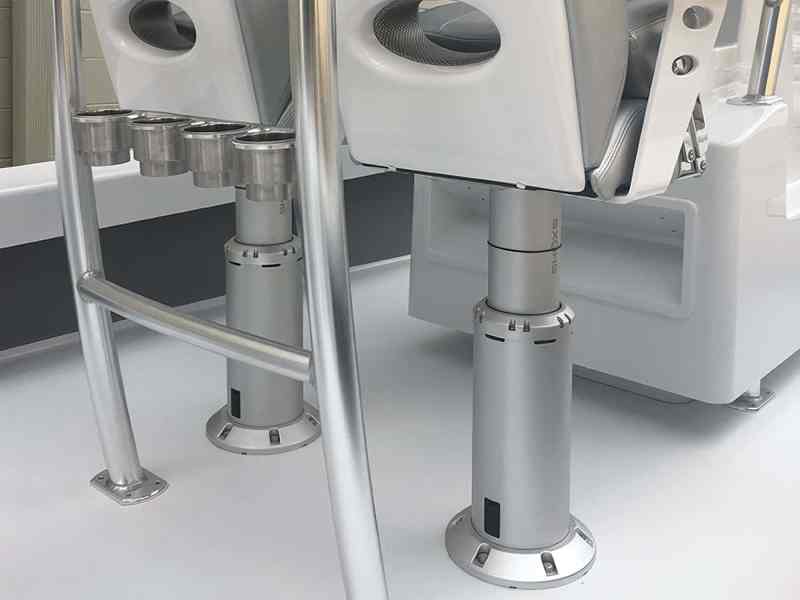
Rough seas take a toll on the spine, and it’s no wonder captains tend to have chronic back issues. Shock-mitigating seats absorb punishing forces so your body doesn’t. Companies like Seaspension make replacement pedestals that give like shock-absorbers when a boat hits a wave. Pedestals start at $850. Shox builds seats for military assault boats and also offers Helmcaster and Saltcaster suspension seats, available as options on Solace and Everglades boats. The seats are installable on most boats. An emerging market is suspension-seat options on Texas-style mega skiffs like the Simmons Revolution 25, which is smart because flat-bottomed boat hulls pound mercilessly when seas run over a foot in height.
Helm Pads
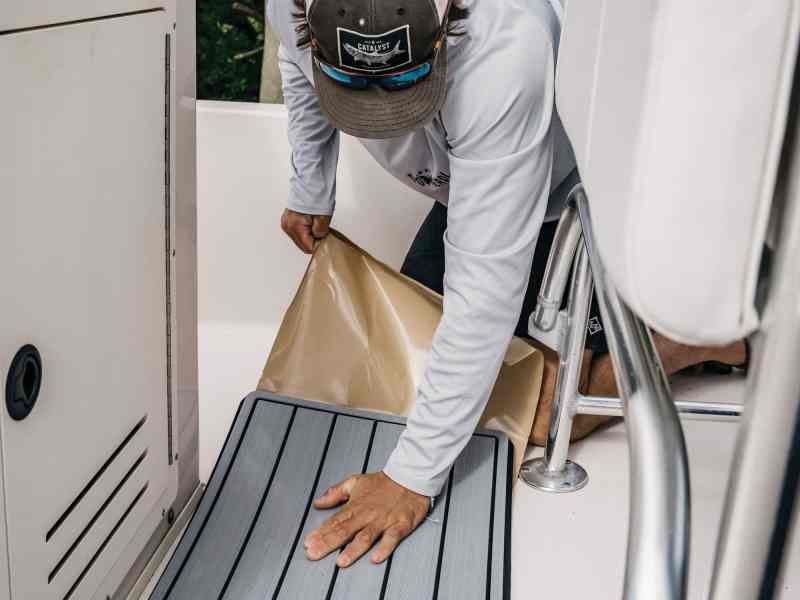
The least expensive option for improving comfort at the wheel is to add a helm pad, which starts at $80. Most quality pads feature twin-density foam and thicknesses that average 3/4 of an inch, with some more than an inch thick, often available as options on new boats. Look for pads that have beveled edges to reduce tripping hazards. SeaDek, GatorStep, and DEKit not only provide full-deck padding, but also offer thicker helm pads in a wide variety of colors and engraving options.
Autopilot
For long-hauls across open ocean, most skippers stand for hours to drive because sitting on the center console helm seat puts the driver’s hands too far away from the wheel and throttle. Some steer with their feet, but it’s not practical if wind-waves kick up. Autopilot lets the driver remain comfortably seated with hands off the wheel while it accurately guides them to their destination. When trolling, autopilot is like having an extra deckhand.
Risers
Vertically challenged skippers often spend time at the helm en pointe, like a ballerina, peering over tall center consoles. Some boats also feature a lot of bowrise when getting on plane, which can leave the skipper blind for a few seconds. Fortunately, there’s a fix called a riser that’s is available on boats from Boston Whaler, Pursuit, Scout and Tidewater, which flip down to give the driver an extra 4 to 6 inches of height. There are also plenty of aftermarket companies that offer risers, but look for models that can flip out of the way or can be stored easily when not needed. Adjustable-height pedestal seats also accomplish the same effect.
Steering Wheels
Most helm wheels are stainless steel, which can get uncomfortable to hold onto in cold weather. A plastic wheel is warmer, but often looks cheap. Higher-end alternatives include wood and carbon fiber, which can cost thousands of dollars. Rubber-coated wheels offer good grip and feel warmer at a more affordable price. The newest trend is paracord-wrapped wheels from companies like Gemlux and Edson. A less expensive option is to buy paracord from Home Depot for $7 and wrap it yourself. Also, you can add a spinner knob to make tasks like docking easier.
Air Conditioning
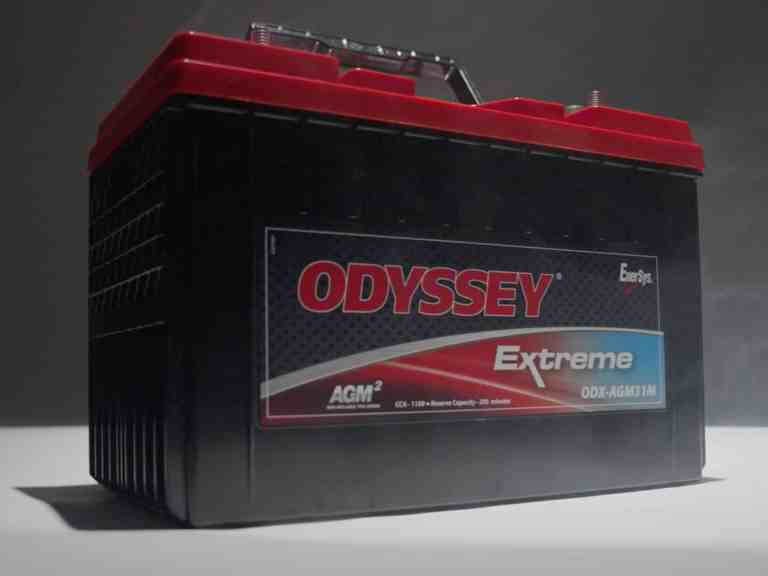
The first time I saw air-conditioning vents on the dash of a Scout 350 Abaco, my first thought was, “What a waste.” Then, as the Bahamian day grew hotter, I discovered how refreshing it is to have a blast of cold air on your face. Some boat builders have also added vents in seatbacks for extra cooling. For boats without generators, there are 12-volt A/C units that run on battery power, but their runtime is limited if the main engines are not running. Adding solar panels helps keep batteries charged, and using lithium-iron-phosphate house batteries allows boating anglers to run batteries well below the 50 percent discharge recommended as the max drawdown for conventional lead-acid batteries. Newer outboards like Mercury’s Verados have high-output alternators, which help keep batteries charged and the A/C unit running.
By making the helm as user-friendly as possible, anglers are more refreshed, alert and ready to fish at their best.