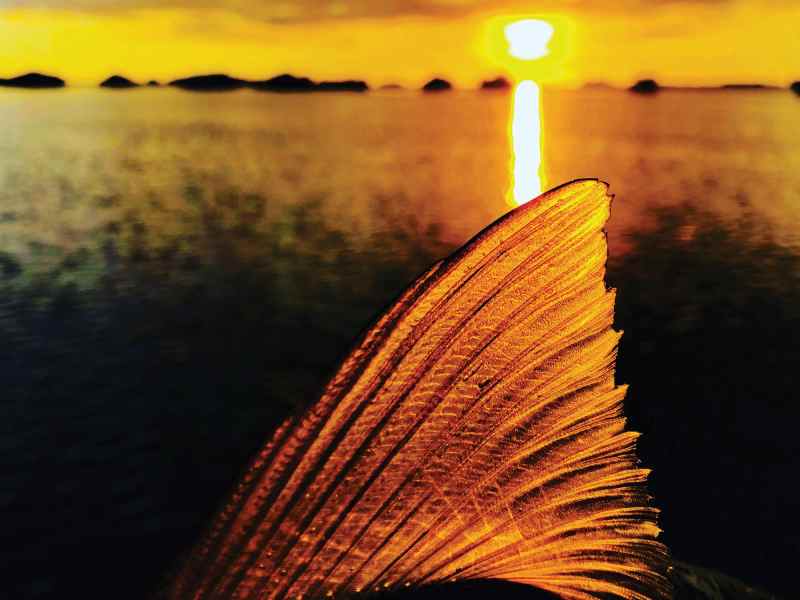
It’s no coincidence the country’s largest cities are in coastal fishing hotspots. The confluence of fresh water and salt water attracts fish and people. Over the past couple centuries, as human population increased, fish populations decreased. But after years of conservation, cities like Boston, Baltimore, Tampa, San Diego, Honolulu and more host phenomenal urban fisheries. Today, serious anglers looking to challenge their skills can satisfy their fishing passion without leaving town.
Beantown Bruisers
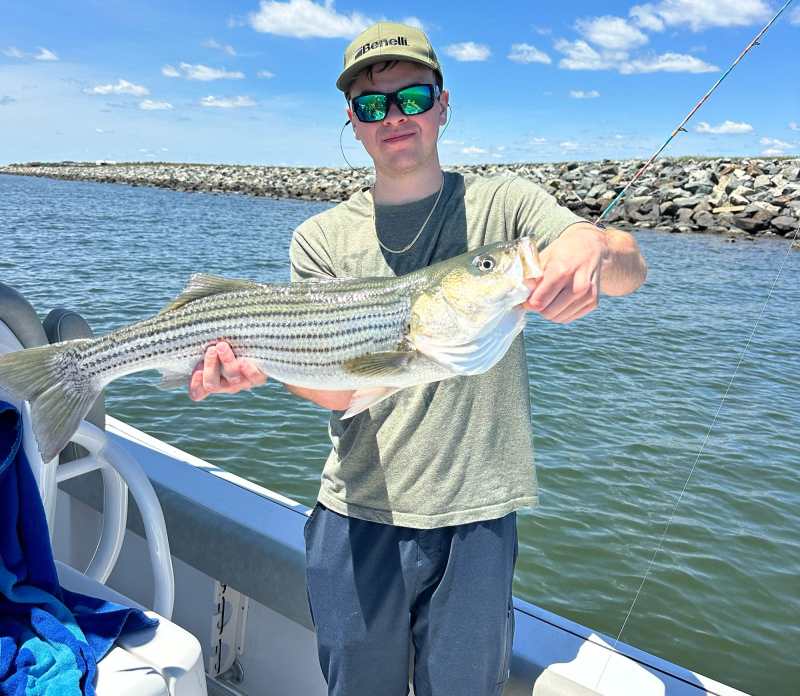
“Boston is full of fishy areas, but the best spots are not easy to access,” Eric Harrison admits. Harrison has been commando fishing around Boston Harbor for decades. “I’ll tell you where I catch striped bass, but I won’t tell you where I park my car,” he jokes.
Harrison is on a streak catching a striped bass every month of the year. “There is a squad that fishes for striper through the coldest months,” he says.
The best strategy is driving the coastal roads looking for diving birds and feeding fish. If he doesn’t see action on the surface, Harrison finds moving current and structure. “Anywhere you can access the water, you have a chance of catching a big bass,” he says.
For shore-based anglers to achieve good casting distance, Harrison recommends a 9-foot rod and 5000-sized reel spooled with 40-pound-test braid and a shot of 40-pound fluorocarbon leader. In a kayak or boat, use a similar-sized 7-foot version. “Fancy plugs are popular, but I catch most of my fish on a 7-inch straight-tail soft plastic or a swimming plug.” He also likes walk-the-dog topwater lures to search for fish. “Topwater lures are a 10-percent solution,” he says. “If a fish swipes at the lure, I know more fish are in the area.”
The rocky shoreline, city lights and confluence of rivers and sea make Boston one of America’s fishiest towns.
Charm City Rocks
Targeting striped bass with a jerk bait in the shadow of Fort McHenry and the Francis Scott Key Bridge is the definition of gritty fun. Capt. Chuck Hill of Chill’s Light Tackle Guide Service in Baltimore, Maryland, paints the picture: “All of the seawalls, docks, jetties and bridge pilings hold rockfish,” he reveals.
Hill says the fishery is easy to access with abundant launch ramps and shore access. Fort Armistead, Fort McHenry and Hart Miller Island are a few of his favorite spots. He likes to fish the first few hours of the outgoing tide as the fish stage to intercept bait flowing out of the rivers.
Baltimore is a year-round striper fishery. “During summer, I use live spot or perch on a fish-finder rig,” he says. Spring and fall are Hill’s favorite seasons. “I switch to fishing light tackle and artificial lures,” he explains. In winter, resident striped bass in the Patapsko River eat jerkbaits, jigs and topwater lures. “My favorite lure is a Strike King 10K KVD,” Hill says. The jerkbait is available in deep- and shallow-diving versions to match the water depth. To fish deep holes, he switches to a ⅜-ounce jig and 4.75-inch KVD Shadalicious soft plastic. “If you fish those lures, you will eventually catch stripers,” Hill guarantees.
Cigar City ’Poons
Jose Chavez designs lures for Z-Man, but he cut his teeth underground fishing Tampa Bay. “There’s a hard-core group of anglers who chase tarpon from the piers and passes,” says Chavez.
Tarpon are available year-round, with the best action in early summer. “If you can’t catch a tarpon in May and June, you should take up golf,” Chavez jokes.
He explains that abundant public access makes the area prime for urban anglers. “The Skyway Bridge is the longest fishing pier in the world,” Chavez points out. Tarpon stage on the bridge pilings waiting for bait to flush through in the current.
The key to catching tarpon is letting the lure sweep naturally in the current. “As the current fluctuates through the tide, the fish will stage at different depths,” Chavez says. He reads a current eddy and lands his lure so it sweeps through the strike zone.
Chavez says a tarpon bite is unmistakable. “The fish destroys the bait,” he marvels. The huge silver fish jump and flip, putting on an amazing show. The only hope for victory is applying steady pressure to stop the tarpon. “Too much pressure, and the fish will turn and run the other direction,” Chavez warns. He says the balance puts the fish in a standstill, limiting its oxygen consumption until it tires and gives up the fight.
Chavez admits tarpon fishing is a challenge. “I went a long time between hook ups, but I learned something new every time I caught a tarpon,” he says. Tampa’s easy access and abundant tarpon put one of the world’s greatest sportfish in reach of urban anglers.
Read Next: Urban Tarpon on Fly
Daygo Beaches
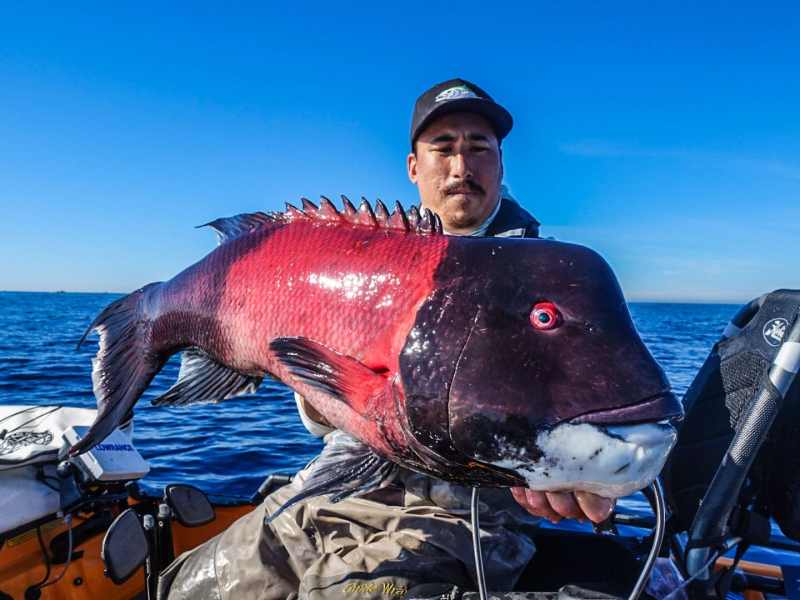
Just like the surf and skate scene, the Southern California fishing scene has a soulful vibe with die-hard anglers pushing the envelope to target trophy fish. Howie Strech, product manager at Newport Vessels, says local anglers looking for a challenge can target halibut, California yellowtail, white seabass and California sheephead along the city’s famous beaches. “Some of the best fishing is swimming distance from shore,” he says.
Some of the best fishing coincides with the squid runs, usually in the colder months, when spawning cephalopods flock to inshore
waters. One strategy is driving along the coast looking for squid boats working close to shore. “When the squid show up, it’s lights out fishing,” he says.
On the water, he uses electronics on his kayak to find bait and fish. “My whole day is defined by the bait I catch,” he says. He rigs his live bait on a weightless line to slow troll. When he marks fish deep, he switches to a live bait on a three-way rig.
When Strech marks actively feeding fish, he switches to metal lures he can work on the surface, mid-water column or dropped deep.
Fishing is relatively simple, but Strech says the devil is in the details. “Don’t try to know everything,” he says. “Perfect a couple techniques then add to that knowledge.” It’s the challenge of chasing trophy halibut, yellowtail, white seabass and sheephead that draws city anglers onto the water.
Emerald City Salmon
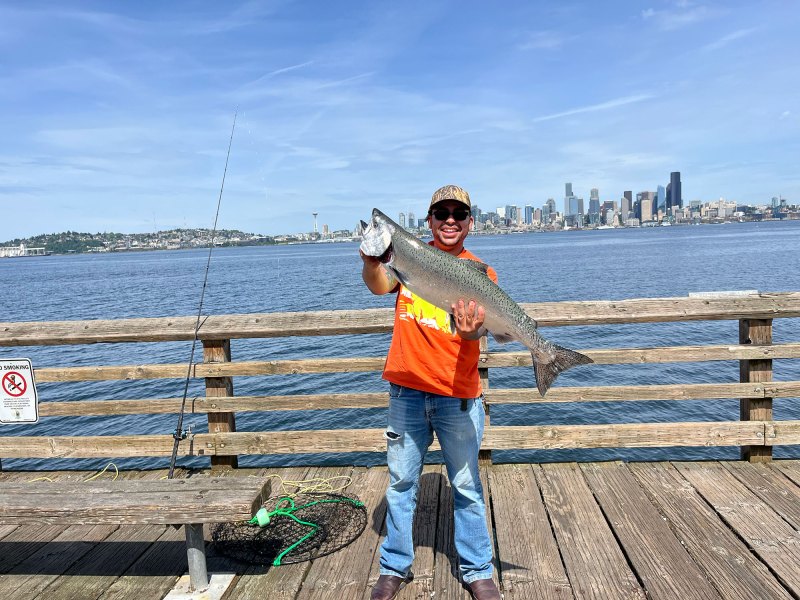
Brad Hole, a social media influencer @kayakfishingwashington, has explored the waters surrounding Seattle, Washington, for everything from crappie to squid, but salmon rule the city. “We’re a salmon state, everything else takes a back seat,” he says.
The city offers opportunities to target king, coho and pink salmon. “There are piers and shore fishing all around the harbor and tons of access for kayaks and small boats,” he says.
King salmon are hard to catch, but they pull hard and taste great,” he says. He suggests fishing early in the morning when the big fish hunt the shallow shore areas. Land-based anglers who fish hard can expect to catch a dozen fish.
For a better chance at action, Hole suggests targeting pink salmon when the fish return to the rivers. “The migration only happens every other year,” he points out.
Anglers line the shore and piers to fish for salmon. Hole recommends a medium-heavy, 8-foot rod spooled with 30-pound-test braided line and 40-pound fluorocarbon leader to cast a 2- to 4-ounce Buzz Bomb.
The biggest challenge to fishing for salmon is navigating the fishing regulations. “Our fishing guide is a half-inch thick,” Hole says. Downloading the smartphone app is the best way to stay current with the rules.
Each year, millions of salmon pass Seattle as they return to their native rivers, and the city’s anglers are perfectly positioned to meet them.
Big Pineapple Bones
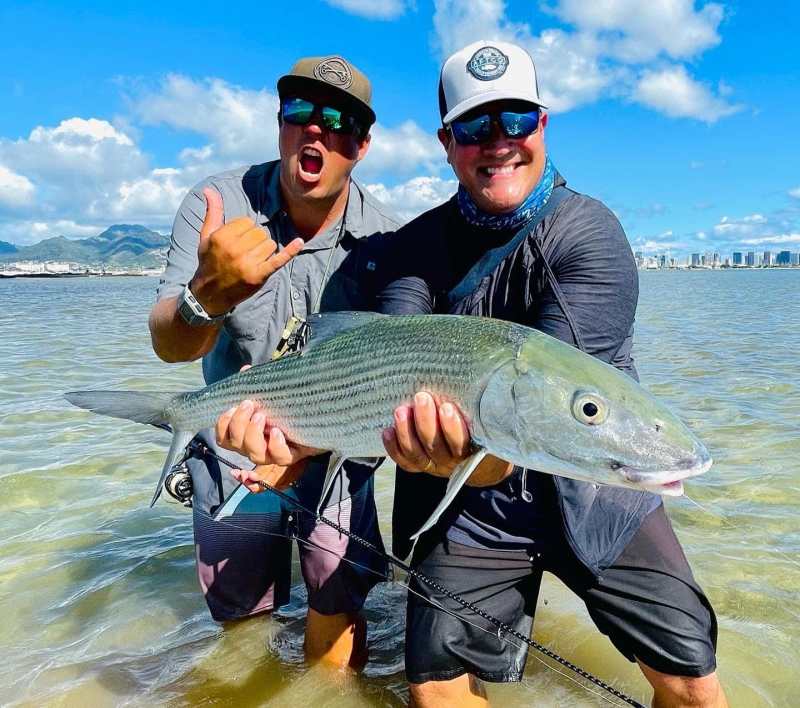
Honolulu, Hawaii, is a paradise for tourists and local anglers. In addition to white-sand beaches and lush green mountains, the city offers world-class flats fishing. Capt. Chris Wright of Aloha Fishing Hawaii has produced IGFA World Records within sight of the famous Diamond Head beach. “We have tons of places where you can drive up and walk out into the water for the world’s biggest bonefish,” he says.
The key to the bite is playing the tides. “At low tide, the water clears and I can see the bones tailing in the shallows,” he says. He has dialed in spots that produce at different tide stages. “The tide may only be right for 30 to 45 minutes,” he says.
To sight fish for bones with spinning gear, Wright uses a medium-action setup, 20-pound-test braided line and a long leader of 15-pound fluorocarbon. The business end is occupied by a Cranka Crab lure.
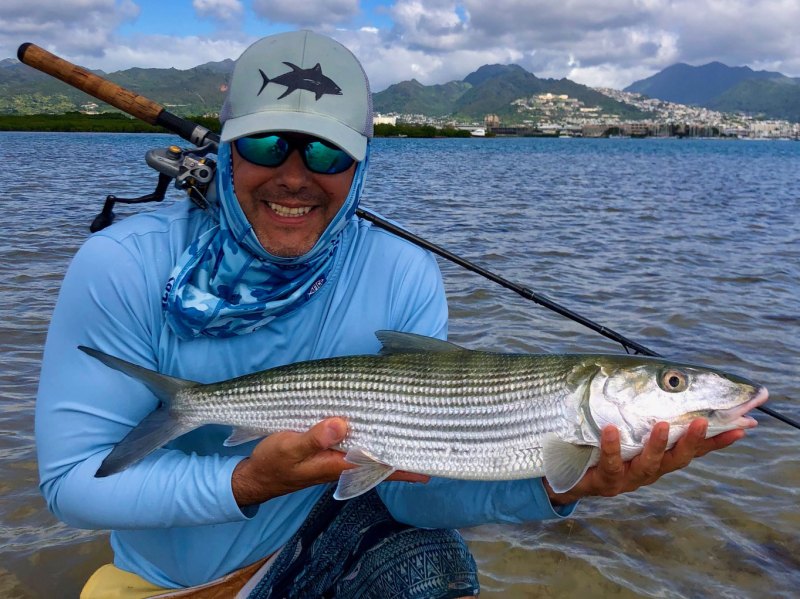
Targeting bones with fly gear presents a greater challenge. Wright recommends a 7-weight rod, sinking line and a 12-foot leader of 15-pound test with a Crazy Charlie crab imitation. “Work it slow along the bottom or you’re not getting bit,” he says.
Other than rod and reel and a few lures, anglers only need a good pair of neoprene wading shoes with felt soles. Wright insists on a stealth approach when stalking bonefish on the flats. “You have to walk hella slow, don’t wear bright clothes, barely move, make no noise,” he advises.
Wright says the extensive flats surrounding the islands allow local anglers to explore endless opportunities to target world-class bonefish. “Get the sun and wind behind you and go for it,” he says.