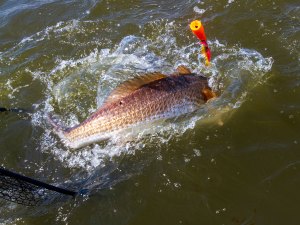

Few fish carry greater esteem than the big chrome-sided croakers swimming in the Pacific waters off California. These close relatives of spotted seatrout are called white seabass, and though they can reach 60 pounds or more, many caught by anglers are 12- to 25-pound fish that measure closer to the state’s current 28-inch minimum size limit.
That minimum size has stood for 95 years, based on a study by fisheries managers that took place in the 1920s that indicated most female white seabass have already reached spawning maturity at this length.
Fishery science has advanced quite a bit in past 100 years, and so the Pfleger Institute of Environmental Research (PIER) in Oceanside, California, undertook a fresh study. PIER began in 2005, and the findings were released in 2024. PIER is a nonprofit dedicated to “bridging the gap between scientific research and fishery management” with the goal of providing “responsible solutions for both resource managers and coastal fishing communities.”
Rather than bog you down with minutiae (you can do that yourself by visiting pier.org/project/white-seabass), I will deliver the upshot: About half of female white seabass reach spawning maturity at 35.5 inches in length, according to the findings. At least one independent marine biologist has told me that the PIER data is “pretty hard to dispute.”
The PIER study will likely play large in the California Department of Fish and Wildlife’s annual White Seabass Fishery Management Plan for 2026. The California Fish and Game Commission is expected to receive the plan this spring, and it could possibly include recommendations for regulatory action.
The PIER findings open a big can of worms, not only for anglers, but for the resource. This is especially true if the Commission eventually votes to increase the minimum size limit for recreational-caught white seabass with the objective of ensuring females have a chance to spawn at least once.
Here’s the rub: With the current minimum size of 28 inches, it’s quick and easy to delineate and release a short fish. You can usually shake them off or at least keep them in the water while extracting the hook, which is important given the delicate nature of these croakers. However, a manhandled fish—even one just held up for photo—has a high likelihood of dying following release.
Now, let’s imagine for a moment that the Commission decides to increase the size to, say, 36 inches, based on the PIER findings. Challenges posed by this decision would include difficulty in discerning a 36-incher from a slightly smaller one. So, there also might be an associated regulation requiring anglers to carry aboard big landing nets, much like the state now mandates for anglers pursuing California halibut.
OK, a net seems more prudent than a gaff. But consider bending a 35-inch white seabass (an inch short in this example) into a landing net, hauling it out of the water, plopping it down on the deck, untwisting it from the net, removing the hook, and constraining the writhing fish against the gnarly nonskid while measuring for length. White seabass are not built for such abuse. There’s a more than even chance it will roll belly up after release. Even if does swim away, in a weakened condition it will immediately become vulnerable to a gauntlet of predatory California sea lions.
Read Next: Targeting White Seabass Along the Channel Islands
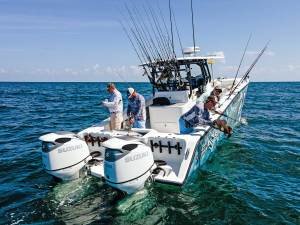
What about just leaving the fish in the water while taping it out? That works if you have a low-freeboard boat or a big swim platform. But California party boats—which land the great majority of white seabass—possess very high freeboards, so that method won’t work for them. Besides, if you hold a white seabass in the water for any length of time, a toothy sea lion will likely snatch it away. You’ll be lucky to escape with all of your fingers. Pity the fish.
Given the high mortality rate for poorly handled fish, increasing the minimum size limit—ostensibly to help the population—may well do more harm than keeping the minimum size as is. This represents the kind of negative consequences the California Fish and Game Commissioners will need to carefully explore and ponder. I hope they make the right choice.