There are regionally recognized fishing slams, like a catfish slam, and deprecating slams, like the trashfish slam, but the International Game Fish Association (IGFA) recognizes five official Saltwater Grand Slams: Billfish, Offshore, Tuna, Shark and Inshore. The organization awards anglers who catch three, four or five designated species in a day with a certificate and listing in their annual World Record Game Fishes publication.
The awards and recognition are icing on the cake. Next-level anglers consider catching multiple trophy species in one day the ultimate test of patience, strategy, skill and luck. For the best shot at scoring an IGFA Grand Slam, head to one of these destinations.
Inshore Slam
- Qualifying Species: Bonefish, snook, cubera snapper, tarpon, permit, pompano, giant trevally, roosterfish, bluefin trevally, milkfish.
- Destination: Cudjoe Key, Florida.
- Best Time: April to September.
- Combination: Bonefish, tarpon, permit.
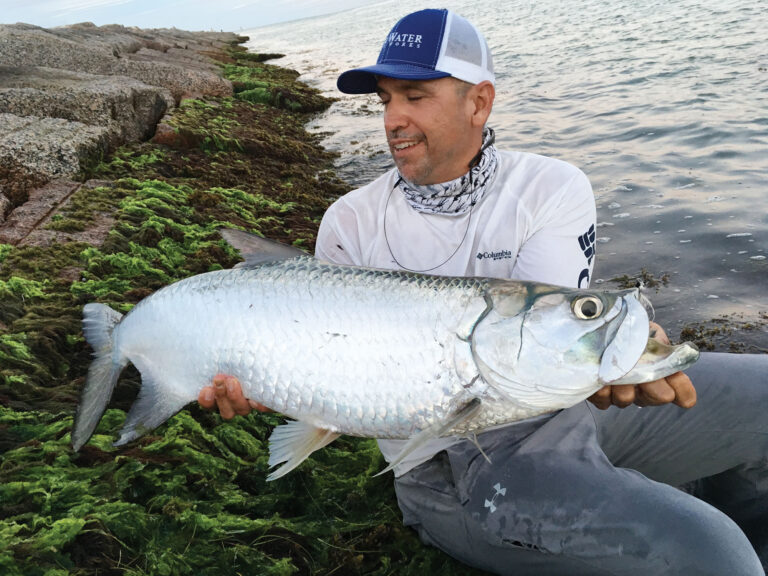
Capt. Pat Bracher has guided anglers to 1,399 IGFA Inshore Slams. “I like to mix it up,” he explains. His location in the center of the Florida Keys and focus on versatility put Bracher in prime position to score the big three backwater trophies.
“My routine is the same,” Bracher says. He starts each day at 5:30 a.m. fishing deeper channels for tarpon. Some days he gets lucky and scores the permit while he’s soaking crabs for tarpon. “The best time to catch a tarpon is from dawn to 9 a.m. Then we go looking for permit and bonefish,” he says.
“There are flats that favor permit and flats that favor bonefish,” Bracher says. He uses his detailed notes on moon phase, tide and current to choose the most likely location to find his next target. The best bites coincide with the new and full moons on the stronger tides. “Depending on the conditions, I can find current on the ocean side or Gulf side,” he adds.
Bracher searches the flats casting shrimp at bonefish and small crabs to tailing permit. When the sky is cloudy and visibility is low, he stakes out his boat and waits for the fish to find his baits.
Scoring a three-fish slam tests Bracher’s knowledge, skills and patience. On a great day, he scores five slams: five tarpon, five bonefish and five permit in a single day.
Offshore Slam
- Qualifying Species: Billfish, dolphinfish, tuna, wahoo.
- Location: Ocean City, Maryland.
- Best Time: August and September.
- Combination: White marlin, dolphinfish, yellowfin tuna.
The list of IGFA Offshore Slams covers the globe and represents the best fishing destinations on earth, but Ocean City appears on the list more than any other US port. “Ocean City is in range of a half-dozen offshore canyons, giving anglers a shot at a wide range of species,” explains Jeremy Duffie, a member of the Billfisher team that won $3.9 million in the 2025 White Marlin Open. “We’ve caught slams many times,” he says.
Late summer and early fall bring eddies of warm water spinning along the continental shelf. In fall, pelagic fish ride the eddies south to spend the winter in warmer climes. “Our primary focus is white marlin, but dolphin and tuna are always an option,” Duffie says.
The Billfisher crew trolls four 20-pound combos pulling small ballyhoo on circle hooks. To attract fish to the spread, they add two squid-chain teasers and two dredges. Duffie says they start the day at the edge of the canyon looking for white marlin along a water temperature or color change.
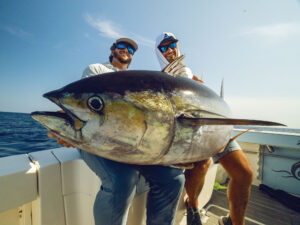
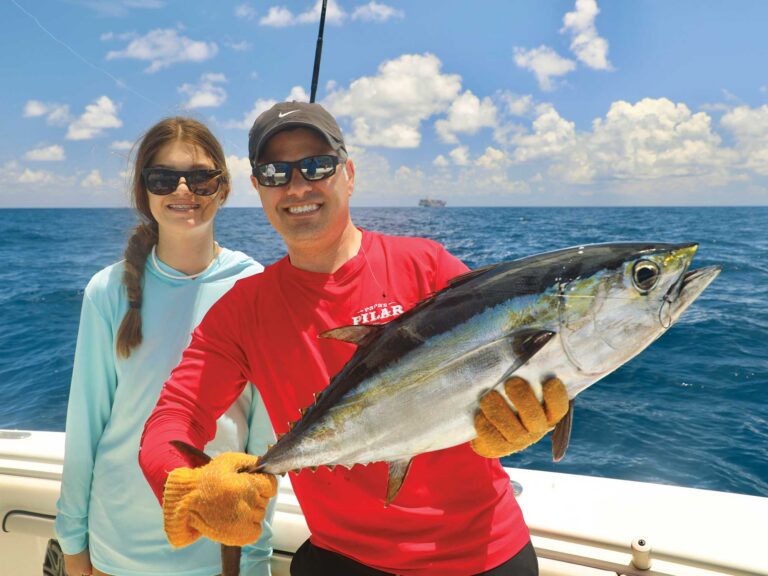
To find yellowfin, they troll the same spread across the canyon. “Tuna love a dink bait on 40-pound fluorocarbon,” Duffie says. Battling a 60-pound yellowfin on light tackle is a welcome interruption to white marlin fishing.
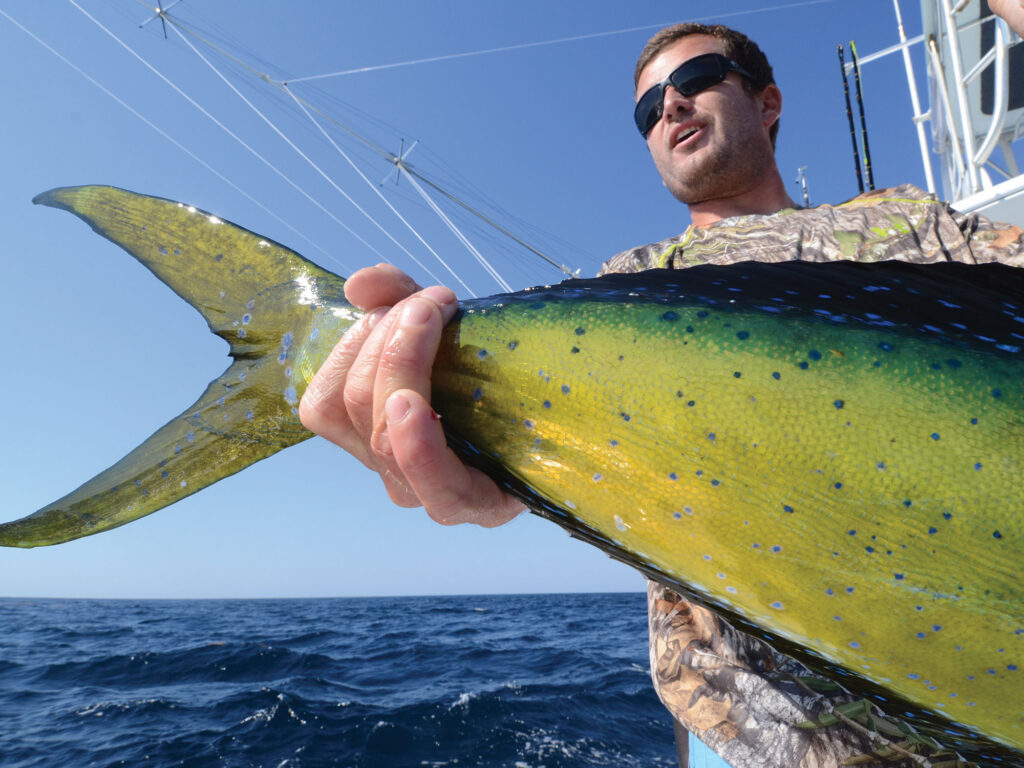
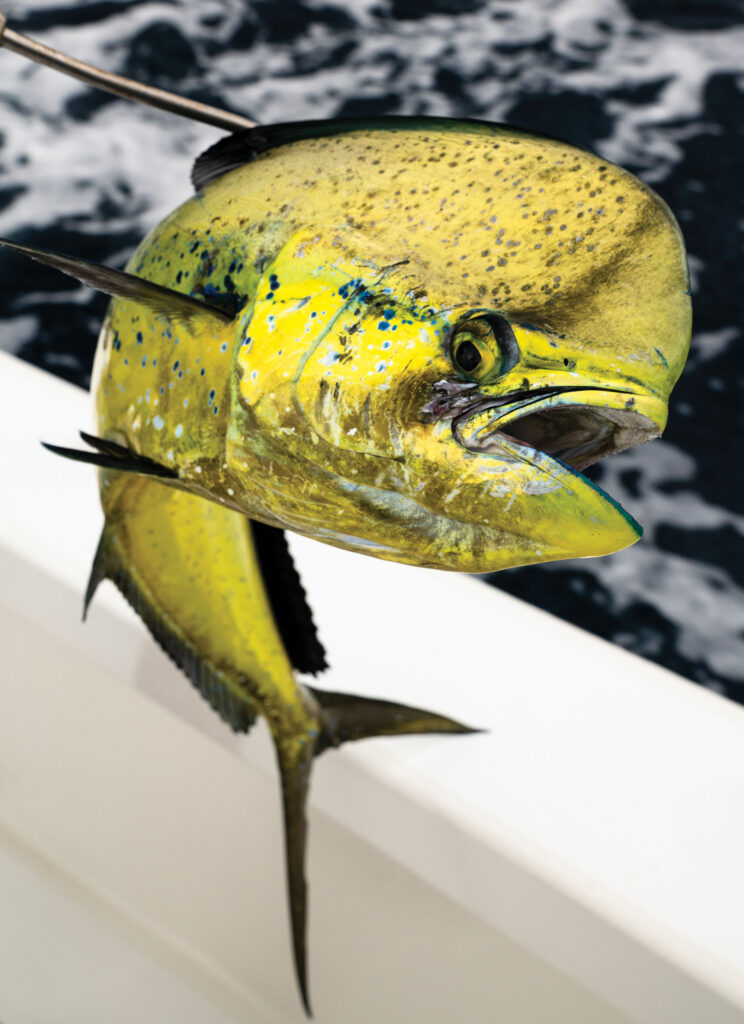
With a tuna and billfish in the books, they turn to lobster-pot buoys that hold dolphinfish. A couple passes with the ballyhoo rigs is all it takes to entice the gold-and-green fish to play.
Duffie recalls a day the crew was fishing the Baltimore Canyon. “As soon as we arrived, we saw a giant blue marlin eating dolphin,” he remembers. The team caught four white marlin and a 30-pound dolphin. When the boat trolled across the canyon, the spread was whammied by a pack of 50-pound yellowfin tuna. “The kids had a great time,” he says.
Shark Slam
- Qualifying Species: Blacktip, blue, bull, hammerhead, mako, porbeagle, thresher, tiger, tope.
- Location: San Diego, California.
- Combination: Mako, blue, hammerhead, thresher.
- Best Time: April through September.
For Capt. Conway Bowman, targeting an alpha predator flips the script. “I’m not the top of the food chain,” he points out. “The shark is hunting me,” he says, only half jokingly.
Shortfin mako and blue sharks are common catches available year-round off San Diego. The third species would be a thresher or a hammerhead. The best shot at scoring a common thresher shark is in April, when the fish move close to the beach to feed on anchovies.
Bowman recommends a bait-and-switch strategy with thresher sharks. “Slow troll a hookless live bait,” he says. “When the thresher attacks the bait with its tail, switch the live bait with a hooked deadbait for the shark to eat.”
The better slam is adding a hammerhead to the mako/blue shark combo. “For blue sharks and makos, I run out past the 100-fathom curve and set a chum slick,” Bowman says. He positions his boat to drift across the drop. To encounter a hammerhead, he starts his drift in La Jolla Canyon. “Hammerhead feed on the same bait profile as tuna and dolphinfish,” he explains.
For Bowman, chasing shark slams adds an extra challenge. “It’s like a sporting event; I have a game plan for the first half and second half,” he says. The plan came together a few years ago when Bowman’s angler scored a mythical slam. “We already caught a blue and mako when a 400-pound hammerhead showed up in the chum slick,” he remembers. Bowman cast a teaser and drew the fish to the boat. When the hammerhead opened its mouth, the angler cast his fly directly into the giant maw. “We fought the fish for an hour and a half. It’s the first hammerhead I brought to the leader,” he says.
Billfish Slam
- Qualifying Species: Blue marlin, black marlin, white marlin, striped marlin, sailfish, swordfish, spearfish.
- Destination: Puerto San Jose, Guatemala.
- Combination: Sailfish, blue marlin, striped marlin, black marlin.
- Best Time: October to December.
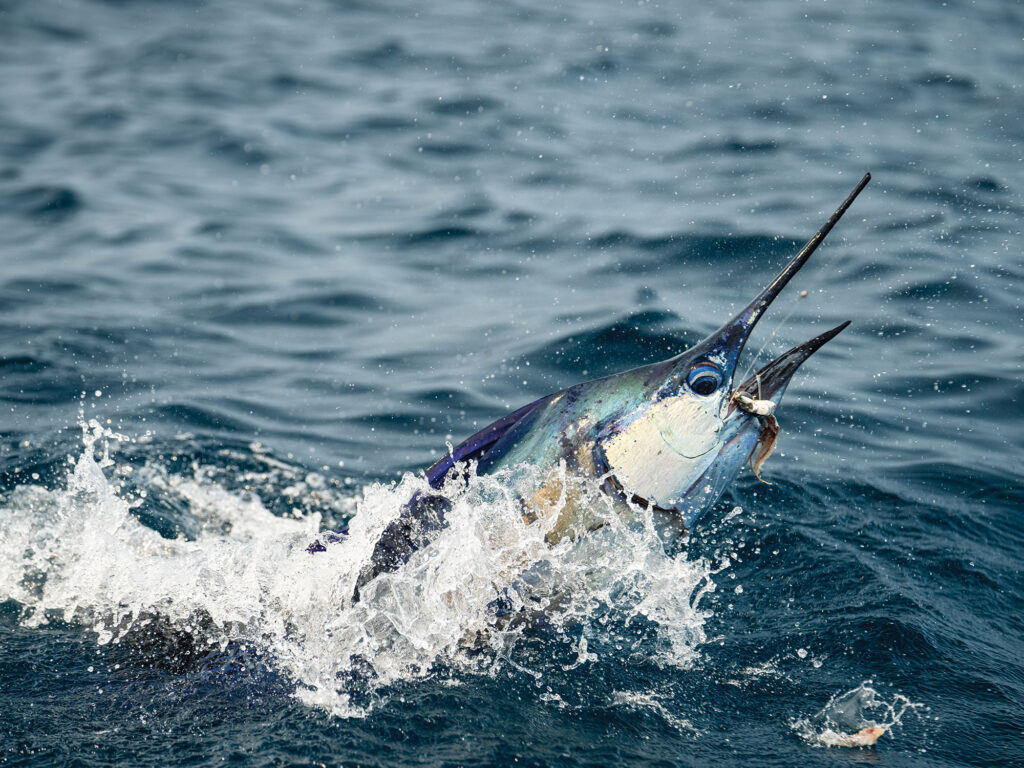
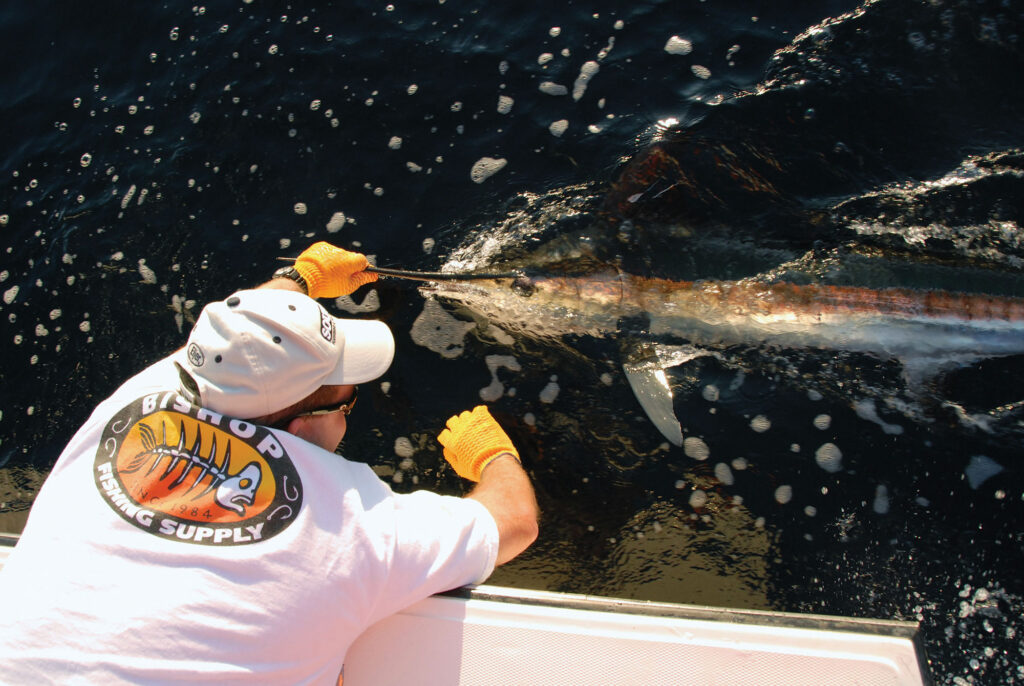
Capt. Terry Brennan has fished all over the world, but he settled at Casa Vieja Lodge in Puerto San Jose, Guatemala. “It’s beautiful, safe and the fishing is great,” Brennan says. Sailfish are the primary target. The captain averages 20 shots a day with 40 sightings on the high side. “Getting the sailfish is a given,” he says.
When Brennan gets lucky and pulls a striped marlin out of the sailfish blitz, he grows excited about the possibility of scoring a slam. “I can head to one of the FADs and live bait for a blue marlin,” he says.
On a recent trip, Brennan had a bunch of sails and a striped marlin when another captain called on the radio to tell him of a tree floating a few miles away. “I ran to the spot, caught a bonita for bait and immediately hooked a blue marlin,” he remembers. After releasing the first blue, he repeated the procedure and quickly bested another blue marlin.
Brennan says a slam is possible year-round, but he sees more blue marlin May to December and striped marlin October to December. “The last three months of the year are the best opportunity to catch a slam,” he says. Another advantage to fishing Guatemala is a less disruptive rainy season. “We don’t have to run 60 miles offshore to find clear water,” he explains.
Guatemala is a great place to learn the billfish ropes. “We have a lot of opportunities to learn how to hook a fish,” Brennan says. “If you miss a bite, no big deal, we’ll raise another sail in a few minutes.”
Read Next: What Can We Learn From the IGFA Great Marlin Race?
Tuna Slam
- Qualifying Species: Albacore, bigeye, blackfin, bluefin, dogtooth, longtail, skipjack, bluefin, yellowfin.
- Destination: Oregon Inlet, North Carolina.
- Combination: Yellowfin, Bigeye, Blackfin.
- Best Time: June and July.
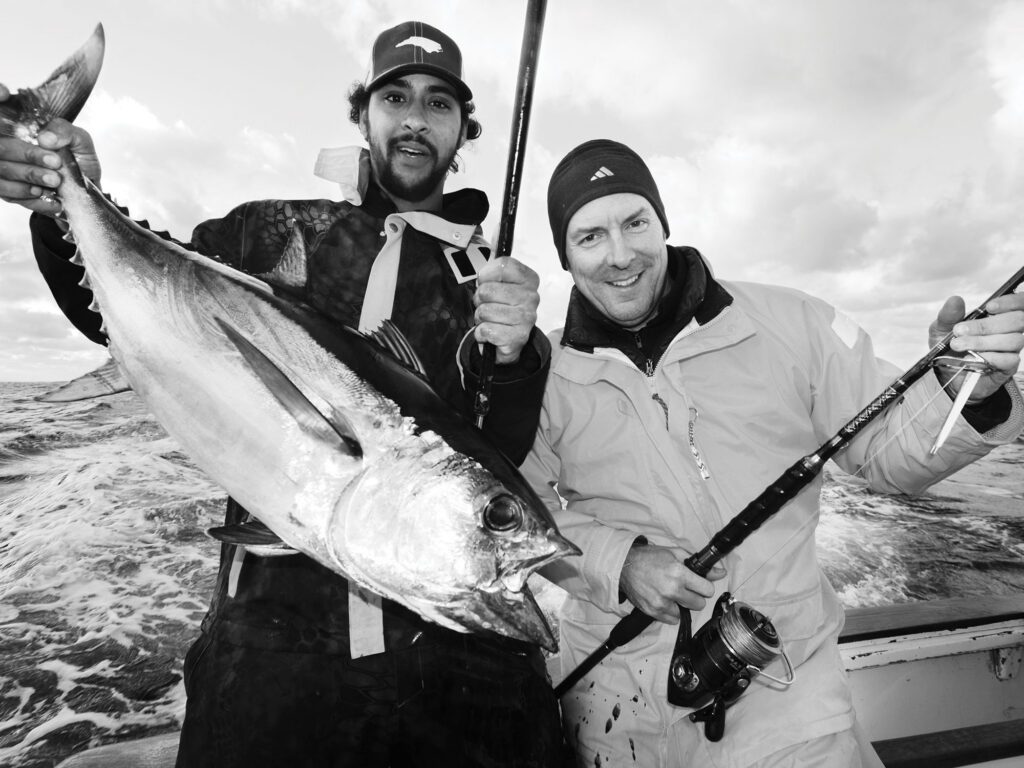
Deep ocean structure and trans-global currents make Oregon Inlet a perfect place to catch a tuna slam. At some times of the year, nearly every species of tuna passes the storied waters of North Carolina’s Graveyard of the Atlantic.
Capt. Billy Maxwell’s aptly named boat Tuna Fever is in the middle of the action almost every day. What is the best time to catch a tuna slam? “The first 10 days in June,” Maxwell says.
Early summer sees ideal water conditions and reasonable weather conditions. Maxwell looks for the Gulf Stream to cross the continental shelf. “Within 45 miles of the inlet, I’m in range of miles of prime bottom structure,” he says.
To score a slam, Maxwell starts his day trolling skirted ballyhoo and spreader bars over a series of seamounts 40 miles east of the inlet. “I’ve switched from 12-inch to 9-inch squids and no bird on my spreader bar,” he says. The smaller squid and lighter bar make it easier to keep his catch away from thieving sharks.
With a mess of tasty blackfin in the box, Maxwell turns south and heads to the infamous Point, an eastward curve of the continental shelf 40 miles southeast of Oregon Inlet. Maxwell trolls skirted ballyhoo and spreader bars over the drops and pinnacles along the edge of the shelf looking for yellowfin and bigeye tuna.
Another opportunity to score a slam occurs from late winter to early spring, when bluefin tuna join the yellowfin and blackfin. Bluefin tend to stick to the cooler side of the temperature break while yellowfin travel the warm side. Blackfin are residents of the lumps south of Diamond Shoals Light.
How to register an IGFA Slam to qualify for a…
- Grand Slam: catch three designated species in 24 hours.
- Super Grand Slam: catch four designated species.
- Fantasy Slam: catch five species.
1. Fill out an online or print application. 2. Pay appropriate fee. 3. Submit to IGFA. 4. Receive an award certificate and appear in IGFA’s annual World Record Game Fishes publication and on IGFA.org.