Over the last decade, an oddball fishery developed on the Gulf Coast of Florida.
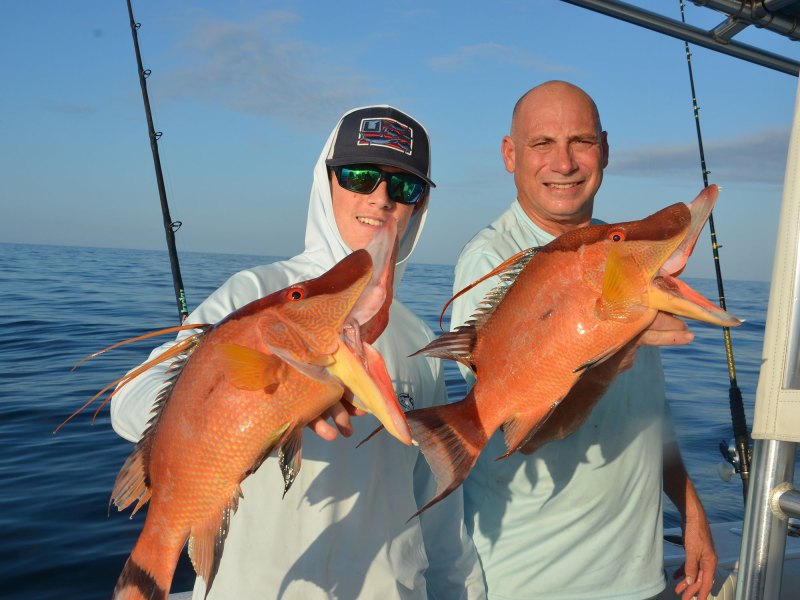
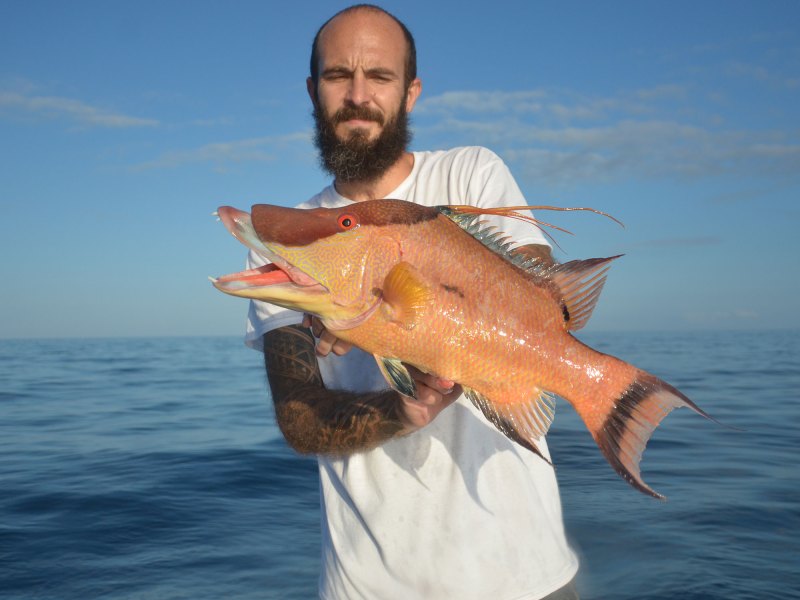
With an epicenter out of Tampa Bay, inquisitive anglers solved the puzzle for catching hogfish on rod and reel. This crazy-looking wrasse is gorgeous, painted up in orange and brown, and yields ultra-white sweet meat that makes it one of the most overlooked and delicious fish in the sea.
Culinary curiosity is what led us to Capt. Joe DePhillips and Reel Lucky Charters. The freezer was almost barren of seafood, and so my 15-year-old son and I found ourselves on a smash-and-grab, one-day meat run to St. Petersburg.
The hogfish bite ramps up in fall and lasts into spring, but DePhillips pinpointed the week of Thanksgiving as primetime. On the front end of the boy’s Thanksgiving break, we set out hoping to bring home something tastier than turkey.
DePhillips is one of the captains who developed the tactics and techniques for this wintertime fishery. He’s put together an itinerary to load coolers with delicious hogfish and yellowtail snapper before going out in search of more meat and adventure. Giant sharks, mutton and cubera snapper, African pompano, groupers and amberjack are some of the species that hunt the wintertime ledges, springs and wrecks off the coast.
It’s an action-packed trip well-suited for kids or anyone who likes consistent action, and you’ll want a few extra hands on deck to put together respectable limits of hogs and yellowtails.
Hog Hunting
DePhillips’ base of operations is O’Neill’s Marina, right on the tip of the Pinellas Peninsula in the shadow of Tampa Bay’s famous Sunshine Skyway Bridge. The massive bridges that cross the bay are lit from below at night, and they glowed an eerie purple as we motored pre-dawn toward the open Gulf. DePhillips said he had laid off of a particular set of numbers in the weeks preceding our trip, and that’s where we were headed.
We came off plane as the sun rose about 9 miles offshore in warm air and glassy seas. Eyes on the screen, DePhillips began the tricky process of anchoring precisely over a small piece of structure at depth while his mate Jonathan Williams readied the rigs.
Fifteen years ago, most fishermen thought targeting hogfish on rod and reel was impossible. Hogs were primarily considered the prey of spearfishers. Their oddly shaped mouths and interesting feeding behavior are impediments to putting a hook in them, but like any fish, you first have to find them to catch them.
A litany of ledges—developed over more than a decade of trial and error and communication with divers and other fishermen—makes finding hogfish easy for DePhillips. He has marks from 7 to 25 miles offshore in depths from 45 to 80 feet. Almost all of his spots are rocky 2- to 4-foot ledges that characterize the gradual slope to depth in this region of the Gulf.
“One year, one ledge will be really, really good and on another year it might just be OK,” explained DePhillips. “But generally, as you learn them, the same ledges year after year will be the ones that hold the hogfish.”
Starting as early as September, these ledges provide hard structure and vertical relief where hogfish gather into harems and spawn through the winter months. A single larger male guards an area with several females, and they feed in the sand around the structure.
Like most wrasses, hogfish are protogynous hermaphrodites. They begin life as females and some transition into males after reaching 14 to 16 inches in length. It is thought this sex change is driven by social cues, meaning someone must do the job if there’s no man of the house. If you catch a 5-pound male off the ledge, the most dominant female in the harem will replace it and become a fully functional male in a matter of weeks.
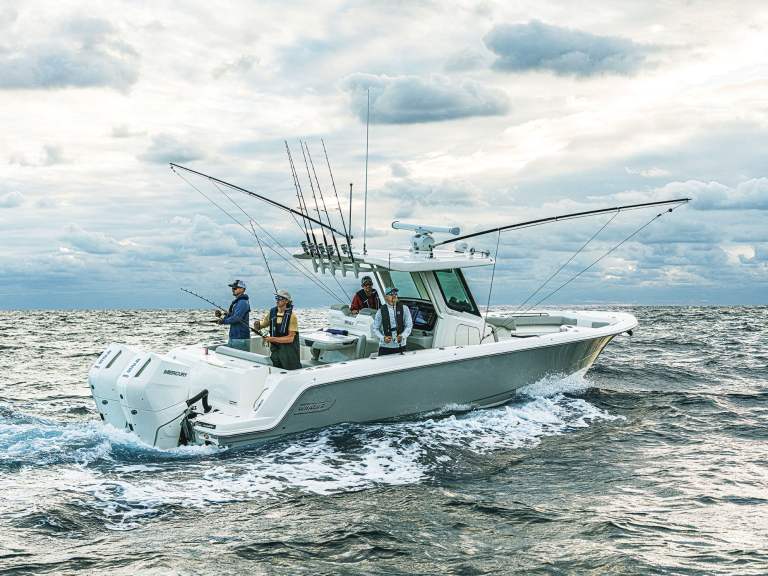
We were in search of those big males, and the contagious optimism of the captain and mate fed the whole crew, including the tiny terrier, Bandit, who perked up from his perch on the console. Joining me and my son aboard DePhillip’s spacious 35-foot Marlago center console were deckhand Justin Curd and angler Dan West. We had three limits of hogfish to fill, which is five per person with a 14-inch fork length minimum.
Hooking a Hog
Once you get the hang of it, catching hogfish is easy. By mid-morning, we were two short of our limit and still catching fish when DePhillips decided this particular ledge had taken enough of a beating. With a big 8-pounder and numerous smaller legal fish in the box, he made the call to “go do something else” when Williams scooped a second 8-plus-pounder into the net with the victorious cry, “that’s a 10-pound hog, boys!” I guess the harem needed a break to make a few more males.
The action had been fast and fun, and included several undersized fish that were sent back to the bottom on a descending device. Which begged the questions: What’s the big deal? Why didn’t someone figure this out sooner?
Well, there’s a little trick to catching hogfish that exploits their peculiar feeding behavior. You’re not fishing for hogfish if you’re just bottomfishing.
Hogfish use their alien-looking snout to root in the sand for small buried crustaceans and mollusks, which they crush up with strong jaws and wicked-looking canines. When I say alien, we’re talking Ridley Scott-style Alien. They have protrusible mouths, which extend forward to dig deep. Eyes down with their nose in the dirt, they suck up sediment, expelling clouds of inedible matter through their gills. If your bait isn’t sitting right on the bottom, a hogfish probably won’t notice it.
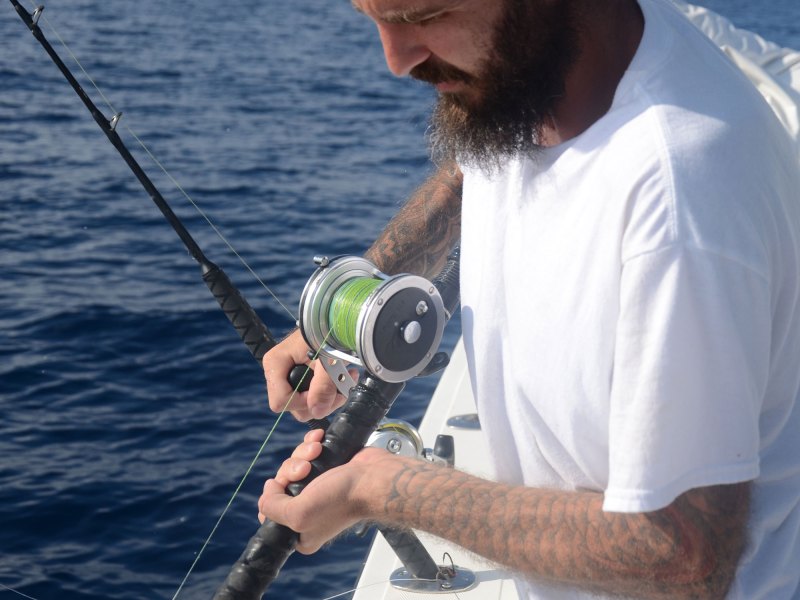
Here’s the hogfish set-up: DePhillips pairs Shimano Torium 20 conventional reels with custom rods he compared to the old Star Rods Kingfish Series. These are medium-heavy or heavy rods with a parabolic bend, meaning they bend evenly from butt to tip. He uses a lot of drag to get hogfish off the bottom, into the boat and away from sharks quickly. The bendy rod reduces jerky motions that might pull the hook.
DePhillips ties 40-pound-test braided mainline to 25 feet of 40-pound fluorocarbon leader with an FG knot. Then he threads on a 2- to 5-ounce egg sinker, and finishes with a 2/0 octopus beak circle hook. Sounds like a pretty standard knocker rig, right?
The trick is in the delivery. The sinker and bait must fall and land on the bottom together. To do this, DePhillips uses as much weight as he thinks he can get away with.
“It’s crucial that the bait and sinker stay together and hit the bottom at the same time,” said DePhillips. “So, if I use a heavier weight, I can put more tension on the spool and make sure that bait is staying with the sinker while still going down at a decent speed.
“If you don’t have that tension as your line’s going down, your bait’s sliding up and away from your sinker,” he continued. “When the sinker hits, your bait might be a foot or two off the bottom and the grunts and porgies and everything else is going to get to it before the hogfish.”
The captain showed us the trick of thumbing the spool to maintain constant contact with the business end of the rig before he dumped double-handfuls of small dead shrimp on the gunwale and set us loose. “After it hits bottom, drop your rod tip and leave about 8 inches of complete slack,” he instructed. This slack allows the fish to suck in the bait and hook without feeling the sinker. Then you just let it sit on the bottom and wait.
“Big Bait, Big Miss”
When my son saw the brown wad of inch-long dead shrimp in front of him, he turned to me with a questioning look. I just shrugged. This looked like bait my cousin and I used to scrounge up as kids to catch gafftop cats off the dock while dreaming of redfish. Our skepticism vanished when fish started hitting the deck.
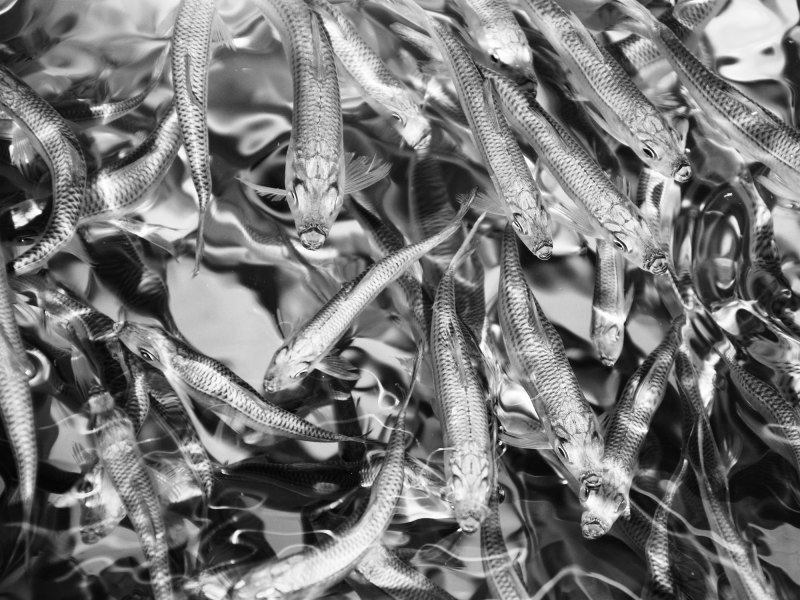
Through experimentation, DePhillips settled on small shrimp as the best bait for hogfish. These are pink shrimp, less than 2 inches in length, head on, with a slim profile. They are readily available to cast-net or buy at local bait shops.
“I don’t even care if they’re alive when I’ve got a hog trip,” DePhillips said. “I’ll buy my shrimp the day before, throw them in a plastic bag and put them in the refrigerator or on ice for the next day.” He also doesn’t shy from freezing leftover shrimp and suspects frozen shrimp have added scent that helps when targeting hogfish. If all he has are larger shrimp, he cuts them into pieces.
Remember, these are fish that root in the sand like hogs in the mud. They prefer a bite-sized meal that doesn’t run away.
Read Next: Gulf of Mexico Gag Grouper Fishing
Spread the Wealth
These hogfish tactics may have developed on the Sun Coast, but hogfish presumably spawn in winter on hard bottom throughout their range in the Gulf, Atlantic and Caribbean. DePhillips said fishermen are already catching on to this bite farther south along Florida’s Gulf Coast, and it’s probably just a matter of time before it catches on elsewhere.
He mentioned an area of the Gulf known as the North Middle Grounds, which is a series of peaks 120-miles out of St. Pete. In his local fishery, 5-pounders are very nice fish, 8-pounders are trophies, and he’s personally caught two 10-pounders over the years. He’s heard reports from the North Middle Grounds of hogfish weighing 12 to 15 pounds or more and is considering making the run.
While 120 miles hardly qualifies as a quick meat trip, the idea of large, pure-white, meaty fillets from a 15-pound hogfish has me salivating. I can now vouch for the culinary value of this species. Let’s just say our meat haul didn’t last long in the freezer.
No Hogballs Needed
If you’ve researched hogfish, you’ve likely encountered a style of jigs known as hogballs. Captain Chappy Hogballs are purportedly the original specialized jigs designed for targeting hogfish. A hogball is simply a ball jig head with a single hook attached via a wire loop, snap-ring or swivel that allows the hook to swing freely. Several brands have variations on the concept with different hardware, including small chains and enhancements like feathers and bright colors. They come in a variety of weights, hook sizes and styles and serve the purpose of putting a small bait on the bottom. As opposed to a rigid jig, the free-swinging hook does a better job of hooking a hogfish’s oddly shaped maw.
DePhillips said he’s experimented with different ball jigs for hogfish and there are a few situations when he’ll use them, but generally he considers them unnecessary, if not less effective than his simple rig.
“The only time I use them is when a client really wants to,” DePhillips explained, before laying out a couple instances when they might provide an advantage. For inexperienced anglers who can’t retain tension on the drop, a hogball delivers the bait directly to the bottom. Similarly, for anglers who prefer spinning reels, it’s difficult to maintain tension with a spinner.
On the Grill
My son and I returned home with a mixed bag of hogfish, yellowtails and vermilion snapper. The hogfish was easy to identify from the mix, with bright-white, chunky fillets similar in color to escolar, which is sometimes marketed as extra-white tuna at sushi bars.
Fish like this does not require complicated preparation. I pressed on a compound butter with some Old Bay and chopped parsley and threw it in a grill basket on a hot hardwood-charcoal grill. Served with a squeeze of lemon, my family enjoyed hogfish that was tender and flaky, with a mild buttery-sweet flavor that had a hint of smoke from the charcoal.
To mix it up, we tried another batch coated with Zatarain’s and fried along with some of the other species from our trip. All of them were tasty, but the hogfish stood out with superior texture and flavor, in my opinion. I’ve heard hogfish compared to scallops and lobster, but I wouldn’t go that far. It tastes like fish, not shellfish. But it is really good fish.