O’five-hundred.
Whether I’m at home or traveling abroad, that’s my wake-up call. It’s a time-honored tradition that gives me a bit of time to settle into the day, and makes everything else work. Here on Turneffe Atoll, rising before first light means quiet mornings, but I’m not the only one who’s up. The staff at Turneffe Island Resort is already busy preparing trays of coffee to deliver to each guest room.
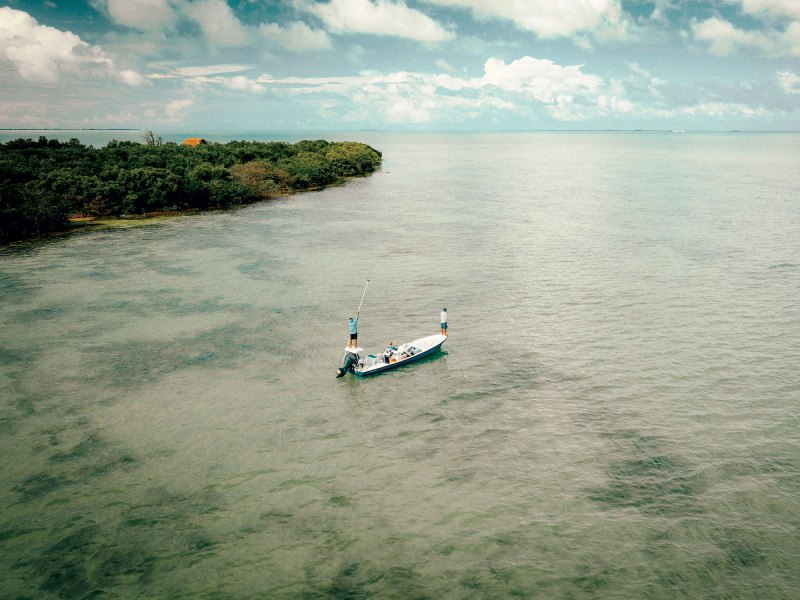
On these early mornings, the Caribbean feels impossibly still. In a few hours, guides will be scanning the horizon from poling platforms with practiced calm while anglers stand poised on the bow of a Dolphin Super Skiff, fly line coiled at their feet, waiting for that one shot that makes saltwater fishing so addictive.
Belize has long been one of the easiest gateways into tropical saltwater fly fishing for American anglers. Direct flights from many U.S. cities put travelers in Belize City in just a few hours, and from there the country’s flats are surprisingly accessible. Yet even among Belize’s storied fisheries, Turneffe occupies a special place. Remote enough to feel wild but comfortable enough for couples and families, Turneffe Island Resort has spent decades introducing anglers to the thrill of Caribbean flats fishing while simultaneously building a reputation as one of Belize’s premier luxury escapes.
A Legendary Caribbean Fishery
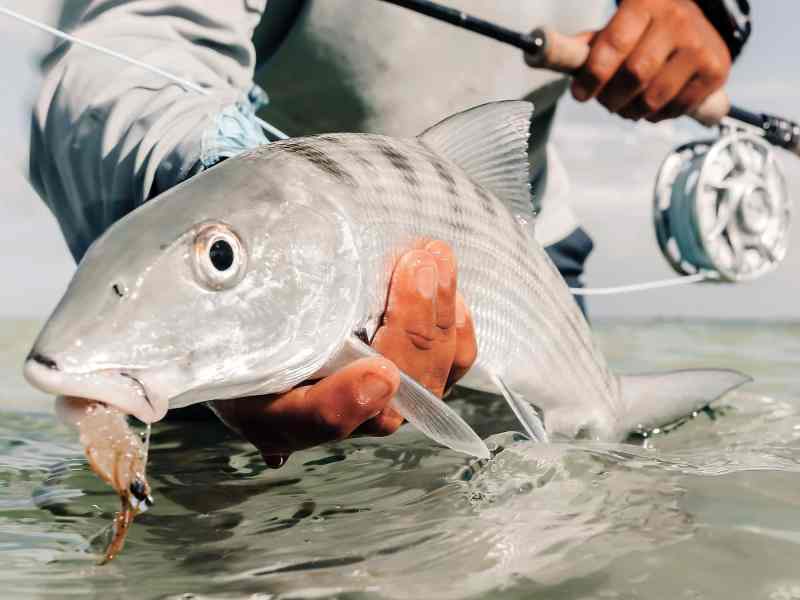
Located on the southern end of Turneffe Atoll, the resort sits in the middle of one of the most productive marine ecosystems in the Caribbean. The atoll itself is a maze of coral islands, mangrove lagoons, channels, turtle grass flats, and reef systems that create ideal habitat for the big three of saltwater fly fishing: bonefish, permit, and tarpon.
For many visiting anglers, permit are the headline act. These famously difficult fish cruise the white sand flats and turtle grass edges with maddening unpredictability, demanding accurate casts, patience, and no small amount of luck. Turneffe draws experienced saltwater anglers eager to test themselves against one of fly fishing’s ultimate challenges, with the understanding that, well, permit will be permit, and more often than not they choose not to cooperate. It’s just part of the saltwater game.
But Turneffe is not solely a destination for experts. In fact, it may be one of the best places in the Caribbean for newcomers to learn saltwater fly fishing. Bonefish are abundant across the atoll, providing fast-paced action and frequent opportunities to develop casting skills and line management in real-world conditions. Few experiences engage first-time saltwater anglers faster than watching a school of bonefish flicker across a flat toward a well-presented shrimp pattern.
Tarpon round out the fishery, with migratory fish appearing seasonally alongside resident juvenile tarpon hidden deep within the mangrove systems. Depending on the season and conditions, anglers might encounter anything from acrobatic “minis” to fish well over 100 pounds. Historically mid-to-late April through October are when the larger fish come around, and anglers specifically seeking large tarpon often aim to visit in June, July, or August. The weather is hot—sometimes downright sweltering—but the fishing can be well worth it.
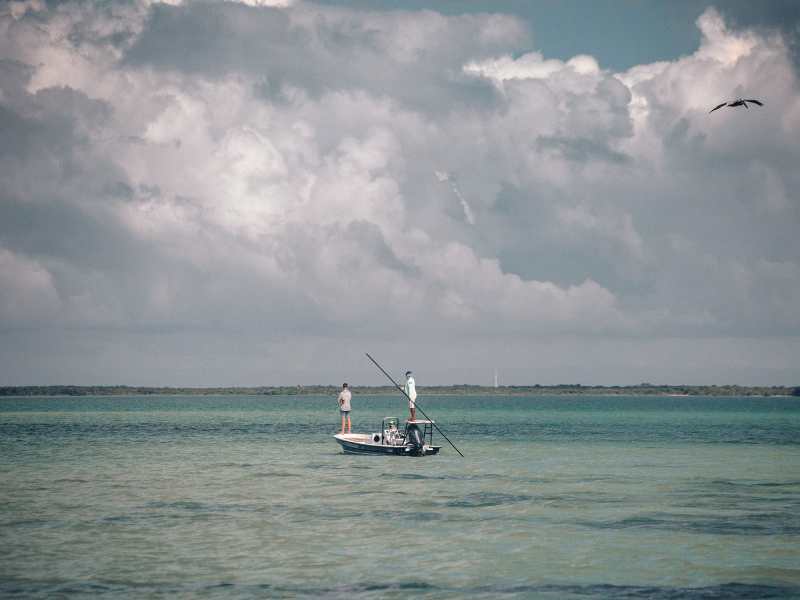
One of Turneffe’s greatest strengths is the diversity of fishing styles available in a single week. Some days are spent wading firm white-sand flats, carefully stalking tailing fish in ankle-deep water. Other days involve covering water by skiff, scanning for cruising permit or rolling tarpon while guides pole silently through the mangrove creeks. The variety keeps each day fresh, and it allows guides to adapt to weather, tides, and angler ability.
Importantly, the fishery also lends itself well to mixed groups. Hardcore anglers can spend their days chasing permit while beginners enjoy shorter outings focused on bonefish or reef species. Conventional tackle anglers have plenty of opportunities as well, including reef fishing, barracuda, snapper, and jack crevalle.
The Lodge Experience
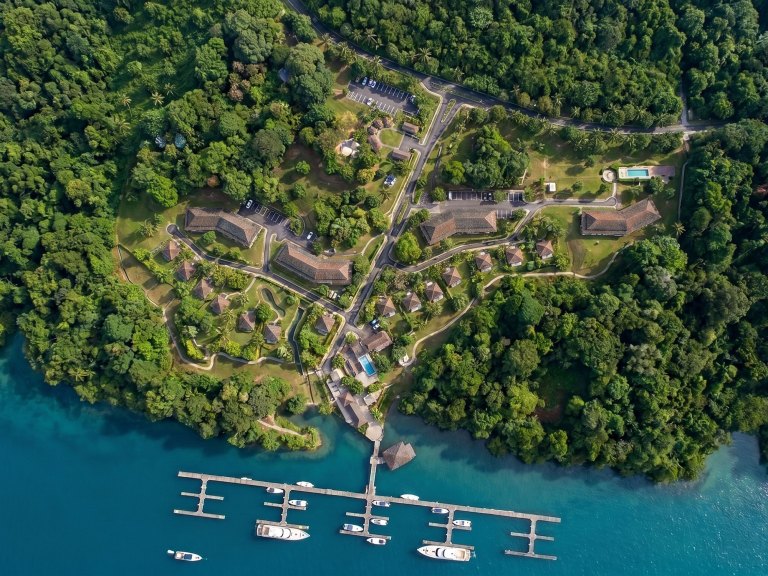
Turneffe Island Resort opened in 1962 as Belize’s first offshore fishing lodge, and more than 60 years later it retains the laid-back character of a classic Caribbean fishing camp while delivering the comforts expected from a luxury resort. The property occupies a 14-acre private island known as Little Caye Bokel, about 30 miles offshore from Belize City.
Arrival alone sets the tone for the trip. Guests depart Belize City by boat for the roughly 90-minute ride across turquoise Caribbean water, gradually leaving behind mainland bustle as the atoll rises from the horizon. Once on property, life quickly settles into island rhythm.
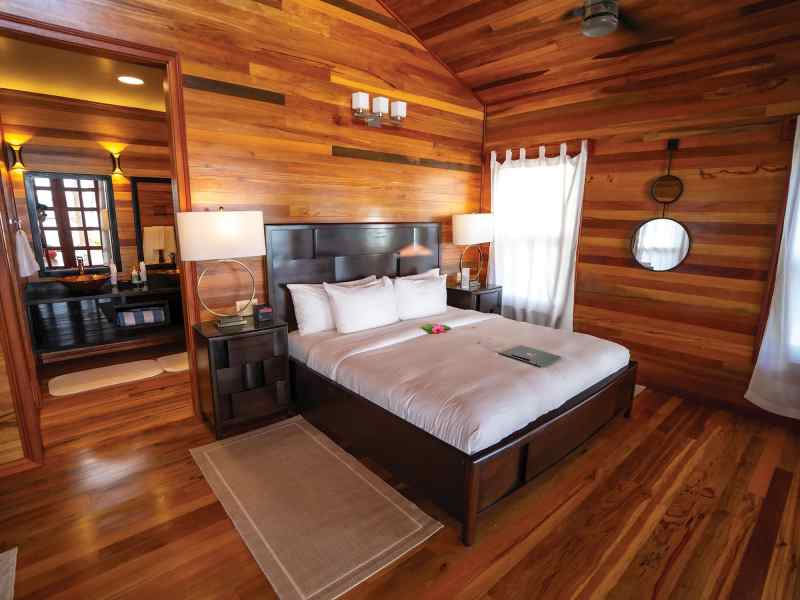
Accommodations range from beachfront rooms to spacious private villas with screened porches, outdoor showers, and hot tubs. The design throughout the resort embraces understated tropical elegance rather than flashy excess. Palm-lined pathways connect guest rooms to the main lodge, pool, spa, dock, and beach areas, and nearly every corner of the property offers a view of impossibly blue water.
Divers are particularly well served here. Turneffe Atoll sits adjacent to part of the Belize Barrier Reef system, home to extraordinary coral formations and marine life. Eagle rays, nurse sharks, sea turtles, and massive schools of tropical fish are common sightings, while the famed Great Blue Hole lies within excursion range for day trips.
Fresh Seafood and Caribbean Flavor
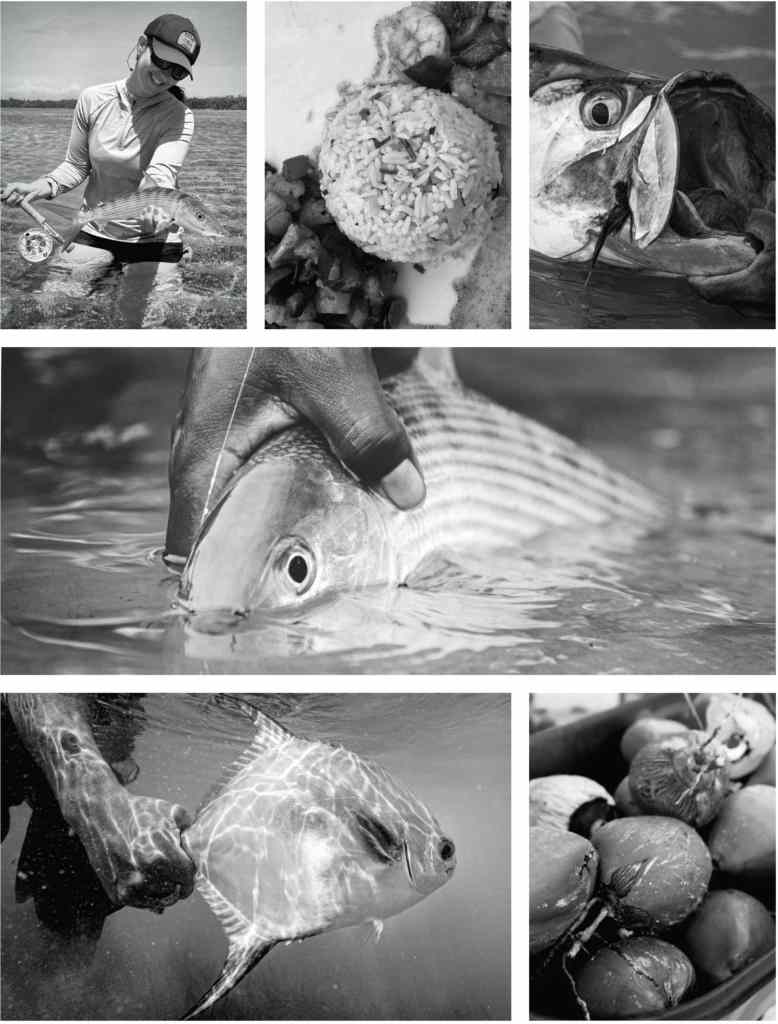
Food is an increasingly important part of modern travel, and Turneffe Island Resort clearly recognizes that. Meals here are far beyond standard fishing lodge fare. The culinary program leans heavily into fresh local seafood, tropical produce, and Belizean-Caribbean influences while maintaining enough variety to satisfy guests staying for a full week.
Fresh fruit appears constantly, grilled seafood features prominently, and many dishes incorporate local ingredients sourced from Belizean producers.
Breakfasts are substantial enough to fuel long fishing days, with made-to-order eggs alongside rotating daily specials and house-baked pastries. Lunches feature lighter tropical fare, while dinners become leisurely multi-course affairs where guests gather to swap stories from the flats or dive boats.
The social center of the resort each evening is the open-air bar overlooking the water. Cocktails highlight island flavors—fresh coconut, citrus, local rum, and even house-infused habanero tequila—and sunset gatherings naturally evolve into one of the most enjoyable parts of the daily routine.
On a small private island, 30 miles by water from the tourist mill of the city, Little Caye Bokel was developed artfully with the amenities of an upscale resort in a way that retains the classic easygoing charm of one of the country’s oldest fishing lodges.
Read Next: Belize’s Bonefish Playground
Protecting the Atoll
Like many of the world’s great saltwater fisheries, Turneffe’s future depends on conservation. The health of Belize’s flats, reefs, and mangrove ecosystems is critical not only for tourism, but for the broader marine environment of the Caribbean. Turneffe Island Resort has taken an active role in stewardship efforts throughout the atoll. The resort supports catch-and-release fishing practices and partners closely with the Turneffe Atoll Sustainability Association, whose rangers patrol the marine reserve and combat illegal fishing activity.
Environmental initiatives on-property include desalinated drinking water systems that reduce plastic waste, energy conservation measures, and sustainable tourism practices recognized through Green Globe certification. For traveling anglers, that conservation ethic matters. Flats fishing depends entirely on healthy habitat, and one of the reasons Belize remains such a remarkable fishery today is because of long-term efforts to preserve these ecosystems before they reached crisis levels seen elsewhere in the Caribbean.
Who is Turneffe Island Resort For?
Turneffe ticks boxes for several types of anglers. Experienced saltwater fishermen will appreciate the quality of the fishery, especially the opportunity to target permit in a pristine environment with elite guides. At the same time, beginners will find forgiving bonefish flats and patient instruction that make saltwater fly fishing approachable rather than intimidating.
Couples and families are equally good fits because the resort offers far more than fishing alone. Non-anglers are never treated like afterthoughts here, and that dramatically broadens the destination’s appeal.
That accessibility may be one of Turneffe’s greatest strengths. In less than a day, anglers can leave behind office schedules and crowded highways for a place where the biggest decision becomes whether to wade another flat at sunset or grab one more rum punch before dinner. And in today’s world, that kind of escape feels increasingly rare.
Travel Planner
The easiest travel window for most anglers runs from spring through early summer, when weather patterns are generally favorable and permit fishing shines. Tarpon opportunities increase seasonally, while bonefish are available year-round. Getting there is refreshingly simple by international fishing standards, and most U.S. travelers can reach Belize City on a direct flight and transfer immediately to the resort’s boat service. No bush planes, overnight logistics, or complicated travel schedules are required.