Here’s a riddle: What is one thing a boat owner always carries and never wants to use? Answer: A ditch bag.
A ditch bag, also known as a bugout bag, is a grab-and-go kit with safety equipment a crew needs in an emergency. While each owner’s ditch bag is unique to his needs, some items should be included in all ditch bags. When it hits the fan, and the fishing trip becomes a recovery operation, ditch bag essentials stabilize the situation and shorten the rescue process.
I’m a nervous boater who fishes solo 40 miles offshore in a 20-foot center console. Of course I have a ditch bag, but I worry about the gear I carry. Do I have the right stuff? Am I missing something? For answers, I reached out to Ted Sensenbrenner, director of boating safety at BoatUS Foundation. “A ditch bag should contain items that may be required for your survival if you and your crew end up in the water or a life raft,” Sensenbrenner says.
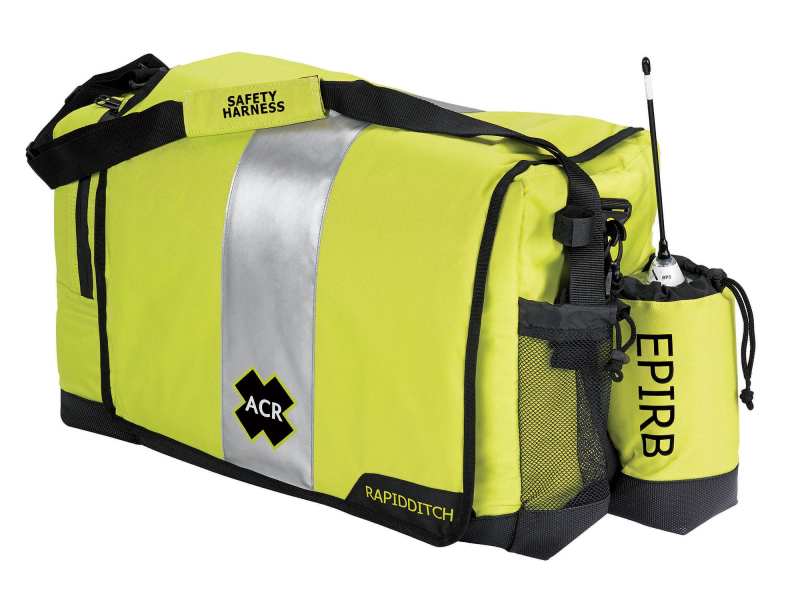
Every angler’s ditch bag is going to be different. “The items in your ditch bag should coincide with how long you believe it will take for a rescuer to reach you,” says Sensenbrenner. Since I fish offshore as well as deep inside coastal salt marshes, I always prepare for loss of cellular service and an overnight stay.
Let’s start with the ditch bag itself. “My ditch bag is neon green and everyone knows where it is,” Sensenbrenner says. I use the ACR RapidDitch bag, with a harness system to attach the bag to myself in the water. Sensenbrenner adds, “It’s also nice if the storage cabinet and bag are clearly labeled ‘ditch bag.’”
Emergency Communication
The first category of gear to consider is communication devices, Sensenbrenner says. He lists personal locator beacon, VHF radio, EPIRB emergency beacon and satellite communicator. “A cellphone in a waterproof case and fully charged VHF radio are top of the list for inshore anglers,” he says.
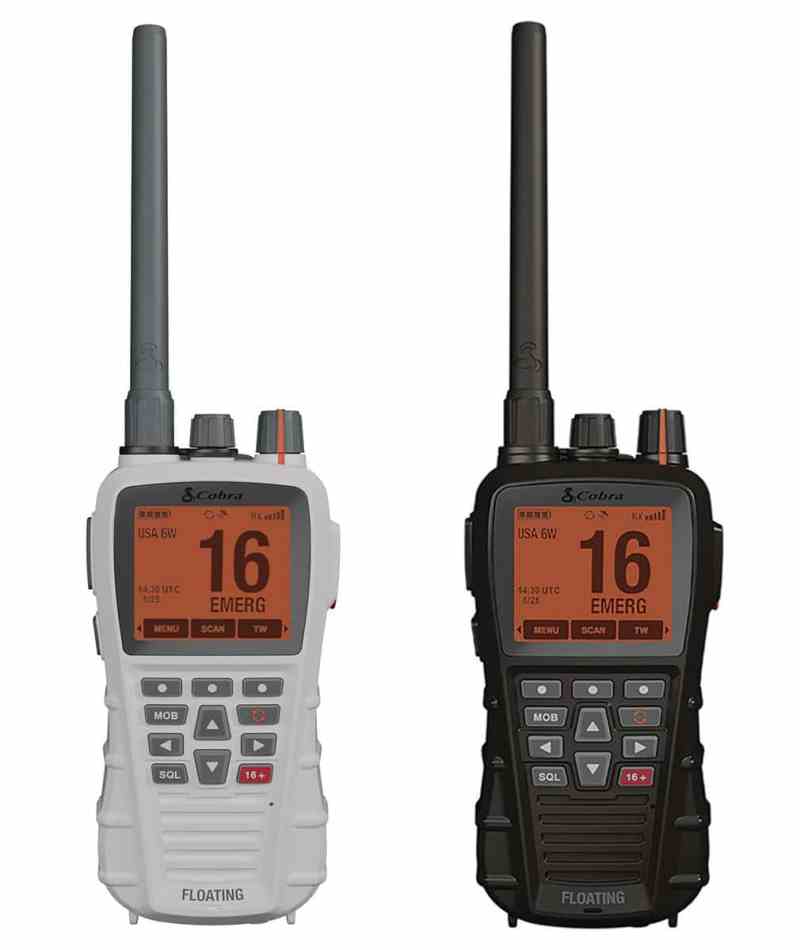
I recently added the new Cobra BlueBound 650 VHF radio to my ditch bag. The rescue radio has a GPS and a Digital Selective Calling emergency beacon to track my location and alert nearby boats of my emergency. The device connects to my smartphone to allow me to use the radio as a speaker and microphone for phone calls.
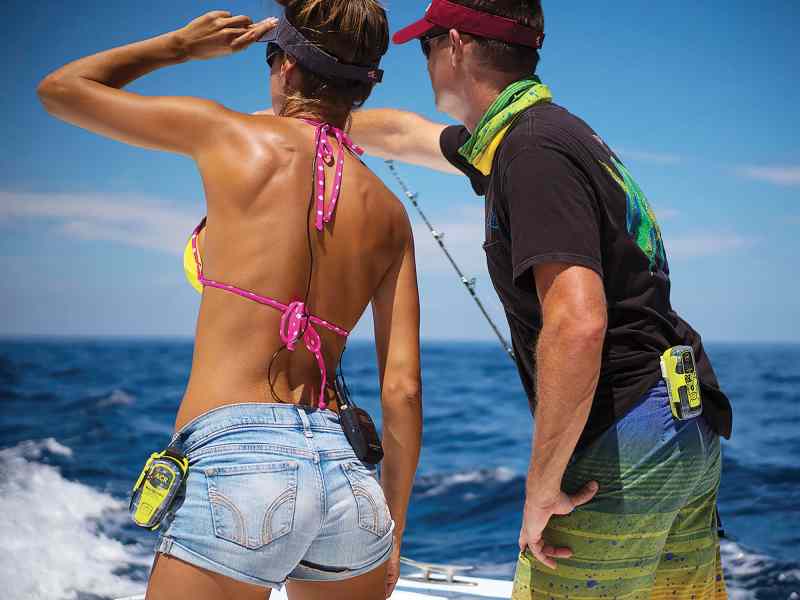
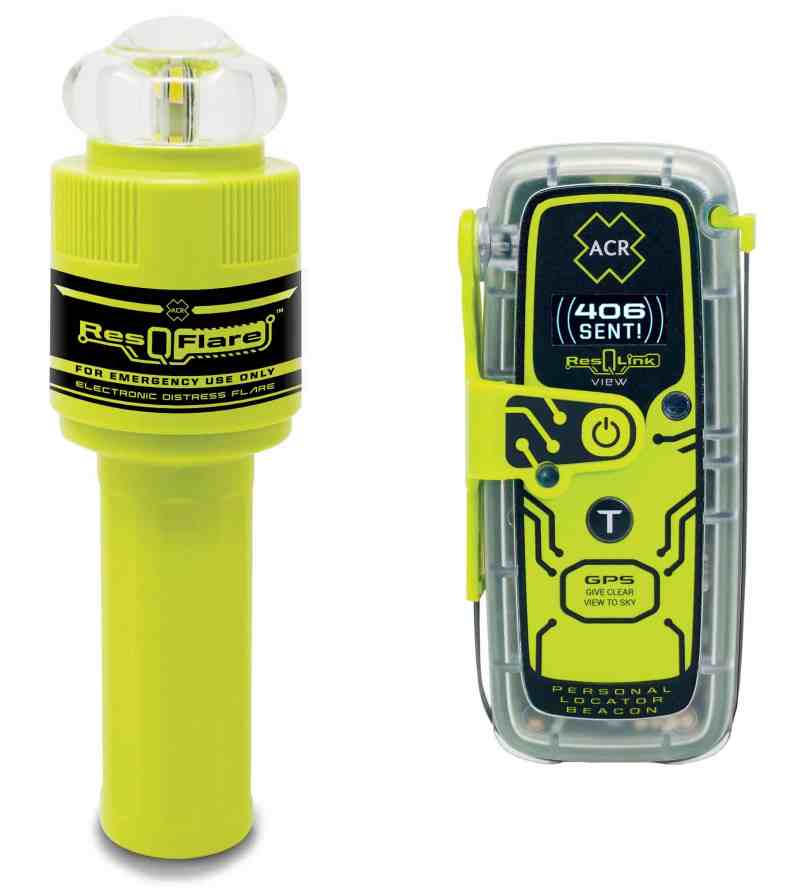
My boat is not large enough to require an EPIRB, so I carry an ACR ResQLink View RLS personal locator beacon (PLB) and a Garmin inReach Mini3 satellite communicator. The ResQLink works on the Cospas-Sarsat global satellite network to alert rescue services of an emergency, and the View RLS model includes a return link service to confirm my signal and location were received.
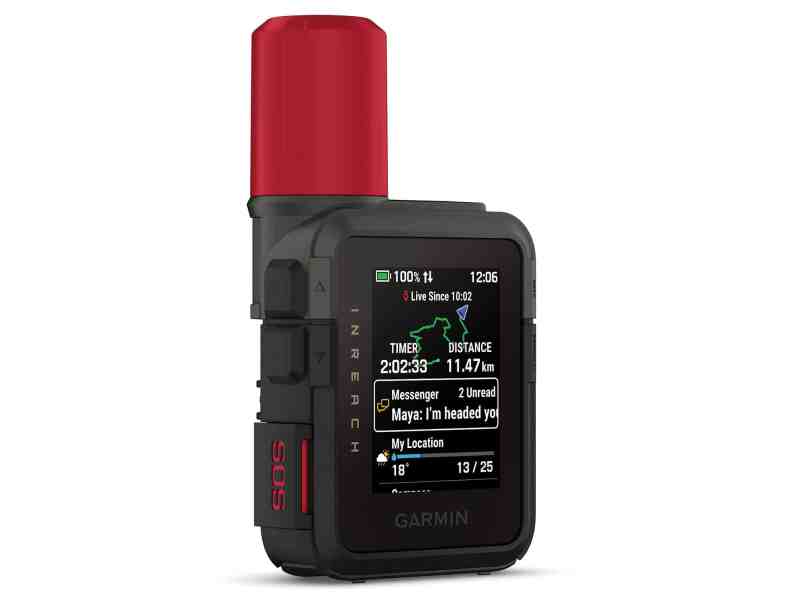
The Garmin inReach Mini3 also serves as an emergency beacon through the global Iridium network. I added a Garmin subscription, so I get two-way communication and tracking to keep my family informed of my position and status. The new inReach3 has a screen to display messages and functions. I can even send photos and voice messages by satellite when I’m out of cell coverage.
Signaling Devices
Advanced electronic devices are powerful rescue tools, but Sensenbrenner points out that visual signaling devices are also useful and, indeed, required by the U.S. Coast Guard aboard boats to guide rescuers closer to you and pinpoint your location, especially in the dark.
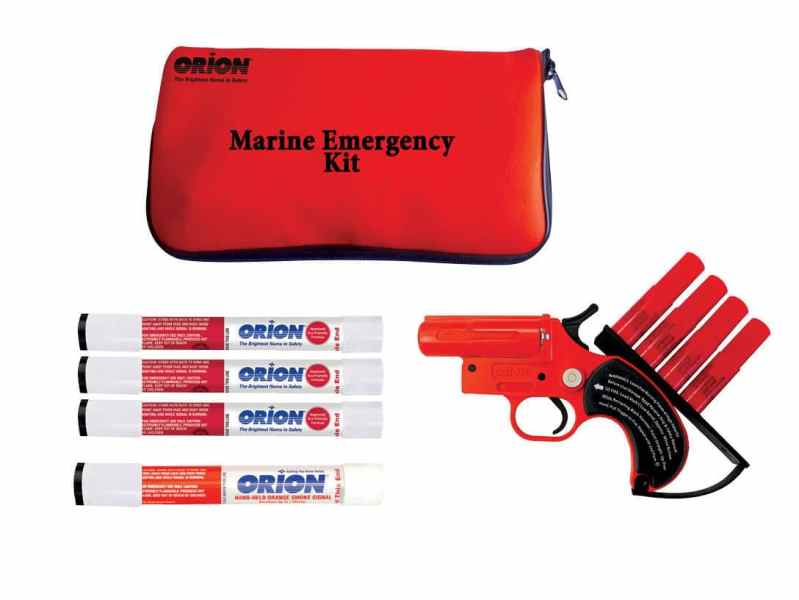
In this Coast Guard-madated category, I have an Orion Coastal Alert/Locate flare kit with both aerial and handheld flares. The aerial flare shoots up 500 feet to alert nearby boaters of an emergency. The Orion flare gun is corrosion resistant with a lifetime warranty, and the flares are stored on a bandolier. The handheld flares burn for up to three minutes and allow rescuers to pinpoint your location. The whole kit fits in a water-resistant, floating neoprene case.
Two important ditch bag ingredients cost less than a cup of coffee. A signal mirror and pealess whistle fit in a pocket and don’t require batteries or a subscription. A metal signal mirror reflects sunlight to flash your location to rescuers. I keep my whistle attached to my life vest for an audio alert. A pealess whistle lacks the little internal ball of the whistle your high school coach carried, which means no moving parts and a high degree of reliability.
First Aid and Sundry
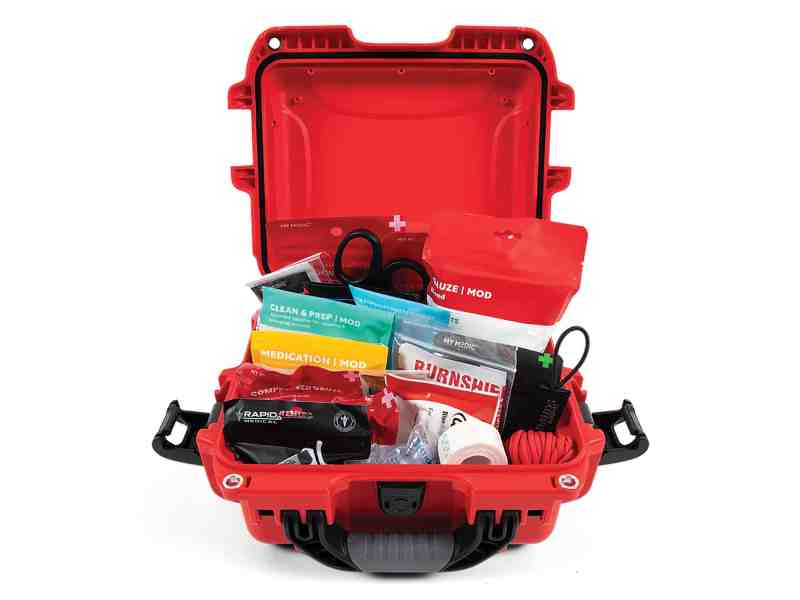
I struggled to find the best first-aid kit until I landed on Mymedic MyFAK Pro. The MyFAK is housed in a waterproof, crushproof and dustproof case with 140 first-aid and trauma supplies compiled by professional first responders. The kit comes with a code for a free online course to learn how to use it.
In addition to these ditch bag essentials, Sensenbrenner recommends anglers include medication and extra prescription glasses. “We learned from a BoatUS member who lost his prescription eyeglasses and fumbled to find the activation switch on the EPIRB,” Sensenbrenner says. The member didn’t have important medications, either. “Had he not been rescued quickly, he would have faced additional concerns and life-threatening complications.”
Wear Your Vest
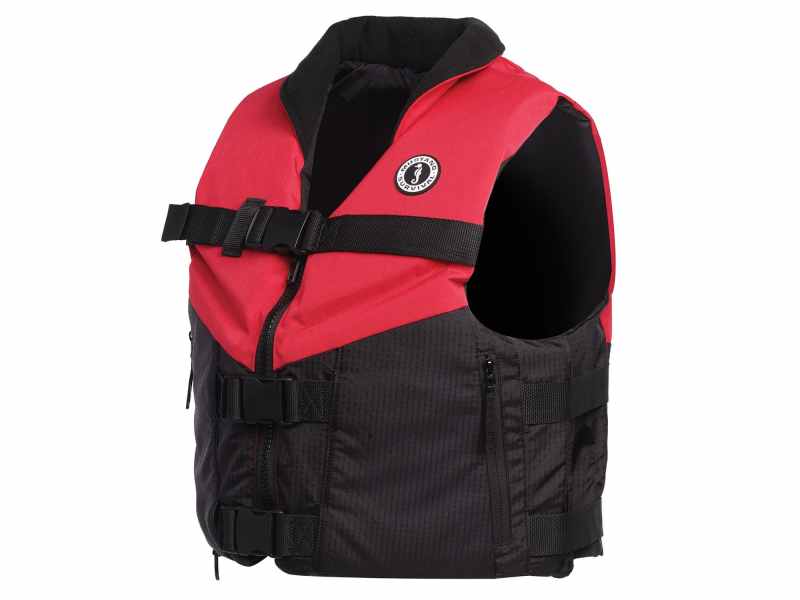
My most important ditch bag component is a durable, comfortable Coast Guard-approved life vest. I wear a Mustang Accel Foam PFD with form-fitting foam that moves with me and doesn’t ride-up. The outer shell is heavy-duty Cordura, which is puncture, tear, soil and wear resistant, and the inside shell is softer nylon for comfort.
Read Next: How to Plan Ahead for a Boating Emergency
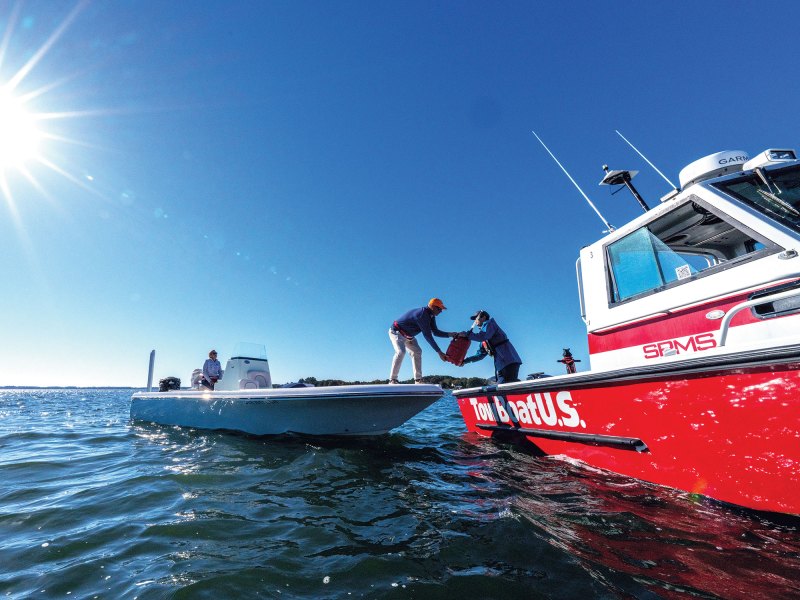
For the final component, Sensenbrenner recommends a BoatUS membership and contribution to the BoatUS Foundation. “The Foundation offers a free online boating safety course that meets many states’ education requirements,” Sensenbrenner says. The organization also offers a life jacket loaner program for kids and emergency beacon rentals. Adding a BoatUS membership provides towing, jump starts and gas drops to support boaters anywhere they fish.
I hope I never need my ditch bag, but carrying the correct emergency equipment in a ready-to-go bag gives me peace of mind when I’m offshore.