
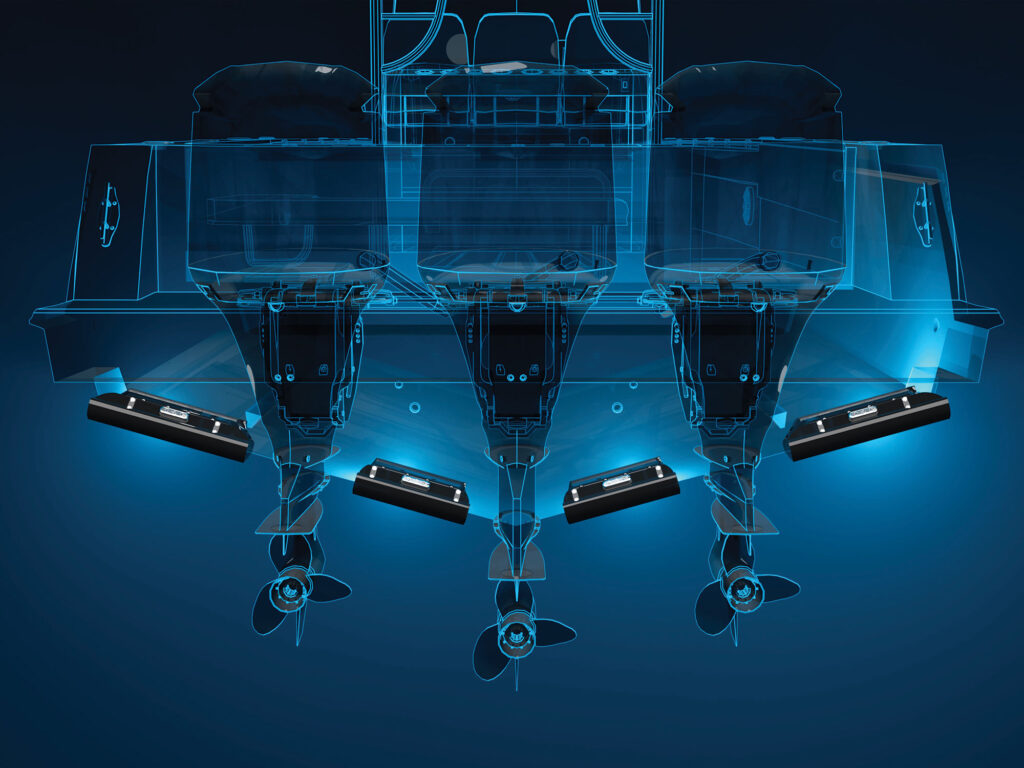
Most boaters are familiar with plate-style trim tabs from companies such as Bennett and Lenco, and many boats over 20 feet in length have them, usually in pairs, mounted to the bottom of the transom. However, in recent years, high-speed interceptor-style trim actuators from brands like Seakeeper Ride and Zipwake have come on strong. These are also mounted to the bottom of the transom, but use vertical “blades” versus the horizontal plates employed for trim tabs.
The purpose of such control surfaces—be they tabs or interceptors—is to provide lift at the stern to help create a quicker holeshot with less bow rise, minimize bow oscillation, and smooth the ride in choppy water.
These systems can also laterally level the boat while underway in certain situations such as when facing stiff crosswinds, running in broad beam seas, or dealing with a 350-pound crew member or other unbalanced load causing a list on one side of the boat.
In the past—particularly with trim tabs—skippers needed to adjust these systems manually, then re-adjust the tabs when conditions or onboard loads changed. But today, revolutionary new attitude adjustment systems have automated this process. Computerized systems fitted with multi-axis sensors, accelerometers, GPS, and blindingly fast micro-processing brains can dynamically control trim actuators to automatically adjust hull attitude, create a level ride, and even mitigate the hazardous instability that occurs when passing over parallel wakes. By the way, all automatic attitude adjustment systems also can be controlled or tweaked manually.
Today, automatic attitude control systems are available as standard or optional equipment on many new saltwater fishing boats, including mono- and multi-hull models. Boating anglers are beginning to realize how much better even an inherently smooth-running boat can ride when the forces of the wind and sea are dampened by these advanced dynamic trim systems. Here’s what to look for in this genre of marine accessories on your next new boat, starting with the newer interceptor style systems, and then moving on to automatic functionality for plate-style tabs.
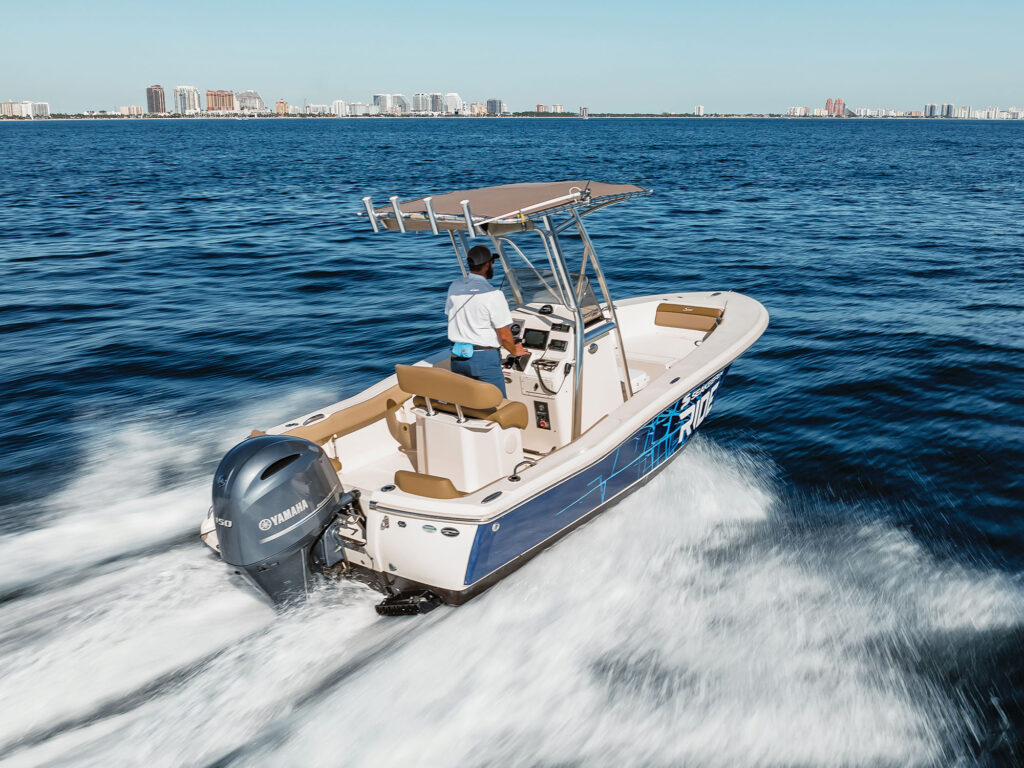
Seakeeper Ride
Seakeeper, a company that made its name with marine gyrostabilizer systems, has parlayed that reputation with the Ride system designed for automatic control of pitch and roll while underway. It can eliminate up to 70 percent of pitch and roll, according to the company, though each boat will respond differently.
Ride’s aileron-like blades on each side of the bottom of the transom are electrically powered by high-speed rotary actuators that make up to 100 adjustments per second based on 1,000 measurements every second. The sealed actuators are housed outside the transom. Only one small hole is required to pass the power cable into the bilge area.
The electronic three-axis sensing hardware understands how the boat is behaving in terms of pitch, roll and yaw, then sends commands to the actuators to instantaneously control bow oscillation and roll while underway. It can also “learn” the boat and sea conditions to deliver the best ride. An optional helm keypad is available to turn the system off and on and manually tweak the actuators, but Ride also networks with compatible multifunction displays that offer graphics showing operational parameters with the ability to manually adjust the actuators via touchscreen control.
To test the Ride system, we ran a Bluewater 2850 deep-V monohull at speeds up to 37 mph. With the automatic function off, the bow rose and fell at the mercy of 3-foot waves. This pitch oscillation robs the boat of efficiency. With Ride in auto mode, bow oscillation was minimal, allowing the sharp entry to cut the waves as necessary, but also allowing the bow to rise slightly to skim the water between waves. Ride eliminated about 45 percent of oscillation on this boat.
To test for correcting a list, we shifted crewmembers from side to side. Without the auto function, the boat developed a list. With the auto function on, the boat never departed from an even keel. Turns feel different, too. In auto mode, the boat still leaned in turns, but not nearly as much as without it, boosting the comfort level. Ride is offered for boats from 19 feet up to 55 feet in length. To learn more, visit seakeeper.com.
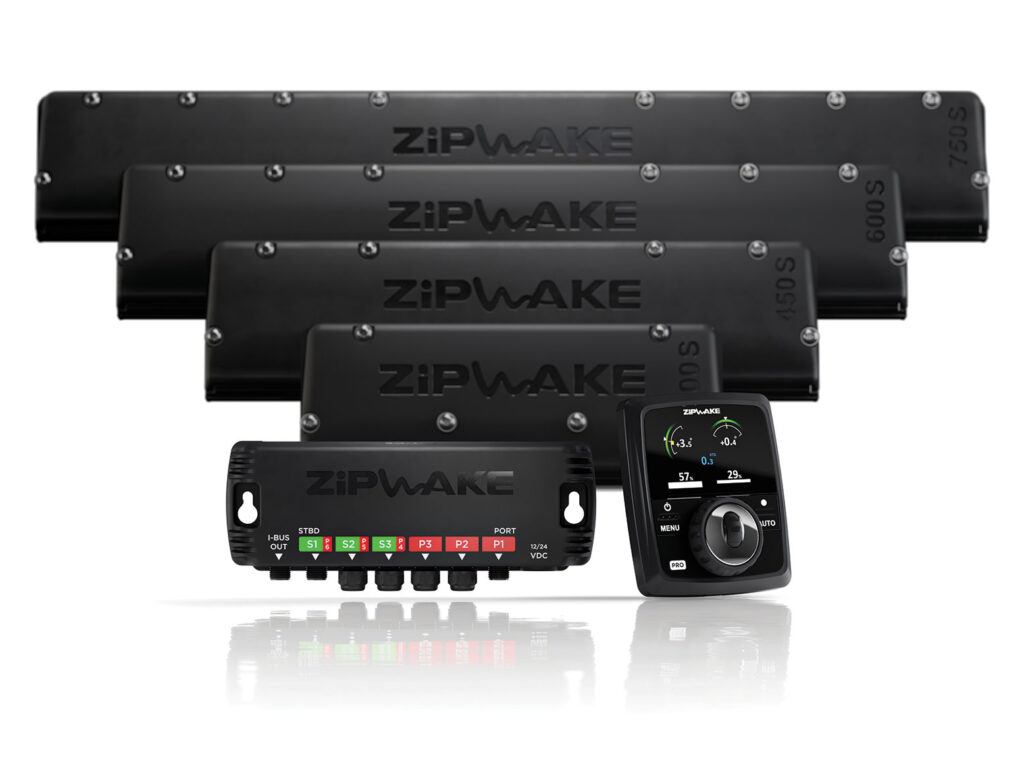
Zipwake Pro
Engineered for boats from 20- to 100-feet in length, Zipwake Pro uses “interceptors”—blades that mount flush to a square transom and deploy and retract vertically—to create a pressure wave that lifts the stern. The color LCD control panel has built-in gyros that measure attitude and inertia of the vessel and compute that information to actuate the interceptors, moving them rapidly up or down to meet opposing environmental forces and dampen and adjust the vessel’s pitch and roll. This reduces pounding and rolling.
On tests with a 28-foot runabout and a 43-foot catamaran, both vessels showed improvement in turns, decrease in bow rise and stabilizing assistance in difficult navigation conditions such as being overtaken by a parallel wake. All catamarans have a habit of leaning outward in turns, but with Zipwake Pro activated, the boat heeled comfortably and gently into the turn. The hole shot with these Zipwakes was a bit quicker, but more importantly, we experienced a much lower point of bow rise that preserved most of our forward visibility. To learn more, visit zipwake.com.

Bennett AutoTrimPro
Bennett, which is now owned by Yamaha Marine, claims the throne as the first company to offer adjustable plate-style trim tabs. The Bennett AutoTrimPro is compatible with all of Bennett’s tab systems, with add-on kits available for both electric and hydraulic tab systems from this brand.
That said, the Electric Bolt Tabs are recommended for boats under 30 feet, while Bennett recommends
hydraulic tabs for boats over 30 feet. Because Bennett offers controllers a la carte, owners may be able to retrofit their current tab systems with the Bennett AutoTrimPro module.
The auto module grants quick shifting from manual to auto operation, and it will remember two favorite trim settings to automatically control for an expected list. Response time on the tabs can be adjusted and customized for different boat dimensions and weight. To learn more, visit bennetttrimtabs.com.
Lenco Pro Control
The Pro Control system from Lenco—part of Brunswick’s Navico division—uses plate-style horizontal trim tabs that are normally in the same plane or just slightly above the boat’s aft running surface when retracted.
Deploying the tabs downward puts upward pressure on them and creates a pressure wave that lifts the boat’s stern. A separate Lenco inertia measurement device updates the controller with rapidly changing conditions and directs the tabs up or down. This dampens pounding and rolling, and it even corrects for excessive heeling inward in turns, giving passengers a more comfortable ride. The tabs automatically retract at slower speeds and when the engine is turned off, saving them from damage from forklifting or trailering.
This automated, dynamic attitude control system also makes boats up to 74 percent more stable by reducing pitch and roll, according to Lenco.
To test the system, we ran a Blackwood 29 with the Lenco tabs and found the Pro Control system comparable to the Bennett system. We also tested the system running along parallel wakes and it kept the boat under control, avoiding side surfing and bow steering. However, the tabs seemed to respond more slowly than either the Seakeeper Ride or Zipwake Pro systems. Yet, functionality when it came to hole shot and lateral stability seemed comparable. To learn more, visit lencomarine.navico.com.
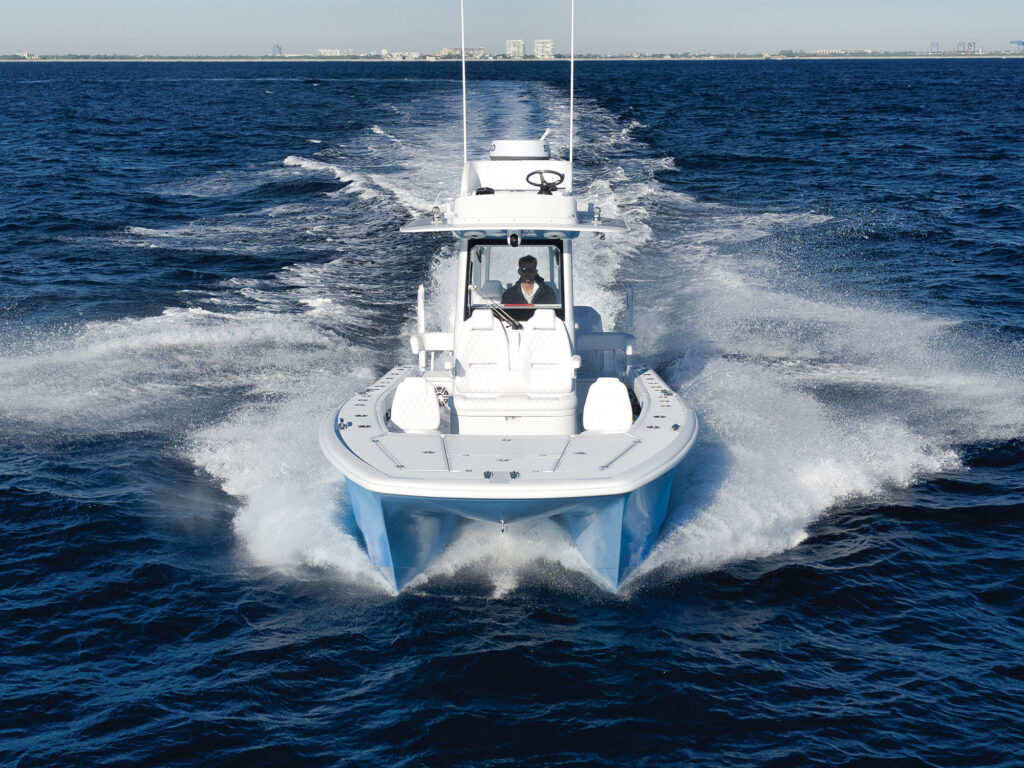
Seakeeper Ride for Cats
Until recently, the Seakeeper Ride system was largely reserved for mono-hull boats. Now, Seakeeper is offering specialized systems for power catamarans—systems engineered to offer the same benefits as with mono-hulls, and then some.
While cats offer a few advantages over mono-hulls, they are still susceptible to wave action and their hull designs can present some unique handling quirks, including turns that are flat in nature or that often lean outward when cornering at speed; increased yaw or bow steering; and porpoising motions at speeds.
To help correct for these adverse characteristics, Seakeeper Ride in 2026 will introduce systems with custom software specifically optimized for power catamarans. The software provides enhanced underway stabilization and enables catamarans to naturally bank inward during turns, much more like mono-hull vessels.
We had a chance to get out in some nasty seas aboard a Freeman 28 cat equipped with one of these new Seakeeper Ride systems. We tested with the system on and off, and we were impressed with the inward banking as the boat cornered with the Ride system on, as opposed to outward banking without Ride. The automatic system also resulted in greater comfort while running into a 3-foot head-sea, and eliminated any hint of stuffing or bow-steering while blasting down-sea.
For installation on symmetrical and semi-symmetrical hulls, Seakeeper Ride actuators can be mounted on both inboard and outboard sections of each sponson. On asymmetrical hulls, Seakeeper Ride’s controller will be mounted on the outboard section where there is available space. To learn more, visit seakeeper.com. –Jim Hendricks