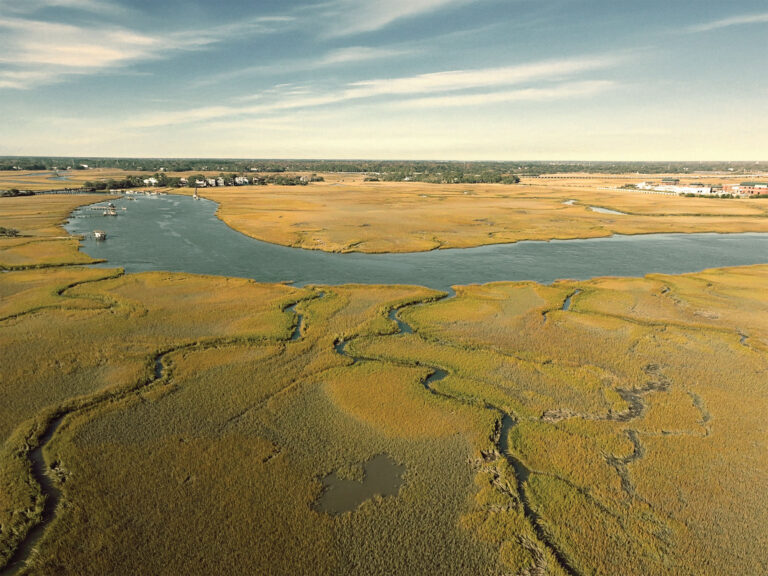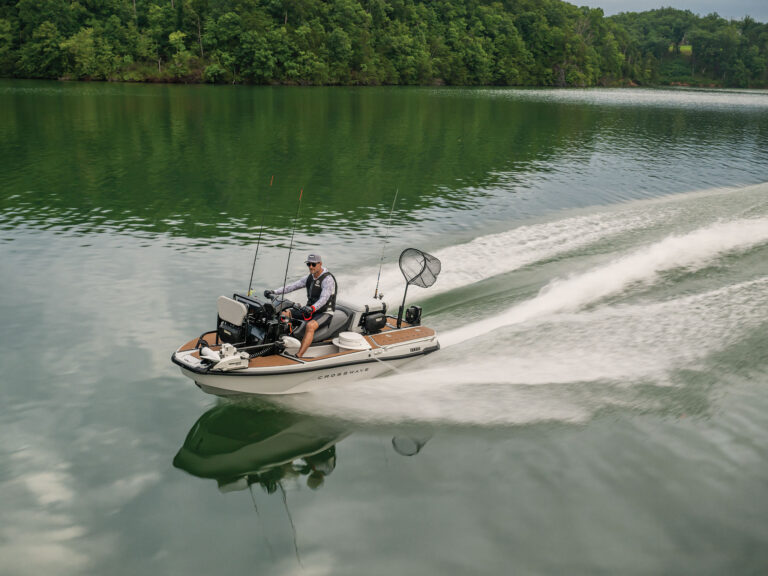
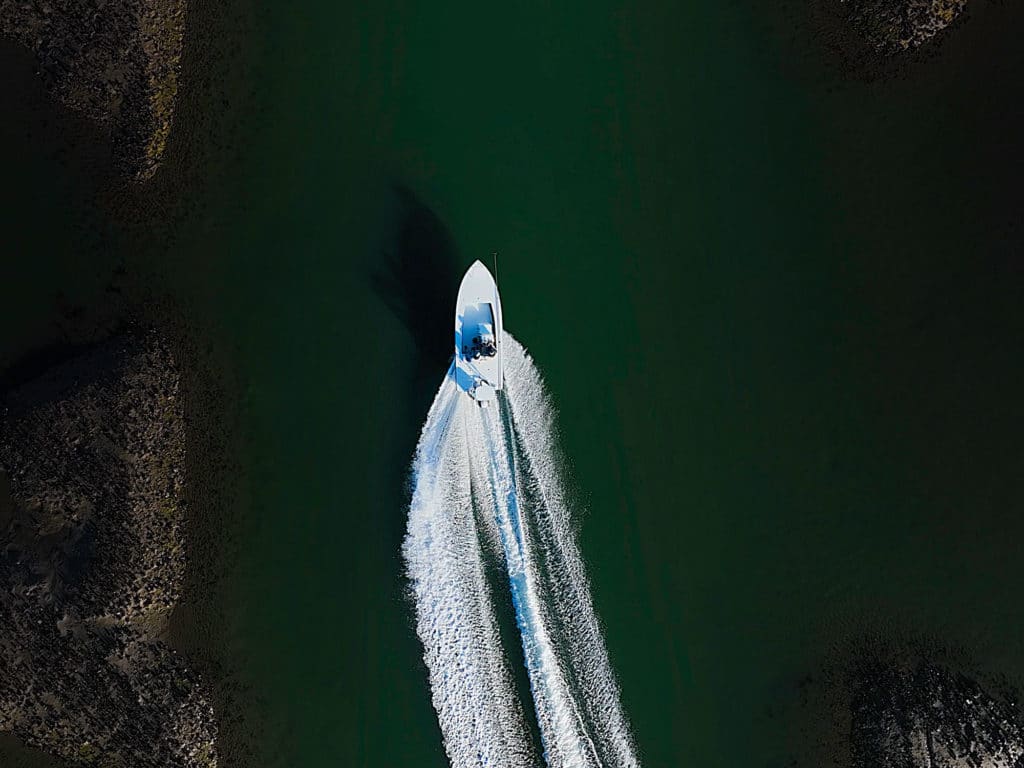
Running a flats skiff at high speed in shallow water is akin to flying a helicopter at treetop level. A certain level of speed is required to keep a skiff on plane and off the bottom, but the operator must understand that bad things will happen if you hit anything solid. The key to avoiding such disaster is simple: stay alert and aware.
No doubt, the pucker factor is high. Grounding your boat at high speed can cause catastrophic mechanical damage and potentially leave you stranded in the backcountry, not to mention those environmentally damaging prop scars you’ll leave behind thanks to your outboard motor.
According to the United States Coast Guard, the number-one cause of all boating accidents, grounding included, is operator inattention. When you’re running a flats skiff you need to maintain 100 percent complete focus. On top of that, use these tips to make sure the cruise goes smooth.
Avoid Water Color Changes When Running a Flats Skiff
Look for—and avoid—color changes. Deeper waters usually appear darker while sandy shoals are lighter in color, but dark spots can also be deceiving because they can be caused by grass flats, weed beds or cloud shadows. When you know there’s plenty of water under the keel, the best move is to avoid visible color changes entirely.
Use a Chartplotter to Track Your Skiff’s Route
Always keep your chartplotter track active, and follow your own breadcrumb trail back to the dock. Chances are, heading out to your fishing spot, you created a route you now know is safe to follow home. But, there’s a caveat: this is only a sure thing if the tide’s been rising or static since you traveled that path. Pay attention to the changing tides or you won’t know if that route is really safe. For example, the route might not be safe to travel home if the tide is low, or lower, compared to when you headed out.
Wear Sunglasses When Running a Flats Skiff
Wear a pair of light-appropriate polarized sunglasses when running in a flats skiff. This will help you identify depth changes and obstacles. Dark lenses are great for bright, sunny days, but in low light or hazy conditions they can be overwhelming. Yellow lenses, on the other hand, improve contrast in low light and will help you spot color changes.
Don’t Run a Skiff Over Unfamiliar Shallow Water
Sure, it takes exploration to become familiar with a flat and to find those skinny channels that allow access. But do that exploration with the engine tilted up and with the propulsion of a pushpole or trolling motor. If you don’t know the area well, take the long way home. Instead of trimming to the hilt and hanging on tight as you scream across a flat, simply go around it. Head out to those channel markers, even if adds a couple minutes to your trip.
Use a Pushpole or Trolling Motor to Get Your Skiff Deeper Water
When in doubt, shut down, tilt the engine up, and pole or walk your boat to deeper water rather than pushing the envelope. Anchor up for a time, and wait out the tides if they’re too low — you might come across some gamefish exiting the flat too. It may take you a bit longer to get where you’re going, but it’ll be a lot faster than if you wipe out your lower unit.