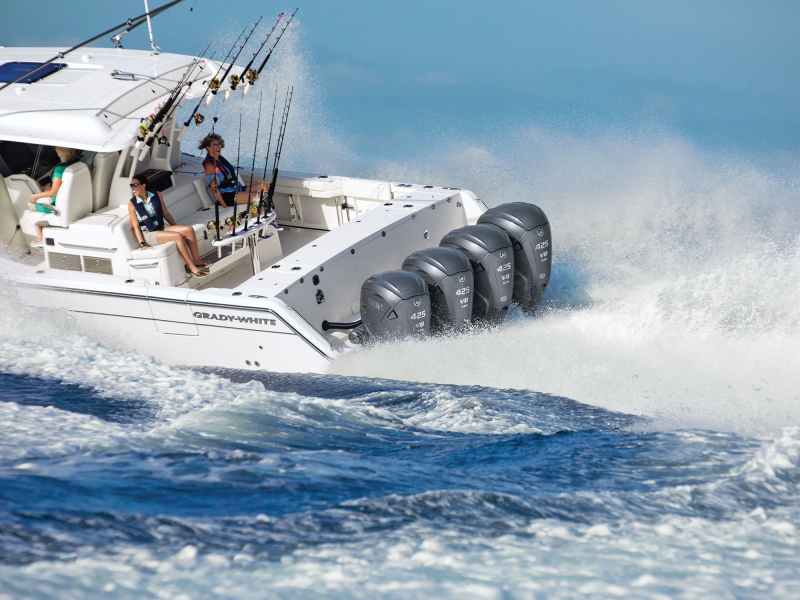
More than 40 years ago, hydraulic steering revolutionized directional control for outboard powered boats, particularly when it came to saltwater fishing machines propelled by 150-plus horsepower engines. Hydraulic steering made these big single- and twin-outboard setups easier to control, largely eliminating the dreaded prop-torque feedback associated with old-school cable steering that would suddenly pull the boat sideways if you let go of the wheel.
Such quirkiness in cable steering was an inconvenience at best; a safety issue at worst. Thankfully we have left that issue—and our well-earned Popeye arms from fighting the wheel—in the wake of boating history.
But today, another technological revolution is making outboard control even easier. Electric steering systems are beginning to supplant hydraulic systems, particularly on today’s larger saltwater fishing boats. There are still plenty of marine hydraulic systems in use. But many new outboards are now offered with integrated electric steering, and there also are aftermarket systems available for retrofitting existing motors with electric steering.
Some use the term “fly-by-wire” to describe this new breed of all-electric marine steering. This differentiates the new-age systems from traditional electro-hydraulic marine steering systems, also known as “power-assist” steering, some of which are still in use today. One example of this type of electrical-assist steering for outboards is the Dometic Optimus EPS system. It incorporates an electric pump to drive fluid to the hydraulic actuator on demand as you turn the wheel.
Fly-by-wire systems, on the other hand, dispense with hydraulics all together. An all-electric system responds instantaneously, and turning the wheel, even under loads with multiple outboards, is nearly effortless.
So, what’s the technology behind fly-by-wire systems? The answer lies in the development and miniaturization of high-speed, high-torque, efficient brushless DC electric motors. To give you an idea of how compact these new-age motors have become, the brushless motor in the Dometic all-electric actuator measures just 4-by-2 inches.
Some of this technology was borrowed from the automotive industry, but Dometic and others have spent considerable R&D to engineer and build systems specifically to operate reliably and safely amid the rigors of the marine environment while handling the heavy steering loads generated by big, high-horsepower outboards of today and tomorrow.
Here are some of the fly-by-wire outboard steering systems available to boating anglers.
Dometic Marine
Electric steering can be added to an existing outboard of virtually any brand thanks to Dometic Optimus outboard electric steering. This all-electric system—including the actuator (shown above) and matching helm—is easily installed by a qualified dealer, and includes speed-sensitive lock-to-lock turns to help ensure safe steering.
It also offers built-in functionality with Dometic’s outboard control systems, including the SeaWays autopilot, Optimus 360 joystick control, and SeaStation GPS virtual anchoring system.
While the Optimus system is designed for higher horsepower outboards, Dometic also offers the Xtreme Power Assist (XPA) system for single outboards of 90 to 150 hp that have cable steering. It’s the only power-assist system for outboard-powered boats with cable steering. It’s easy to install for DIYers, and it makes steering an outboard—be it at idle or at speed—super-easy, greatly reducing the effort to turn the wheel.
Using a compact and advanced brushless electric-motor system, XPA is engineered for use with Dometic’s popular SeaStar rack or rotary cable steering systems to provide fingertip control at the wheel. Yet, XPA does not increase the load on the mechanical helm or the steering cable.
Mercury Outboards
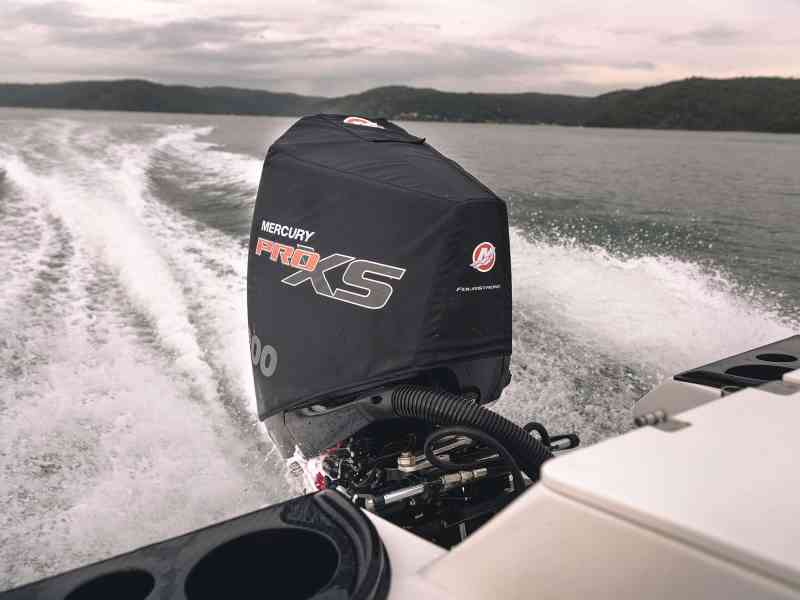
Mercury electric steering uses an advanced electric actuator at the engine and a wiring harness connected to a helm, resulting in smooth, easy steering whether cruising at high speed or slowly maneuvering at the dock.
As with other fly-by-wire systems, this eliminates pumps, hoses, and fluid, as well as the possibility of a fluid leak. Electric steering is standard on models equipped with Merc’s Joystick Piloting for Outboard (JPO). It is also available for select Mercury V-8 and V-10 outboards.
Arguably the most unique built-in electric steering system for outboards resides within Mercury’s Verado 600 hp V-12. This beast of an engine features, among other firsts, an independently rotating gearcase controlled by the outboard’s steering. In other words, the outboard proper does not pivot when the wheel is turned, as do other outboards. Only the lower unit—with its contra-rotating propellers—turns, activated by the built-in fly-by-wire steering.
Suzuki Outboards
Suzuki does not currently offer integrated electric steering technology, though sources say the company is working on it. However, many of its outboards can be fitted with aftermarket systems such as the Dometic Optimus all-electric steering. On its flagship V-6 models—the Suzuki DF300BMD and DF350AMD—the clamp bracket design dramatically reduces or eliminates transom splashwell interference with aftermarket steering system actuators, be they all-electric or hydraulic.
Yamaha Outboards
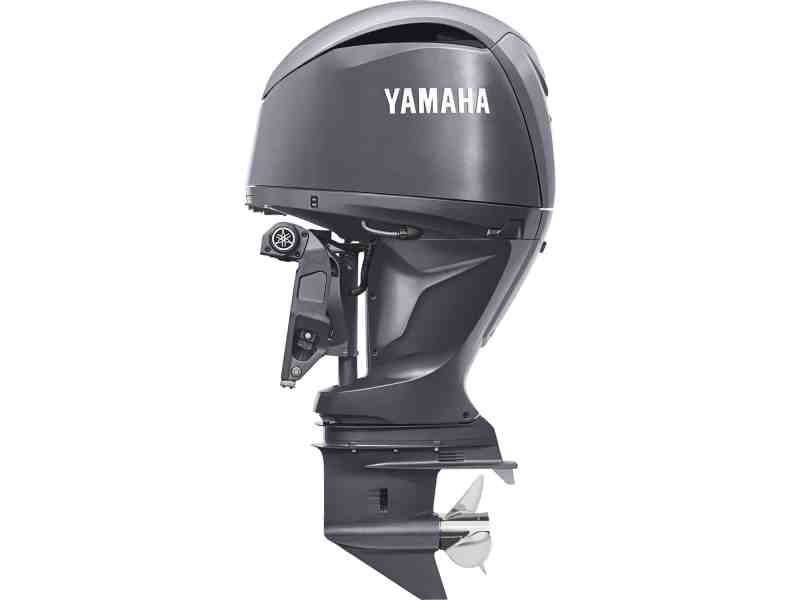
Among the first of the outboard brands to introduce all-electric steering as original equipment on an outboard was Yamaha, with its DES (Digital Electric Steering). It is available as a built-in, original equipment feature on larger outboards ranging from 225 to 450 hp. It can also be added as an external bolt-on accessory to digitally control Yamaha outboards ranging from 150 to 350 hp.
Like other fly-by-wire steering systems, it eliminates traditional hydraulic pumps, hoses and fluids, and that means less maintenance. Fly-by-wire results in less clutter around the transom, and there is no battery drain unless the steering wheel is moving. DES automatically adjusts helm resistance and lock-to-lock turning depending on boat speed. In essence, as boat speed increases, so does wheel resistance and the number of turns lock to lock.
Very importantly, DES fully integrates with Yamaha’s Helm Master EX features, including autopilot, joystick maneuvering, and much more.
Read Next: One Outboard or Two?
Honda Outboards
Honda remains one of two major outboard brands that has not yet introduced an all-electric steering system as factory equipment. However, the higher-horsepower models can be fitted with the Dometic Optimus fly-by-wire system by a qualified dealer. For Honda models up to 150 hp, the Dometic XPA system is another aftermarket way to join the electric steering revolution.