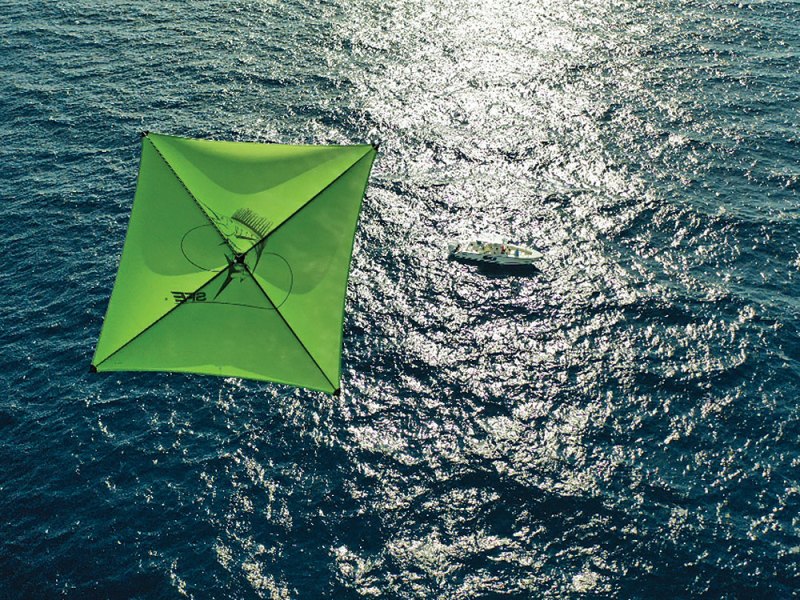
It was late April off Miami, with mild air temperatures, an easterly breeze and 4-foot seas. We were drifting a six-line live-bait spread through an 80- to 250-foot depth zone, one accentuated by tight contour lines and a couple wrecks; any narrowing of that zone would depend on where we found activity. Fortunately, on this day, that adjustment came fast.
At around 180 feet, a sailfish consumed the closest of three kite baits, and Mark Gardner went on to release his first one. Soon after, Rachel Lazenby caught and let go her first sailfish; and, not to be outdone by her mother, 14-year-old Lexi released her first sailfish—for our third score. Not to boast too proudly, but ironically, I put Johnny, the Lazenby family patriarch, on his first sailfish a year prior!
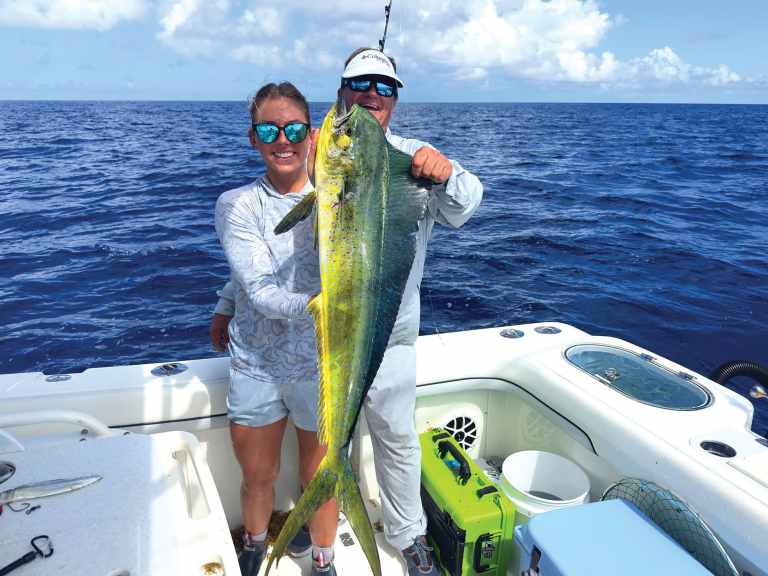
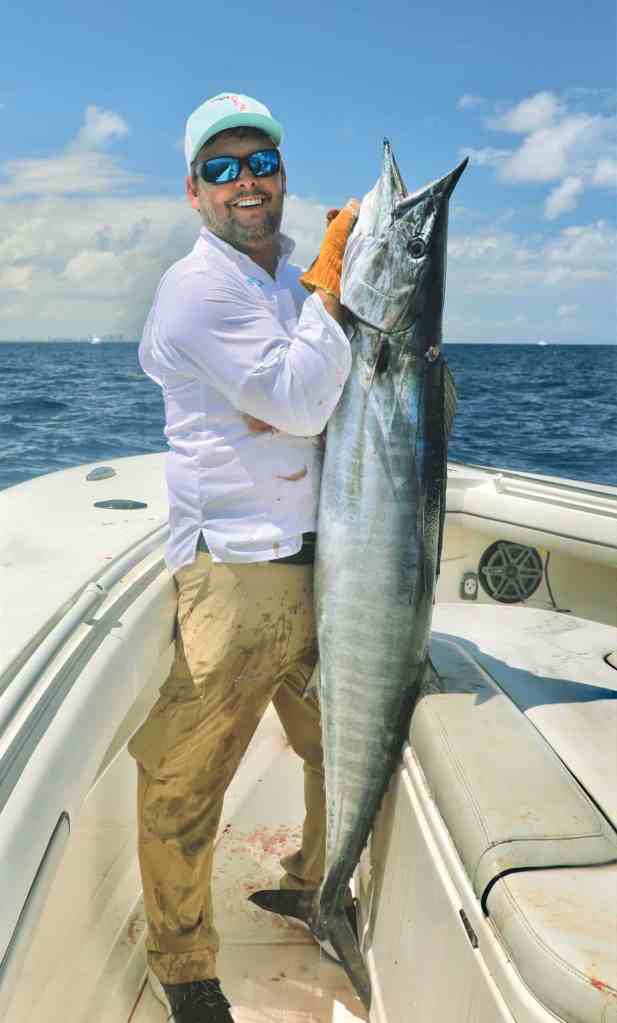
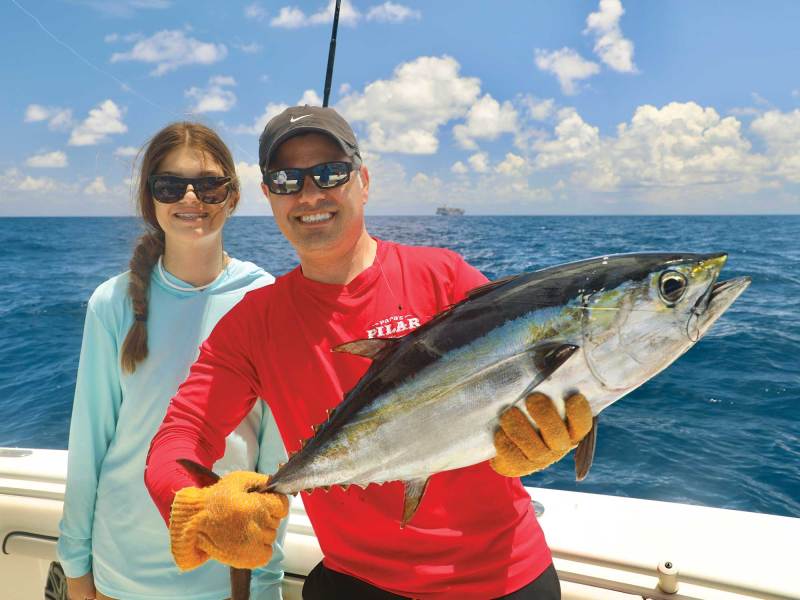
Three sailfish “firsts” were truly awesome. However, the beautiful blackfin tuna Johnny boated, and Gardner’s big wahoo supercharged our bragging rights. Catching a sailfish, a blackfin and a wahoo in one day isn’t uncommon off Miami and South Florida during April and May. With a good strategy and some luck, such a Sport & Dine Slam can be yours.
Other Candidates
It’s debatable as to why king mackerel and mahi aren’t part of the Sport & Dine Slam. My take: King mackerel abound during winter and spring; therefore, they’re not overly challenging to catch—unless, of course, you’re targeting a true “smoker” (a king 30 pounds or heavier). As for mahi, their initial migration occurs around late March and ramps up in April and May. Mahi can ambush a spread at just about any time; so, again, no great challenges there. The consolation: Both species provide fun and dining, but more so with mahi.
All in One Day
April heralds a major migration of large breeding-class sailfish, especially off Miami. Averaging between 50 and 60 pounds, these fish give no quarter when hooked and often beeline hard to the east. This contrasts with typical 35- to 45-pound class sails, which can be muscled boatside in short order. The larger spring sailfish require chasing, especially on 20-pound-test class tackle. The challenges of locating, hooking, fighting and landing them earn headliner status, hence the “Sport” in the Sport & Dine Slam.
As for the dining component, spring blackfins often mix with sailfish. These mostly 15- to 20-pound class fish, with some breaking 30 pounds, are highly prized for their fight and fine table fare, be it sashimi, grilled, blackened, etc. This past season, videographer Rob “The Swede” Greene boated a 32-pounder during a “fun-fishing” day with me. If that’s not impressive enough, he also scored his first wahoo. However, he was a sailfish shy of his Sport & Dine Slam. Ironically, the day prior, he released three sails! This slam means you need to score all three in one day.
Wild Card Wahoo
Winter sees the largest numbers of wahoo migrating past South Florida. Come July and August, far fewer wahoo abound. However, it’s peak time for trophy fish, those stalking schools of bonito and skipjacks. Spring still lends a decent chance at catching them. As for table fare, does it get any better than fresh wahoo, regardless of preparation?
The dilemma is how to target them, as wahoo respond more aggressively to sub-surface lures trolled at quicker speeds, versus slow-trolling or drifting live baits, which are the techniques most effective for sailfish and blackfins. It’s an apples-to-oranges dilemma: troll (better odds for wahoo) or live bait (best odds for sailfish and blackfins).
Play the Odds
Our April/May successes come by targeting sailfish. Live baits are deployed from kites and flat lines, the latter consisting of at least one deep bait, a pair tethered to balloon floats some 40 feet above them, and at least one free-lined. Baits are goggle-eyes and pilchards.
Water conditions, wind direction, wrecks and quickly descending bottom determine where our typical 80- to 250-foot depth zone drift begins. Sailfish and blackfins can be encountered wherever heavy bait concentrations are, wrecks included, whereas wahoo are more structure oriented, hence more effort around wrecks.
Lesser-known hot spots for all three species include freighters and ships anchored off the Port of Miami, more specifically those stationary over a period of time. Bait masses often concentrate around their lights, whereas anchor systems and hulls provide structure. We’ve taken sailfish, wahoo and big blackfins by ships anchored off the Port of Miami.
Lady Luck
Our 20-pound-test class tackle is rigged with 40-pound-test (kite and primarily goggle-eyes) and 30-pound-test (small baits, herring/pilchards) fluorocarbon leaders. Wahoo can easily bite through such leaders. However, we’re focused on getting bites, including bites from wahoo. Add a wire trace to a leader, and that live bait might go untouched all day. The trick lies with in-line circle hooks.
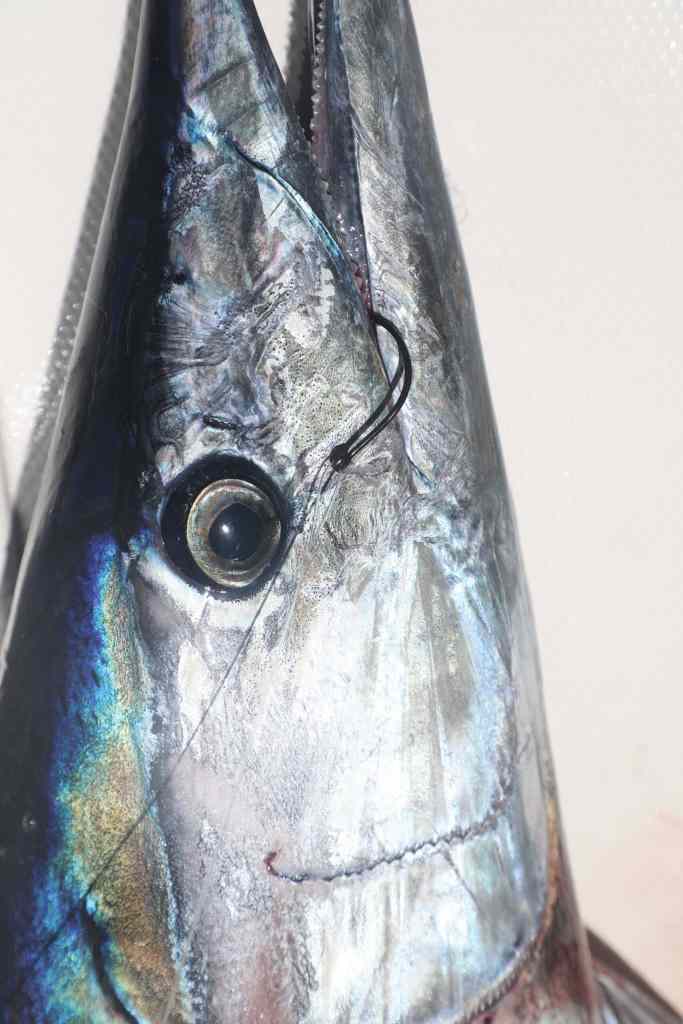
Set correctly, a circle hook lodges in the corner of a fish’s jaw, with the hook eye and leader remaining on the outside. Greatly decreased is the risk of being cut off by sharp teeth (wahoo) or chafing from the minimal dentition of sailfish and blackfins. Our gamble on wahoo relies on this tactic. Over the long haul, we’ll surely lose some to cut offs, but we’ll also get lucky and take a fish or two home for dinner.
Read Next: Guide to Spring Sailfish Fishing
Deep Baits
Blackfins roam deep within the water column, save for occasional surface blitzing of forage. A live goggle-eye positioned between 100 and 150 feet deep, with a removable sinker 40 feet above, is potent for blackfins. With two deep baits, set the shallow one around 50 feet. Place these rods in gunwale holders and back off on the drags to around 3/4 of their fighting settings. When a rod goes off, simply advance the drag and wind until the fish is solidly hooked. Remove the rod and enjoy the fight.
Again, wahoo and sailfish will strike deep baits. We’ve had multiple sails on deep baits, with a wahoo or two, as well.
Shotgun It
Our Sport & Dine Slam approach is to primarily live-bait for sailfish. Again, April is peak sailfish time off Miami. Blackfins frequent the spread along with, but to a lesser degree, wahoo. Our varied spread and inclusion of wrecks yield exciting and diverse days.
It should be noted that there are other specialized ways to specifically target each one of these gamefish. But, come April and May, you’ll likely find me and my “shotgun” approach seeking those Sport & Dine Slams—and the bragging rights that come with them.