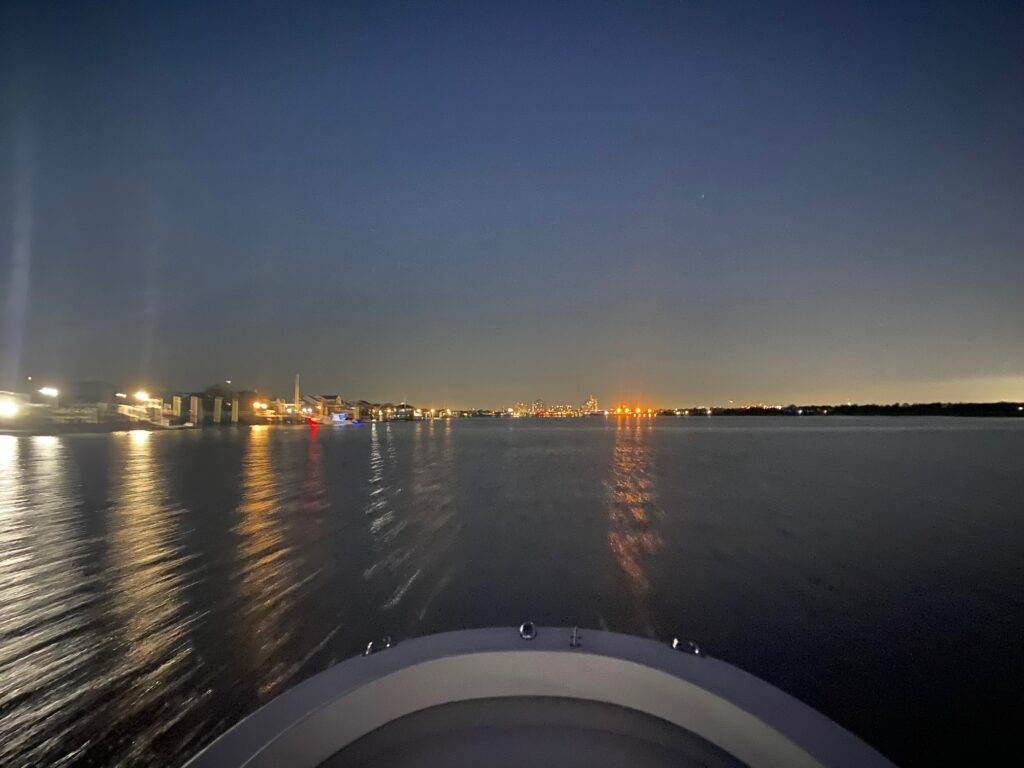
Night-vision technology for boaters has evolved mightily since I began following and testing these devices 30 years ago. Among the first were marine night-vision scopes from ITT Industries. Adapted from military night-vision technology, the now-defunct ITT Night Mariner scopes hit the market in the mid-1990s, amplifying the faintest ambient light to offer illuminated images at night.
While those early products were impressive, today’s night-vision devices are vastly better. Gone are the ghostly green hues and speckling associated with the earliest products. Night-vision systems from brands like Black Oak and SIONYX offer color high-definition images that make night look like daytime with fields of view that align with your natural vision. While night-vision scopes are still available, some of the newest systems feature fixed-mount marine cameras that network with MFDs so you can view the nightscape in conjunction with your radar and chartplotter—all at once, if you like—for enhanced situational awareness from dusk to dawn.
To be clear, night-vision differs from thermal imaging. The former amplifies available light many times to generate images, while the latter—known best in the form of the FLIR brand for boaters—senses the infrared heat signatures of objects, then converts this to imagery. Let’s look at some of the latest fixed-mount night-vision systems that can enhance your pre-dawn runs to the fishing grounds and help guide you back home when fishing adventures take you late into the night.
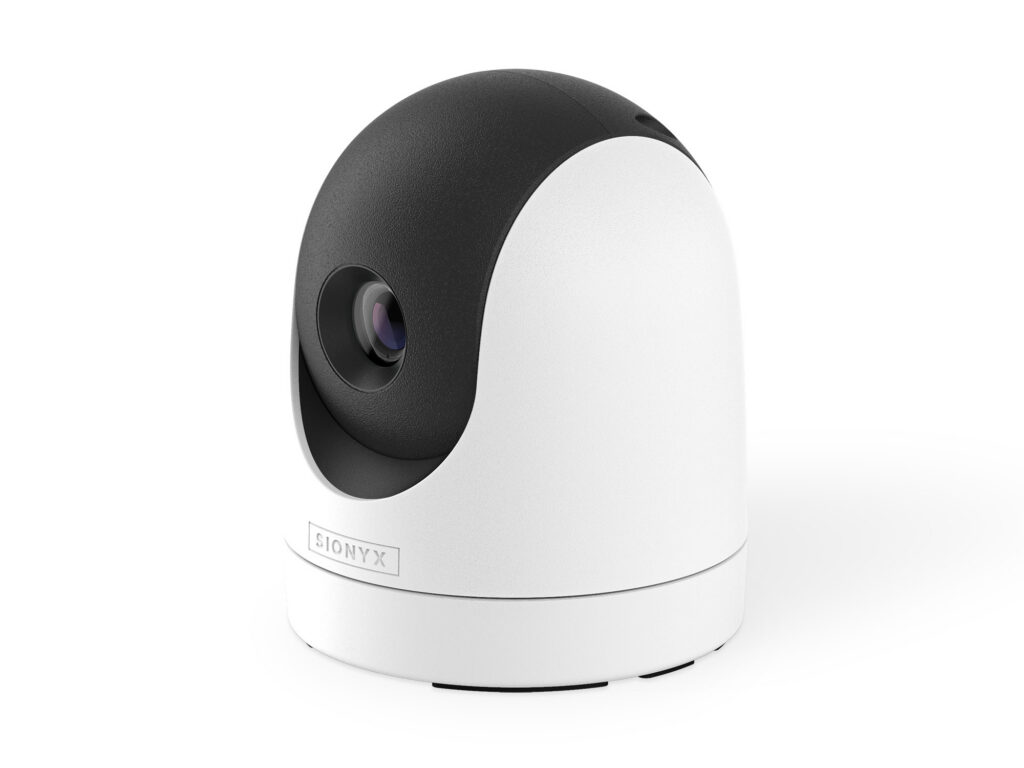
SIONYX Nightwave Digital
The Nightwave Digital is the next generation of ultra-low-light marine imaging systems from SIONYX. It kick-started the market for these affordable systems a few years ago with the popular Nightwave D1 analog camera, which continues to be available in the SIONYX lineup. Both compact, lightweight fixed-mount cameras are approximately the same size and designed to easily install atop or under the brow of a hardtop.
Like the analog version, Nightwave Digital uses SIONYX’s Black Silicon CMOS sensor technology to deliver outstanding ultra-low-light full-color imaging on an MFD that is remarkable in its clarity and detail, thanks to 1280×1024 HD resolution. The 16mm F/1.4 glass lenses offer a 44-degree horizontal field of view, the same as the analog camera.
Nightwave Digital connects to a MFD via a single cable (which provides power and networking) that plugs into the display’s Ethernet port, as opposed to Nightwave’s analog wire with a RCA plug (for a MFD’s video input port) and a separate power cable for 12-volt DC power.
The Ethernet connection for the Nightwave Digital offers greater image detail to better serve large-screen high-definition MFDs—those in excess of 16 inches. Ethernet also allows for networking a single camera with multiple MFDs, or multiple cameras to one MFD, versus the ability to connect to one-on-one only with the analog version. However, both the analog and digital models offer Wi-Fi video streaming to the new SIONYX mobile app.
Marine-grade UV-resistant polycarbonate construction withstands 20 Gs of vertical shock, 10 Gs of horizontal vibration, and wind speeds up to 100 mph. The Nightwave Digital is available in black or white cases, and is rated for IP67 water resistance to withstand harsh saltwater environments. The Nightwave Digital system retails for $2,995, while the analog version carries an MSRP of $1,895. To learn more, visit sionyx.com.
Read Next: Fishing for Tuna at Night
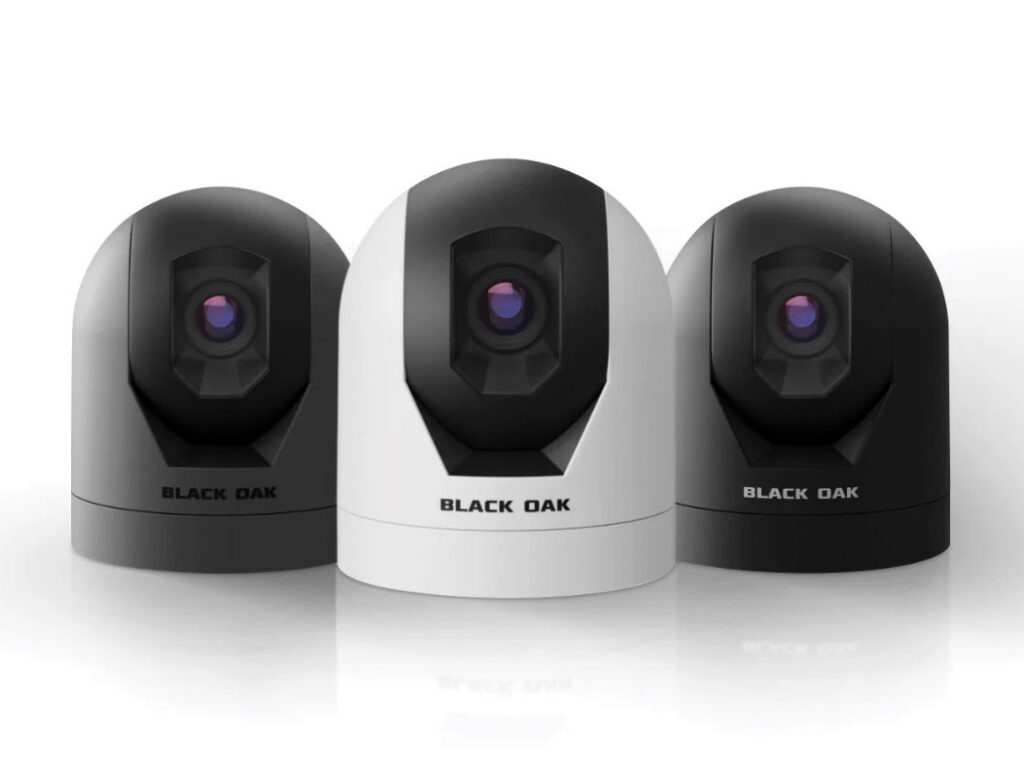
Black Oak Nitron XR1
Similar in size and appearance to the SIONYX cameras, the new fixed-mount Nitron XR1 marine night-vision camera from Black Oak uses an analog feed with a RCA plug that connects with a single MFD via a display’s video input port. It also has a separate cable to connect to an onboard 12-volt DC power source, much like the SIONYX Nightwave Analog system.
The XR1 incorporates an ultra-low-light sensor to generate clear, full-color 1920×1080-resolution video imagery, presented in a 42-degree field of view. The compact, lightweight design gives boaters the ability to easily install the camera above or below a hardtop. The housing features an IP67 waterproof rating to withstand the rigors of saltwater use.
The XR1 can be paired with one of Black Oak’s infrared (IR) light bars. While IR is invisible to the human eye (and thus will not ruin the crew’s night vision), the XR1 sensor can pick up the reflected IR and show this on display to enhance the ability to see even the smallest objects, even on moonless nights.
Available in black, white or gray housings, the Nitron XR1 retails for $1,595. To find out more about the system and compatible MFDs, visit blackoakled.com.
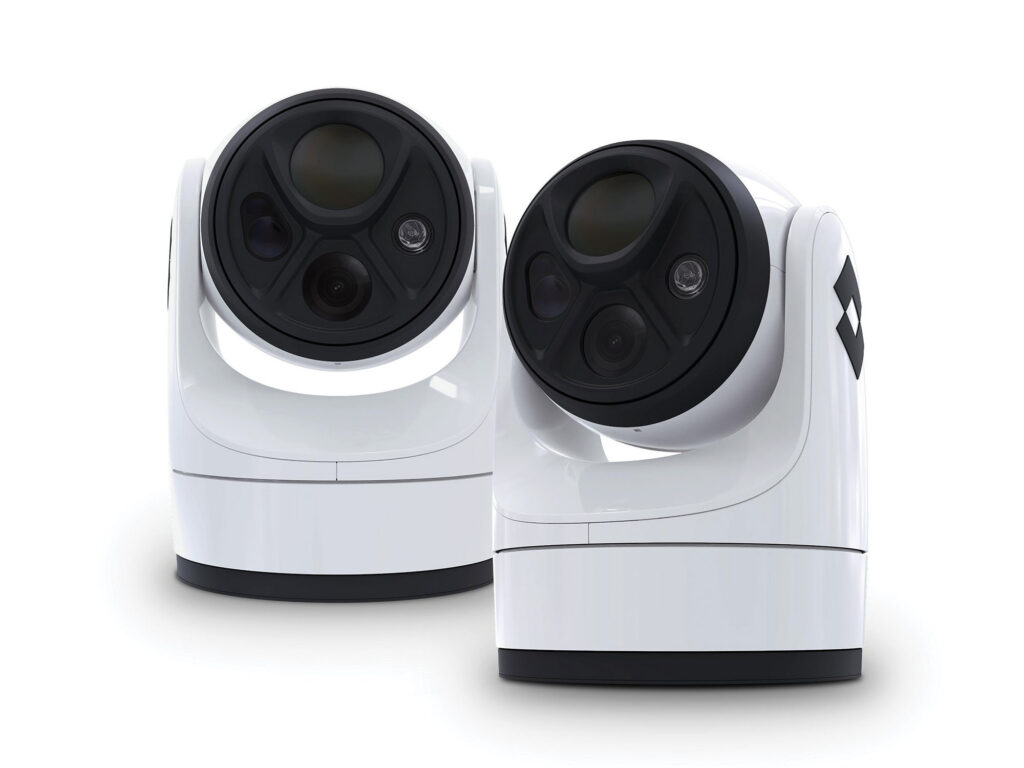
FLIR AI-Powered Cameras
FLIR’s new M460 and M560 AI-powered multi-spectral camera systems are big and priced beyond the budget of many boating anglers, but the technology and features offer a glimpse of what we might see in more affordable systems in the future.
For example, these systems integrate advanced AI Target Tracking that keeps a watchful eye on the water via an MFD, and automatically identifies common marine objects – like vessels, buoys, and people. Once an object is selected, the camera intelligently tracks the target with dynamic pan and tilt control.
They also offer three-axis gyro stabilization systems for stable imagery, even in the most challenging sea states. High-sensitivity, long-wave IR sensors with up to 14x zoom offer long-range detection capabilities. What’s more, the M460 and M560 feature tight-beam laser spotlights with the ability to illuminate objects up to a kilometer away, and a laser rangefinder can measure target distance up to 12 kilometers away. These are just a few of the features that affordable marine cameras might hold in store for boating anglers whose future adventures take them into the night. To learn more, visit marine.flir.com.