We’ve all been hooked into a big fish with line screaming, rod bent and heart racing. And then, in an instant, there’s nothing. The rod straightens, line goes slack, and the trophy’s gone. A likely culprit is a broken, bent or dull fishhook. Hook makers are working hard to prevent heartbreak with stronger, sharper and more effective hooks, and when it comes to fishhooks, small details make a big difference. From raw material to design, forging and finishing, the latest hooks are optimized for performance.
Wire
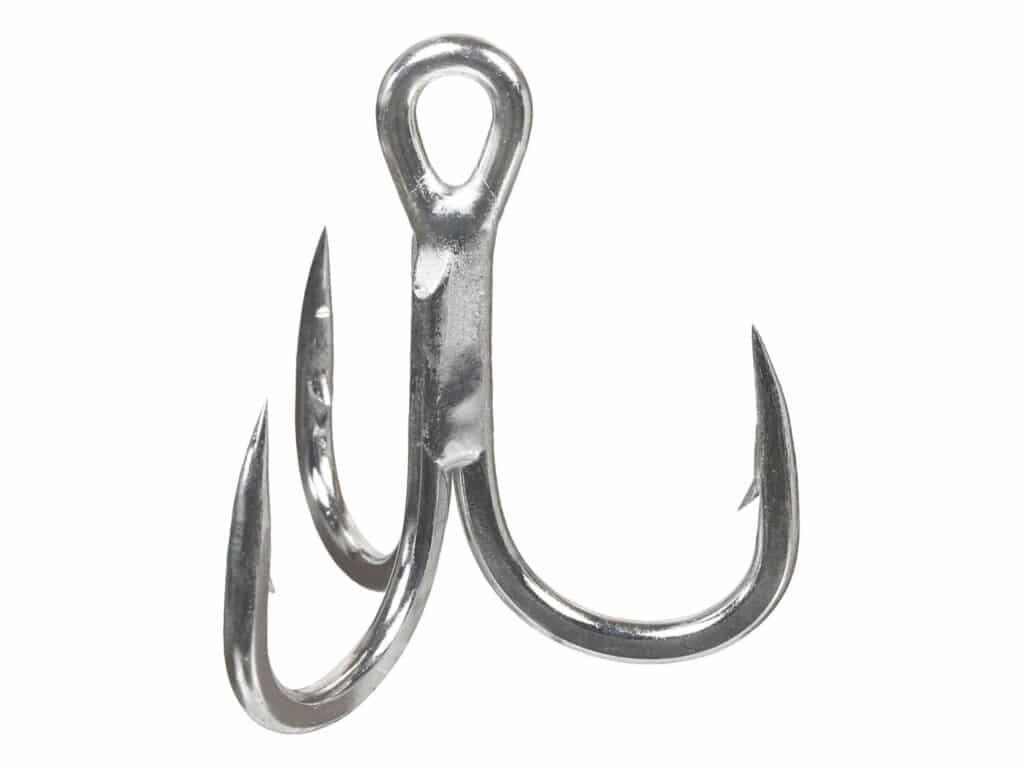
A good hook starts with the raw material. High-carbon steel both holds a point and flexes under pressure. Developing the perfect balance between hardness and softness is the objective of Owner’s new Zo-Wire, Owner sales manager Chinh Nguyen points out. “A hard point will snap, while a soft point won’t hold an edge,” says Nguyen. Zo-Wire steel creates a hook 20 percent stronger than standard high-carbon steel. “This allows us to use thinner wire while maintaining the hook’s strength,” he explains.
For example, Owner’s new STX 60 and STX 71 treble hooks use Zo-Wire to achieve what Owner markets as 4.5x and 5x strength with a thinner wire. “We designed these hooks for bluefin lures,” Nguyen says. When a 500-pound tuna strikes a topwater lure, a thinner hook effortlessly penetrates the fish’s jaw. Then, as the tuna runs, STX hooks have a curved point to stay pinned under 40 pounds of drag.
Forged
To increase strength, hooks are forged under high pressure. Mustad takes forging a step further with its UltraNor hooks, says Chris Gatley, business manager at Mustad. “The hook is stamped with a groove running down each side of the wire like an I-Beam,” Gatley reveals. The process pushes material to the outside of the wire, increasing strength. “The UltraNor hooks are 20 percent stronger than round wire,” he says.
Mustad has been experimenting with the hook point. Their Alpha Point 4.8 hooks have a longer point length than Ultra Point 4.3 hooks. “The longer point is thinner for better penetration,” Gatley says.
The new Alpha Point 4.8 hooks are popular for slow-pitch jigging. The jig is moving slowly and the fish doesn’t hit aggressively, so the slow-pitch jig hook needs to penetrate easily.
The shorter Ultra Point 4.3 is stronger to prevent damage from structure or contacting a fish’s jaw at high speed, making it a good choice for high-speed jigs and bottom-bouncing lures. “Around structure, I want a traditional hook point for durability,” Gatley explains.
Coated
After the hook is heat treated and tempered, the metal is coated to reduce corrosion and improve penetration, according to Syd Rives, sales manager at Spro, a subsidiary of Gamakatsu. “If you touch an uncoated hook it will start to rust,” Rives says. While high-carbon steel has the perfect properties for strength and softness, the raw material is a perfect breeding ground for corrosion. “Coating the hook with corrosion-resistant material prolongs the life and improves performance,” he says.
Gamakatsu says its new Nano Alpha coating makes hooks that are five times more corrosion resistant and twice as slick as other hooks. To test corrosion resistance, the company soaks hooks in saltwater to compare against competitors. “The Nano Alpha went three to four months without showing signs of corrosion,” Rives says.
The Nano Alpha coating also makes hooks slick, so they pass through fish jaws with less pressure. “If a hook doesn’t penetrate completely, it is more likely to straighten out,” Rives explains.
Rigging
Gamakatsu continues the attention to detail with new slow-pitch jigging assist hooks. Assist hooks are connected to a steel ring, traditionally with thin red Spectra Fiber braided line. “We’ve changed the red line to blue.” The blue line tends to be less visible to fish underwater, Rives contends.
One of the most purpose-driven new hooks is VMC’s Redline Series Swivel Fluke Hook. The fluke in this instance is not a fish but the lure style that’s also called a soft-plastic jerkbait. Designed by professional bass angler Seth Feider, the innovative weightless fluke hook includes a monofilament bait keeper and an integrated swivel attached to the hook eye. “The baitkeeper allows me to rip the bait without worrying about the soft-plastic fluke sliding down the hook,” Feider says. The swivel reduces line twist. “I used to lose a lot of fish because of line twist,” Feider points out. The swivel also adds weight to the nose of the lure to keep it just below the surface for optimal action.
Read Next: How to Sharpen a Hook
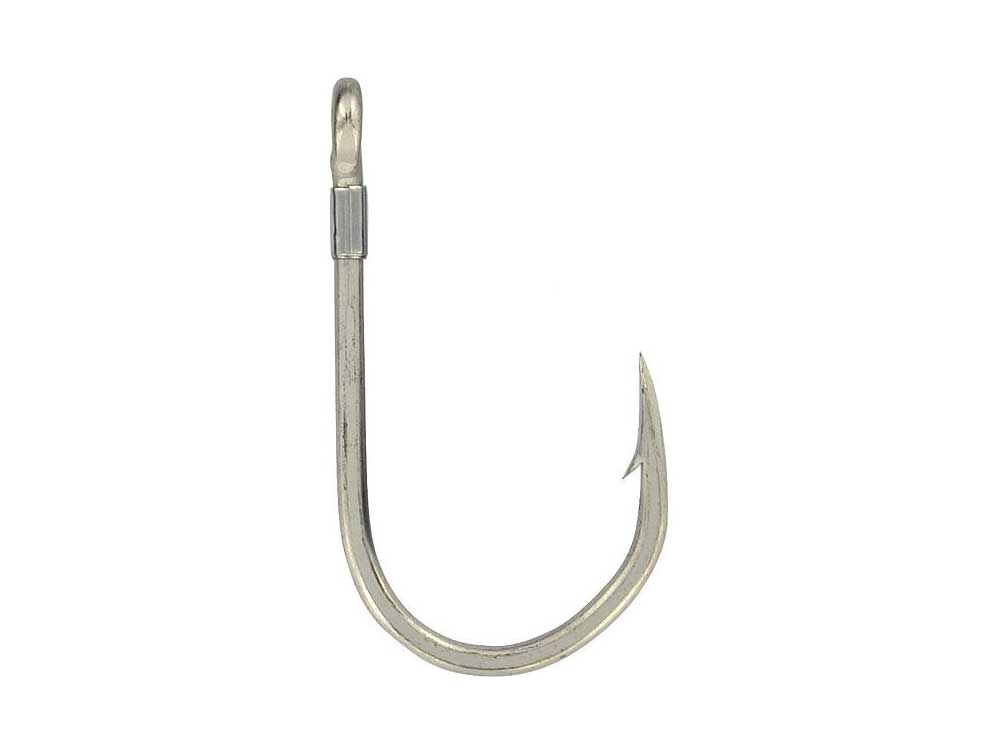
Care and Maintenance
Even the best hook is susceptible to corrosion and damage. Cleaning, protecting and storing a hook correctly lengthens its life. Rust can cause a hook to break or bend, but corrosion dulls the point long before that happens. “At the first sign of rust, throw out the hook,” Gatley says.
One of the biggest mistakes Gatley sees is anglers running with hooks exposed to the elements. “Sea salt contacts every exposed hook,” he says. Gatley recommends storing rigs and lures away from the elements and rigging up on site.
Upon return to land, rinse hooks with fresh water and leave them to air dry in a salt-free environment. Then, place hooks on a paper towel, lightly spray with a light oil and leave to dry.
Experts suggest storing hooks in a waterproof tackle tray. The best tackle trays are made of special plastic that emits a corrosion-blocking vapor. Adding desiccant packs absorbs remaining moisture.
Hooks may be small things, but they play a huge role in your success. Hook manufacturers pour a ton of effort into maximizing strength and durability into thin wire. With all the money and time invested in fishing, using old, cheap, rusty hooks becomes a liability when it really counts.