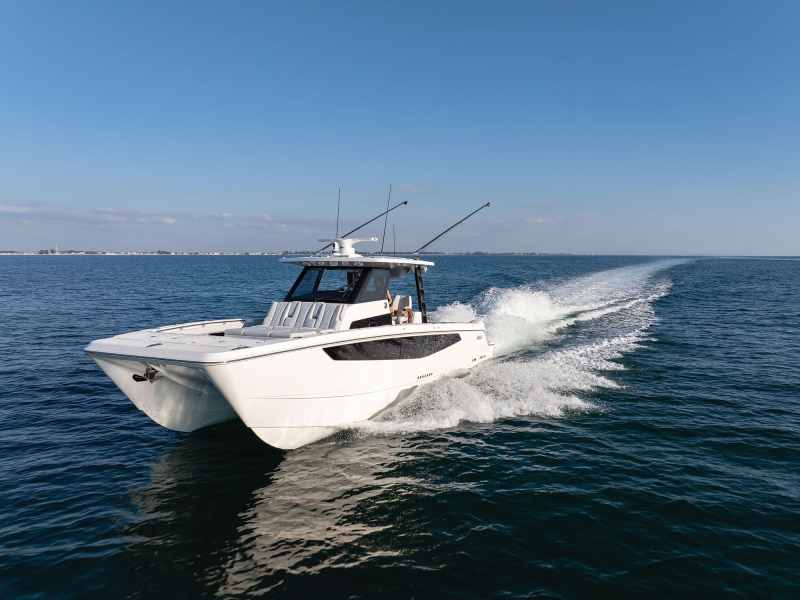
Power catamarans have inspired strong opinions among serious anglers for years. For some, twin hulls promise unmatched stability and efficiency. For others, questions remain about handling quirks and whether a cat can ever truly replace a proven center-console monohull when the inlet gets ugly and the hot bite is well over the horizon. The 36 Molokai from Aquila Power Catamarans makes a compelling case that the debate may be nearing an end.
The 36 is unapologetically built for anglers first. From its triple-livewell arrangement to the massive fish boxes and single-level 360-degree cockpit, the 36 Molokai is designed to chase fish far from the dock.
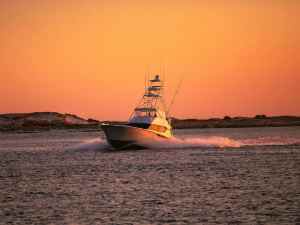
Our test day off Jupiter, Florida, delivered the kind of weather that reveals a boat’s true character. A stiff 15- to 20-knot northeast wind was opposing an outgoing tide, with swells stacked into confused 3- to 5-footers. The 36 barely noticed.
The Molokai capitalizes on its relatively narrow sponsons and generous tunnel height to soften impacts. Tunnel slap and sneezing—two complaints often leveled at catamarans—were nonexistent.
Some cats can bow steer, where one hull sponson grabs first in quartering seas, but the Aquila tracked cleanly and confidently.
Standard power is a pair of twin 300 hp Mercury outboards, though most buyers will likely opt for Mercury’s 400 or 425 hp V-10s. And while our test boat was equipped with an experimental power package, Aquila reports a top-end speed of 57.2 mph with the 400s, along with a fast cruise of nearly 50 mph. With 508 gallons of fuel aboard, that translates into serious range.
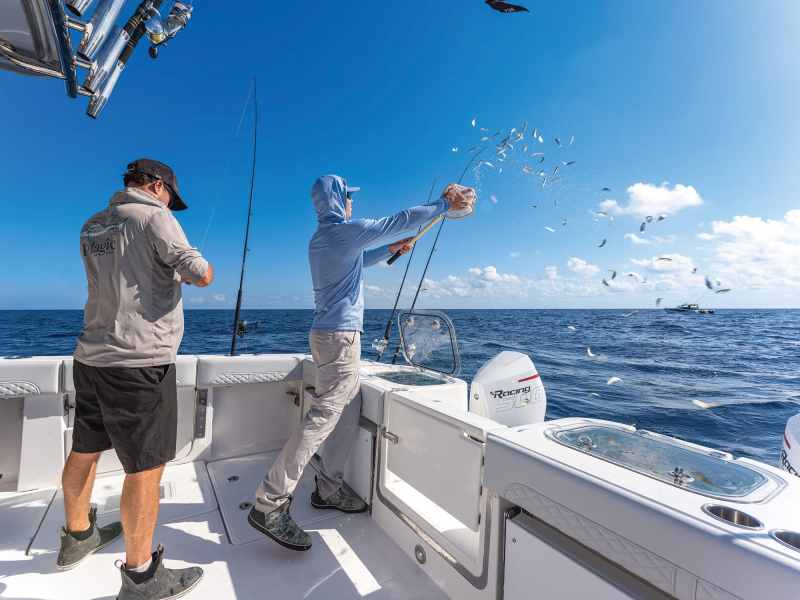
But a fishing boat should be judged by how it fishes. Here, the 36 Molokai shines. Live-bait management is one of the boat’s strengths. Two 53-gallon transom livewells with clear lids anchor the cockpit, complemented by a third 58-gallon in-deck well that lets crews separate bait species, isolate delicate offerings or replenish the transom wells as needed.
Hooker pumps feed the wells through a dedicated sea chest equipped with both high- and low-speed pickups, ensuring reliable water flow. Variable-speed controls at the helm let crews fine-tune circulation. Optional tuna tubes can be installed for those targeting larger offshore predators. Valves and plumbing are easily accessible via an oversized in-deck hatch.
The Raymarine 18-inch multifunction display mounted beneath the aft edge of the hardtop is positioned so the cockpit crew can monitor bait schools on a weedline or track structure while bottomfishing.
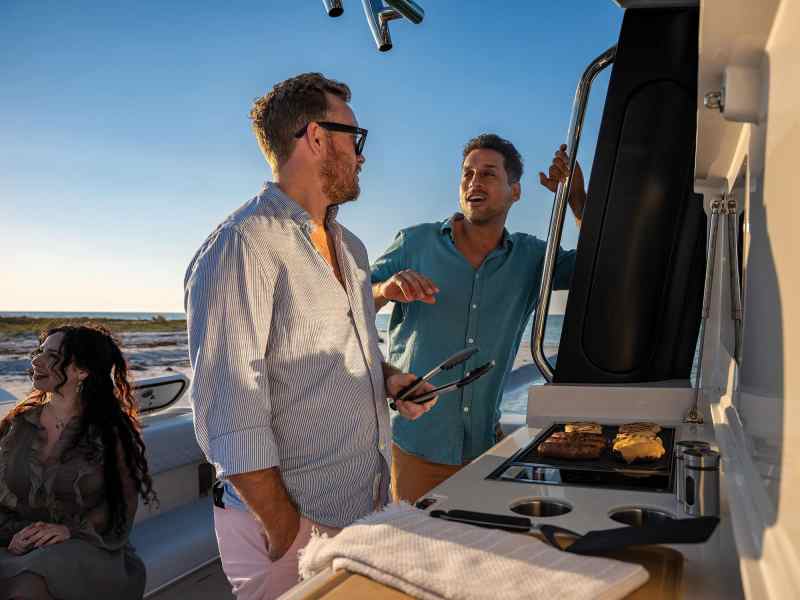
At the center of the cockpit sits an aft-facing prep station that functions as mission control. A cutting board, sink, tackle storage and optional grill are integrated neatly into the module, while a pair of pull-out Yeti coolers tucked below can remain hidden for deck space or extend outward to create mezzanine-style seating. Foldaway transom seating disappears completely when lines go in.
Rod storage is abundant, with seven in the rocket launcher mounted along the aft edge of the carbon-fiber hardtop and 32 more positioned throughout the gunwales and cockpit. Massive, well-insulated in-deck fish boxes extend well into the sponsons, offering 198 gallons of fishbox capacity and enough length for even trophy-class wahoo. That hidden storage volume is one of the catamaran’s quiet advantages. Beam isn’t wasted; it becomes usable space instead.
The single-level deck layout allows true 360-degree fishability. Crews can move around the console freely while fighting fish, and the broad beam—11 feet, 9 inches—creates more elbow room than most conventional 36-footers can offer.
Aquila can also pre-wire the foredeck for trolling motors, a feature appreciated by anglers targeting tarpon, cobia or snapper in precision situations.
Read Next: Aquila 47 Molokai
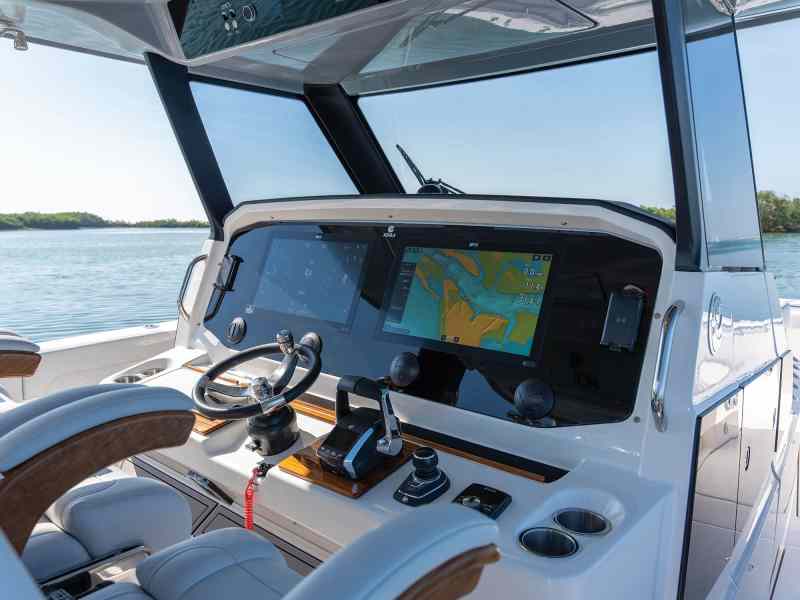
At the helm, the wide beam again pays dividends. Triple helm seating gives the captain and crew room to ride together in genuine comfort, protected from sea and spray behind a substantial windshield. Twin 22-inch Raymarine displays (or three 19-inch screens) provide abundant navigation and fish-finding real estate, while an Airmar B175 1kW transducer delivers high-wide chirp sonar. You also get structure scanning and 3D imaging. Mercury joystick control simplifies close-quarters maneuvering.
Technology integration throughout the boat reflects Aquila’s larger-yacht experience. CZone digital switching controls many onboard systems, but traditional overhead switches remain in place as a tactile backup, a practical decision when pounding through rough water makes touchscreen precision difficult.
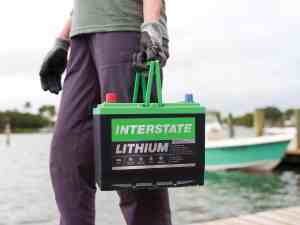
An optional lithium battery package can power onboard systems, including pumps and air conditioning, for up to eight hours without running the engines. For anglers planning overnight trips or long bottomfishing drifts, that capability adds meaningful versatility.
Even the details beneath the deck reinforce the boat’s fish-first priorities. Large bilge hatches provide easy access to all pumps and systems. Electric reel outlets are positioned both fore and aft. Freshwater and raw-water washdowns are exactly where they should be. These are the kinds of features that serious anglers notice.
There’s a cabin tucked inside the console, complete with air conditioning, a surprisingly spacious berth and enclosed head. It’s useful for additional stowage, overnighting or escaping the weather.
The Aquila 36 Molokai doesn’t ask anglers to compromise. It delivers the range, bait capacity and fishability expected of a modern offshore platform, while adding the ride stability and deck area advantages unique to a well-executed catamaran. For those willing to embrace two hulls, the reward may be more than comfort. It may simply be more (and better) fishing.
Specifications
| LOA: | 38’2″ |
| Beam: | 11’9″ |
| Draft: | 3’6″ |
| Fuel: | 508 gal. |
| Weight: | 12,888 lb. |
| Max HP: | 850 |
| Price: | Available upon request |
Aquila Power Catamarans – Saint Petersburg, Florida; aquilaboats.com