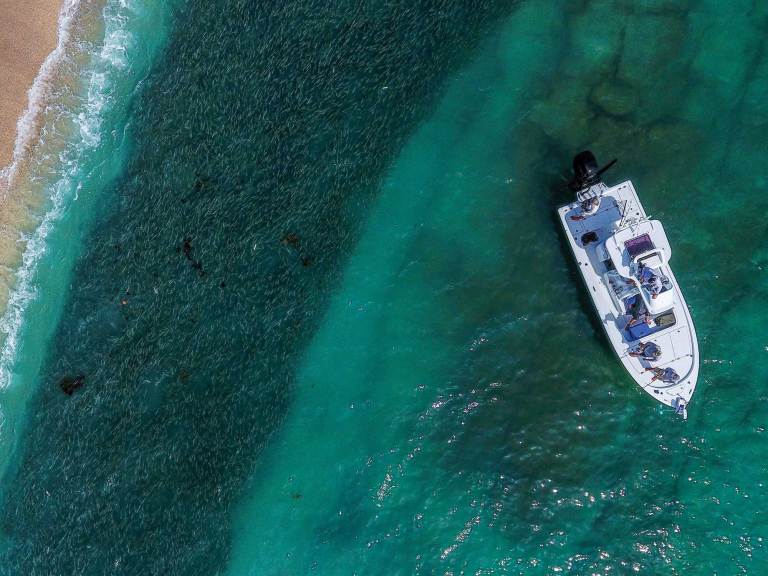

Anchoring up to fish a wreck or a reef, or to spend a night in quiet cove on an extended fishing trip, is critical for saltwater anglers. Making the task of dropping and retrieving a heavy anchor and hundreds of feet of rode is the purview of an electric anchor windlass or an electric anchor winch. These labor-saving devices can forestall a mutiny among crew members who are asked too often to weigh anchor by hand. It is a back-breaking proposition.
Before we move to the pluses and minus of each system, it is important to point out the differences between an anchor windlass and an anchor winch. To the uninitiated, they might sound like the same thing. You know—potato, potahto. But they are not. These systems look and operate far differently, and boat buyers should know these differences before deciding on one or the other for a new boat.
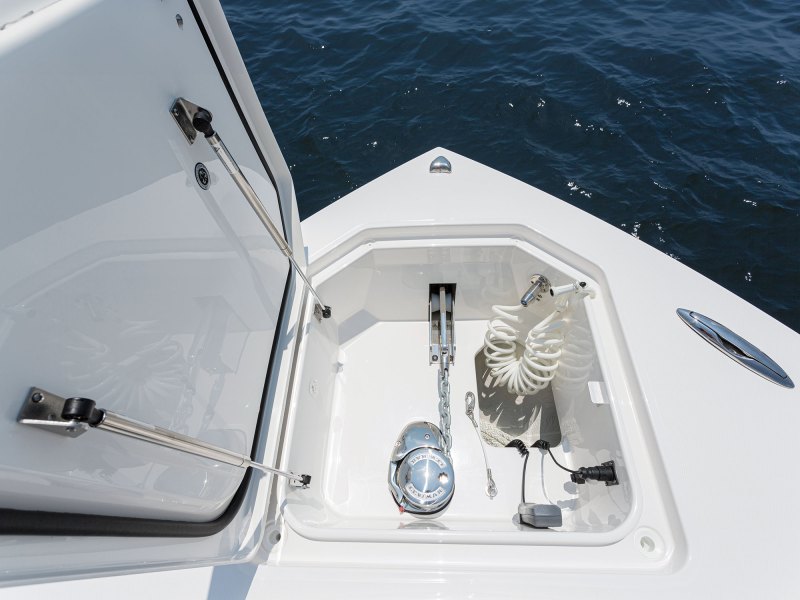
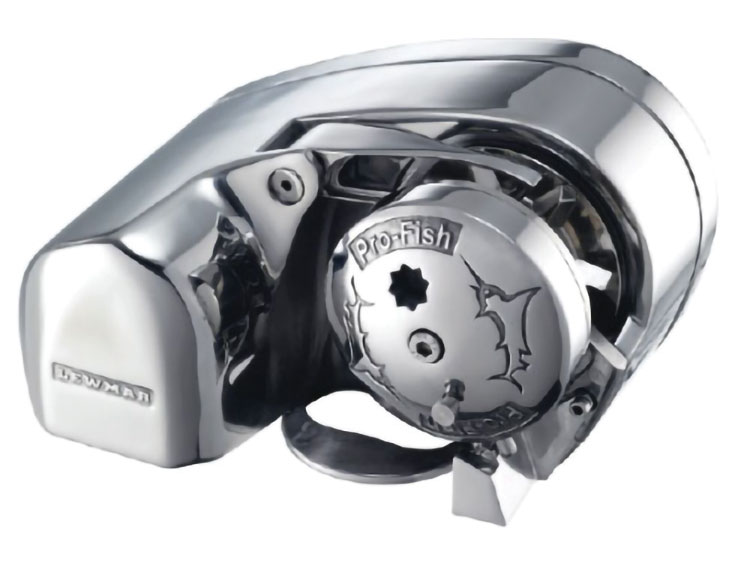
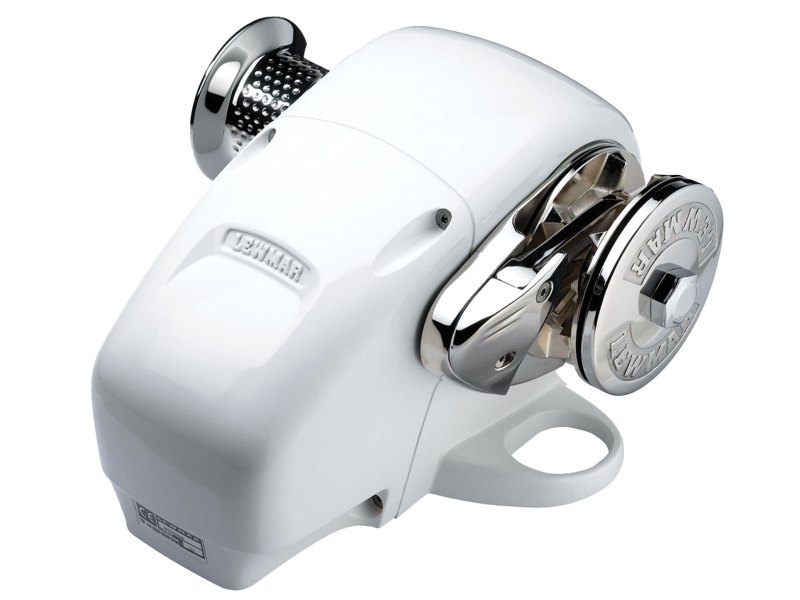
When it comes to retrieving ground tackle via electric, hands-free machinery, the anchor windlass in its various iterations ranks as the overwhelming favorite among boating anglers. These are offered by brands such Lewmar, Maxwell, Harken, Quick and Vetus. A windlass uses a gypsy—some models use a gypsy in a vertical orientation, sometimes in a horizonal one—to retrieve the rode and feed it into an anchor locker.
In recent years, however, the electric anchor winch has encroached on the popularity of the windlass, especially aboard salty-looking pilothouse boats hailing from the Pacific, as well as along the Eastern Seaboard.
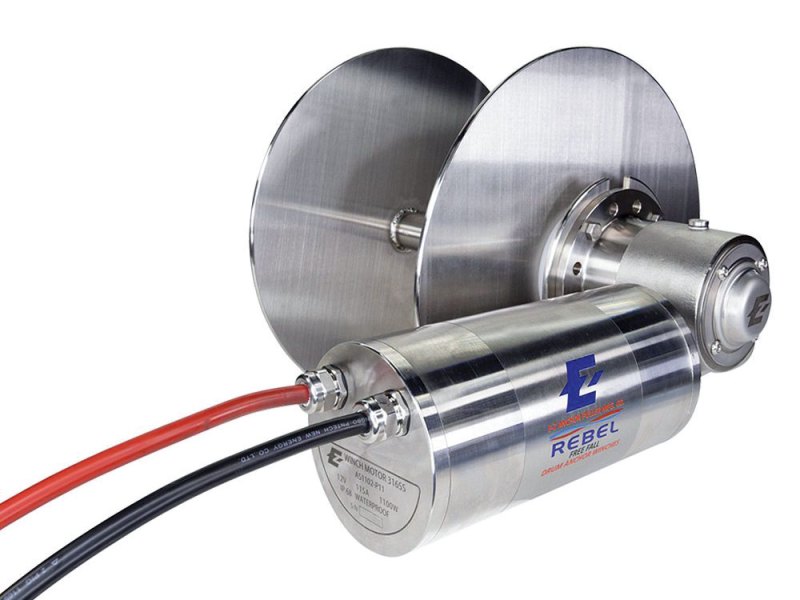
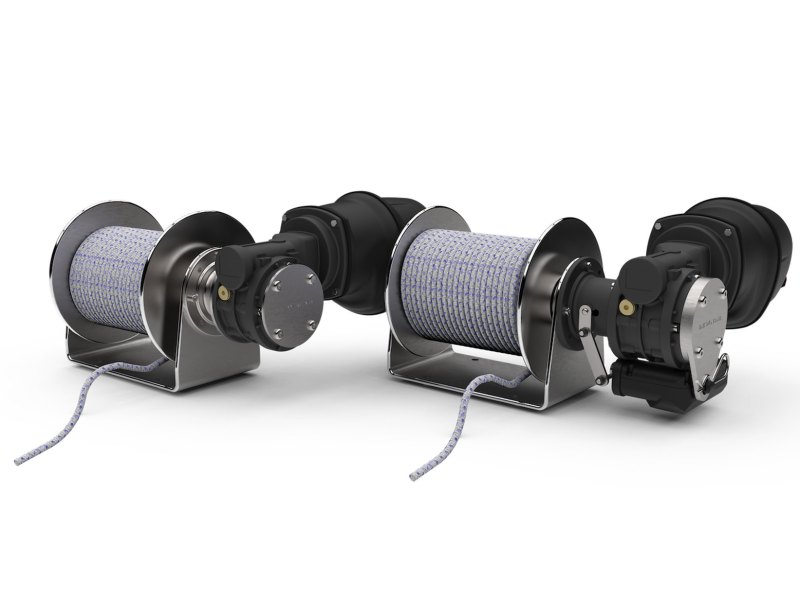
Available from companies such as EZ Anchor Puller, Lewmar and Seachoice, anchor winches—which are available in various sizes and capacities—are characterized by an electrically powered drum that reels out, reels in and stores the rode. Let’s compare these two systems.
Tangle Potential
One advantage of an anchor winch is it’s less prone to jam than a windlass. This is because the rode spools on and off a drum. When retrieving, it spools the rode level on the drum, so that it does not pile up in one spot. A windlass, on the other hand, grabs the rode with “teeth” in the gypsy and feeds the line and chain in and out. Line can pile up in the locker, causing it to back-feed around the gypsy and jam. Also, windlasses tend to twist the anchor line as it passes over the anchor roller and into the locker, and this can result in jams on the way in and out. When it comes to avoiding a tangled and twisted anchor line, the winch wins out.
Space Constraints
Windlasses take up less space than a winch. A winch necessitates room for the drum. Unless there’s room in the anchor locker for a drum (and some boats can accommodate this), it must be mounted on the bow deck, assuming there’s enough space topside. A windlass does not require a big drum to contain the anchor rode, and a windlass is far more compact. That can make a big difference on a small boat.
Rode Requirements
Windlasses possess tight specifications for the size of the line and chain in order to mesh properly with the gypsy. However, winches can accommodate a wide range of line and chain sizes. Also, a windlass requires a special rope-to-chain splice in order to pass through the teeth of a gypsy. Winches, on the other hand, handle the bulkier thimble-and-shackle connection. When it comes to versatility of line, chain and connections, the winch takes the win.
Line Capacity
The amount of rode available for anchoring in deeper water is limited on a winch by the size of the drum. Newer thin-diameter, high-strength-to-diameter synthetic lines like Dyneema or Amsteel allow for a greater amount of anchor rode to be stored on the drum. That said, a windlass, in theory, has no inherent limit to the length of the rode, which is dictated instead by the volume of the anchor locker. But in reality, there is a limit to the line capacity of any anchor. Consequently, in this line-capacity comparison category, we call it a draw between the two systems.
Wear and Tear
A windlass wears out the anchor line more quickly than a winch. That’s because the teeth on the gypsy chew at the line. A winch has no such point of contact. However, this isn’t a concern for many boaters because it takes years of hard use to wear out an anchor line. Still, in the category of wear and tear, the winch wins.
Free-Fall Capabilities
Precision anchoring over a wreck or reef calls for getting the anchor to the bottom quickly. The best way to ensure this is to let the anchor free fall. Both windlasses and winches are available with free-fall capabilities. So, in this comparison, they finish in a tie.
Aesthetics
As mentioned earlier, it’s possible to hide some winches inside anchor lockers, but most get installed atop bow decks. Perhaps the steampunk look of an exposed winch complements an Alaskan fishing boat, but it’s hard to imagine one on a sleek center-console, on which it can obstruct an angler throwing a cast net or fighting a big fish around the boat. Many of today’s windlass installations lie hidden under the hatch of an anchor locker, and even then only the gypsy is visible inside, with the rest of the machinery below deck. So, when it comes to pure aesthetics on a sleek fishing boat, the windlass gets the nod.
Capstan Windlass
There is a second type of electric windlass that uses a capstan instead of a gypsy, and some windlasses come equipped with both. While a capstan is easier on anchor line than the teeth of a gypsy, it does not offer hands-free retrieval and does not automatically feed the rode into the anchor locker. A crewmember needs to take wraps of anchor line or chain around the rotating capstan and maintain slight pressure (called “tailing”) to ensure traction. The crewmember also needs to manually feed the rode into the anchor hatch or through a hawse pipe for stowage.