If you troll or drift live baits for wahoo, bluefish, mackerel and other razor-mawed game fish, you’ve no doubt had a fish make off with the lower half of your offering, missing the hook entirely. Such an occurrence is a bummer with a fish of any size, but when it costs you a tournament-winner or trophy, the effects can be devastating.
Whether the target is wahoo, kingfish, Spanish mackerel or bluefish, there are ways to boost your hook-up numbers with sharp-toothed predators. One tactic is to use a stinger rig consisting of two or three hooks rigged in tandem. However, as elementary as adding a second hook to your bait rigs might seem, it won’t do much good unless you understand the concept behind the stinger rig and how to make one.
Choosing Wire
A proven way of coaxing more strikes from any species of game fish is to scale down your terminal gear to make it less visible. For example, when I’m free-lining live yellowtail snapper for big king mackerel in the clear waters of the Bahamas, I use the shortest length of the lightest wire I can and still have a good chance of landing a big fish. As simple as it may seem to use 30- or 40-pound leader, I know that a 40-pound-plus kingfish can sever stainless-steel wire that light. I’ve had it happen. Therefore, I use No. 6 wire, which is approximately 61-pound test. This wire is still light enough to fool big, wary kings, yet strong enough to survive their jaws.
The length of the main leader is usually around 24 inches, just long enough to prevent a cut-off should the fish strike the head of the bait. I use a No. 4 (130-pound test) SPRO Power Swivel to connect the leader to the fishing line. Power Swivels, incidentally, are smaller than standard swivels of the same strength rating.
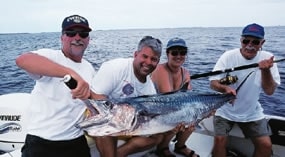
This 56-pound kingfish was caught off Bimini on a live yellowtail fished on a stinger rig.|
To protect the fishing line against contact with the fish or the reef, I tie three feet of 40-pound fluorocarbon to a short Bimini twist in the main line via a Bristol knot. However, if I’m not getting bit and know there’s a big king or two around, I cut off the fluorocarbon and double line and tie directly to the stinger rig.
Hook Selection
It makes little sense, visually speaking, to use a light leader and rig it with large hooks.
Whether you decide upon single or treble hooks, they should be small enough to remain inconspicuous, yet strong enough not to straighten under the strain of a big fish. The hook size and style will vary greatly based on the targeted species and type of bait. For example, with goggle-eyes, speedos, blue runners and yellowtail, I opt for a either a 5/0 Octopus or short-shank live-bait hook. Ditto with the stinger hook.
I rarely use treble hooks with live bait, for two reasons: First, since most of the kings we catch are released, a single hook makes removal safer and easier. Second, I don’t believe single hooks put me at a disadvantage. If a fish severs the bait and manages to avoid the hook, I can often get a second shot by free-spooling the remains of the bait. Mackerel and wahoo are notorious for slicing off the tail section of a bait and circling back for the remains. Providing your bait is sinking naturally, the fish (or one of its companions) may come back and pick it up. As soon as line begins racing off your reel, engage the drag, wind tight to the fish and set the hook; you’re likely to get a solid hook-up.
Joining the Stinger
The method used to connect the stinger leader to the lead hook can make the difference between catching a fish and losing it due to a kink in the wire, a hook turning back into the bait, or a pulled hook. Another concern involves the light stinger wire catching in or slipping through any gap in the hook eye. This threat can be countered by using a hook with a welded eye, or one forged from wire that’s strong enough not to open should the stinger wire become wedged in the cavity where the hook eye meets the shank.
King mackerel guru Dave Workman, Jr., who owns Strike-Zone Fishing in Jacksonville, Florida, has an effective way of connecting his stingers. Workman uses a haywire twist to join the lead hook and leader. Then he passes the stinger wire through both the eye of the lead hook and the loop in the main leader. Lastly, he secures the stinger wire with a haywire twist.
Workman explains that by interlocking the loops of the main and stinger leaders, the risk of the stinger wire slipping off the lead hook is eliminated. Furthermore, the loop-to-loop connection enables the lead hook to swing freely, preventing the rig from binding.
Alternative Method
I tend to vacillate between using the stinger rig with interlocking loops and one incorporating a SPRO Power Swivel. With the latter, which I tend to favor when live-baiting for big fish on 20- and 30-pound-class tackle and heavy drags, I start by threading the leader through the eye of the lead hook. I then run the wire through the eye of a No. 4, 130-pound-test SPRO Power Swivel, to which the stinger wire and hook are attached. With the swivel resting on top of the lead hook, I secure the connection with a haywire twist.
What you lose here, as compared to the interlocking-loop method, is insurance against the stinger wire slipping through a gap in the hook eye. Again, it’s a very small risk. However, should a fish pounce on the stinger hook, the swivel will counter any torque and help minimize any twisting, binding or kinks. When using bigger baits such as goggle-eyes, runners and speedos, the small Power Swivel isn’t prominent enough to warrant concern over its visibility. This is a good setup for prolonged fights with big fish on relatively heavy tackle.
Measuring Up
Stinger leaders should be slightly shorter than the bait, so the hook can be positioned in the rear third of its body. The wire should lay snug against the bait, yet shouldn’t restrict its swimming action.
While some anglers prefer a free-swinging trailing hook on their stinger rigs, I like to place it in the bait. First, I run the lead hook lightly through the bait’s nostrils or just in front of its dorsal fin. Then I lay the stinger alongside the bait to determine where the hook will ride and thread the point just under the skin. Depending on the bait, I sometimes hide the entire shank just under the skin, leaving only its eye and point exposed.
Make sure to embed the lead and stinger hooks firmly enough to prevent them from tearing out on a cast, yet light enough so they’ll pull free on the strike. If they’re embedded too deeply, the hook may prove difficult to set, or may turn back into the bait.
Also, before deploying the bait, hold it firmly and tug on the leader. The strain should be absorbed by the lead hook in the bait’s head. If the rear stinger is pulling forward as you tug on the main leader, the bait will not swim properly. If this occurs, create some slack in the wire by positioning the stinger hook farther forward in the bait.
Since you’re working with relatively light wire, replace your stinger system after each fish. Do not try to straighten the wire, as this will only weaken it. In your spare time, make some extra rigs in different lengths and place them in plastic bags. That way, you’ll always have them ready to go for a variety of live baits.
The rigs shown in the accomanying photos are effective on virtually all game fish. The necessary adjustments will be in the sizing of the wire and hooks to the species you plan on catching.
| ### Interlocking-Loop Stinger Rig |
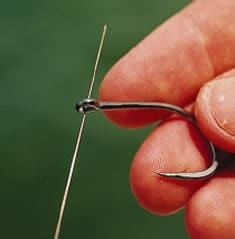
|**Step 1 **Using approximately 24 inches of wire, run one end of the leader wire through the eye of the lead hook. Secure the hook to the wire with a haywire twist. Add a swivel to the opposite end of the leader, for attachment to your fishing line.|
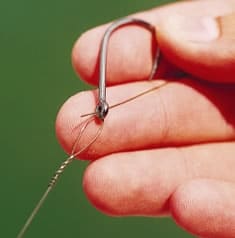
|**Step 2 **After cutting the desired length of wire for the stinger leader, run one end of the wire through the eye of the lead hook.|
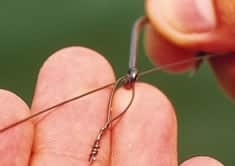
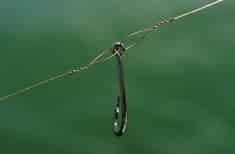
|**Step 3 **Pass the tag end of the stinger wire through the loop of the main wire leader. Form a small loop, then secure with a haywire twist.|
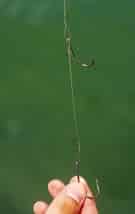
|**Step 4 **Attach the stinger hook with a haywire twist.|
| ### Swivel Stinger Rig |
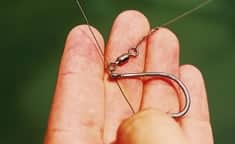
|**Step 1 **Run a few inches of the primary leader through the eye of the lead hook and a swivel with the stinger wire and hook already attached.|
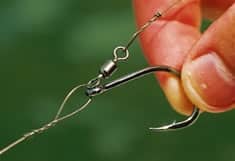

|**Step 2 **Form a small loop and secure the connection with a haywire twist. The swivel should rest on top of the shank of the lead hook.|